The Problem: Subsurface Water Threatening Slope and Foundation Stability
Hydrostatic pressure behind retaining walls and within slope fill is one of the most common — and most underaddressed — causes of long-term slope instability on data center sites. Horizontal drains intercept groundwater before it builds pressure, protecting slopes and foundations for the life of the facility.
How Horizontal Drains Work
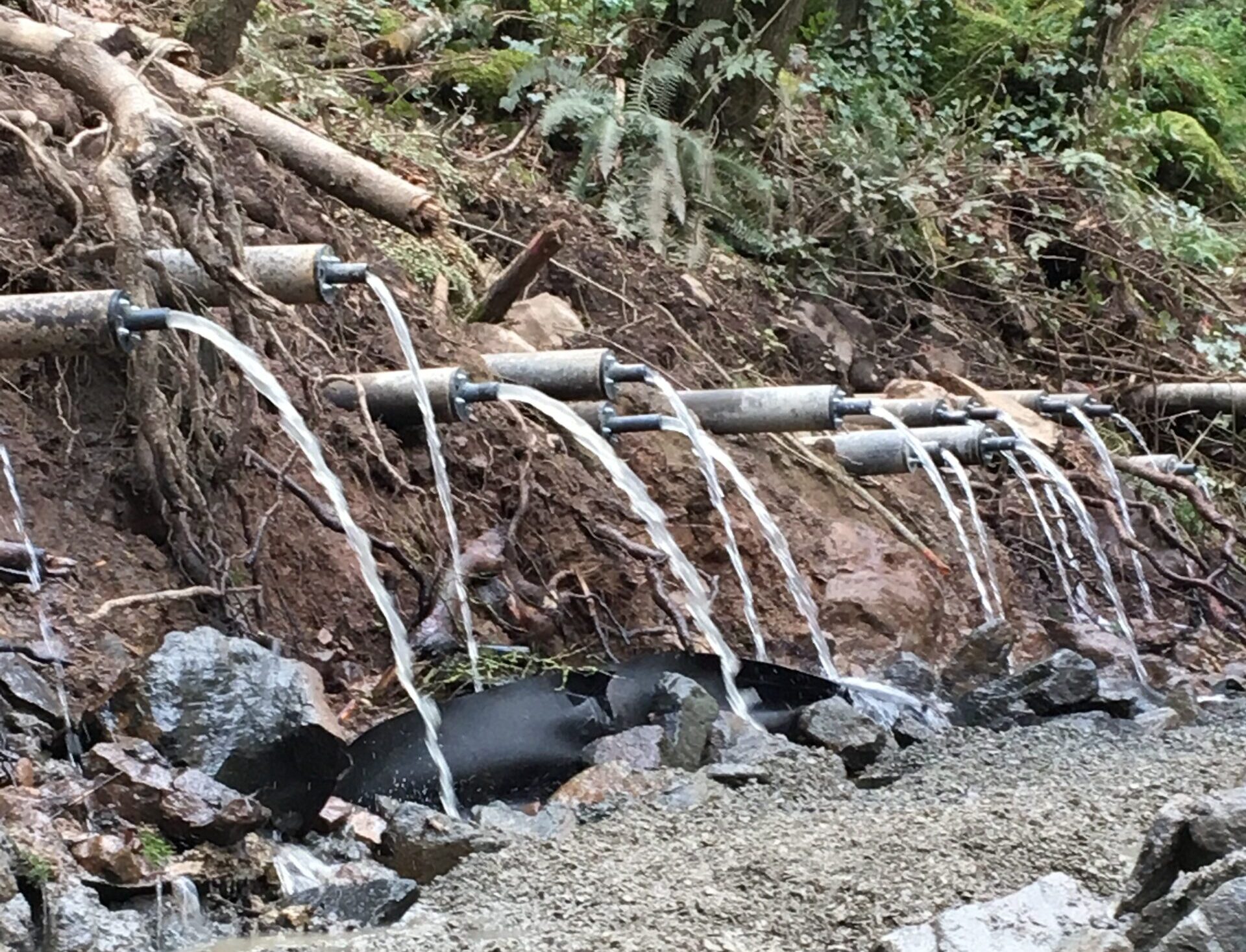
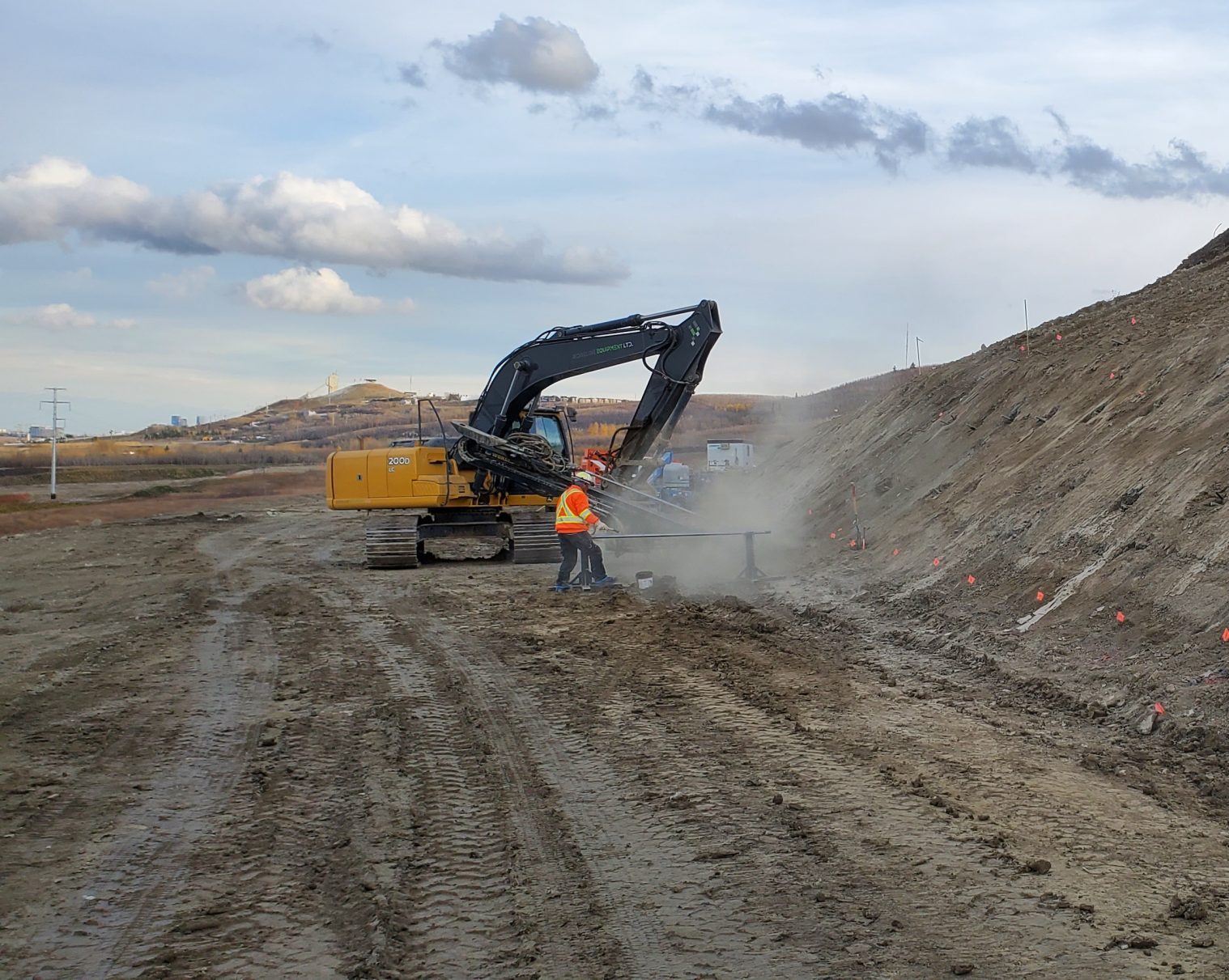
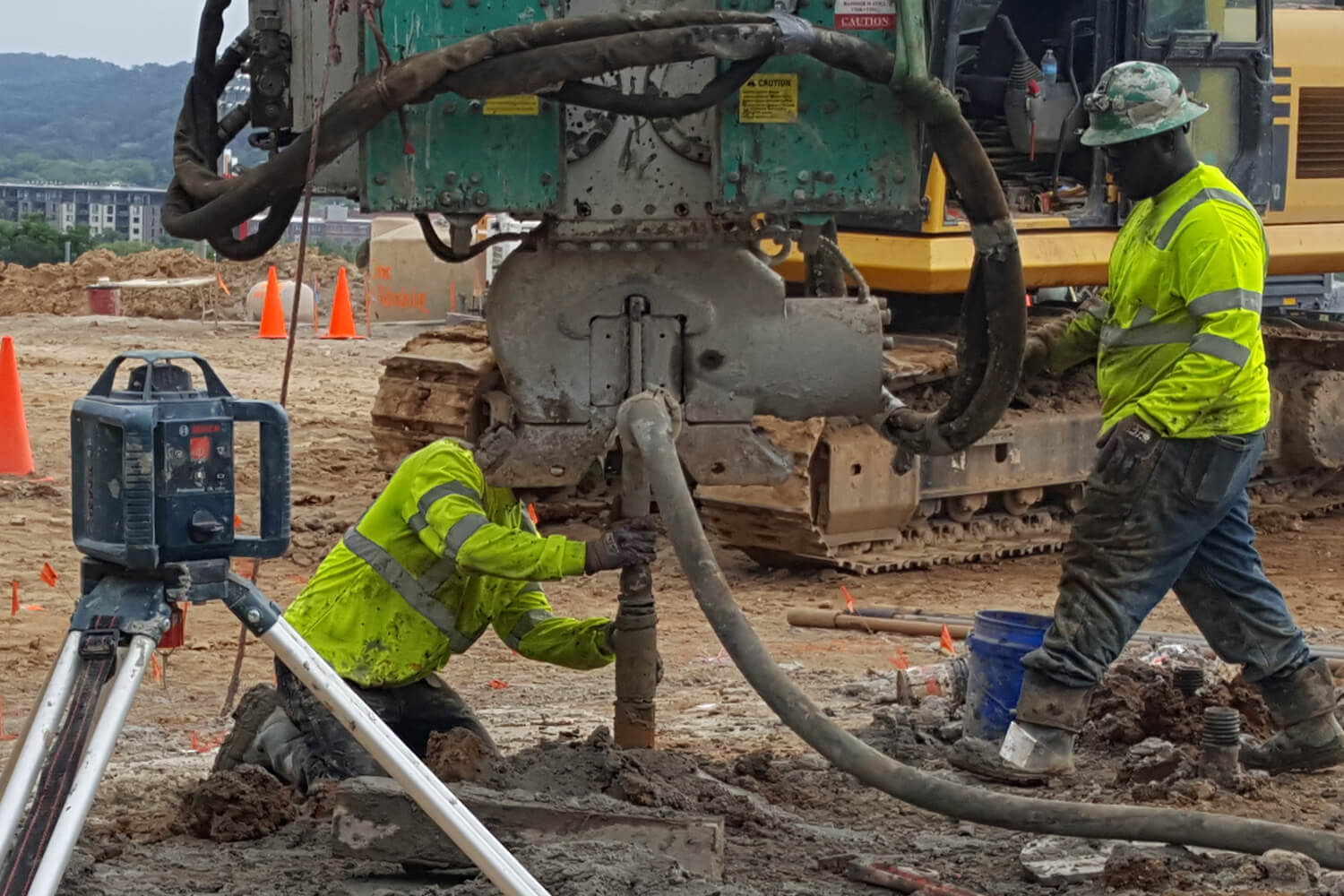
Horizontal drains are perforated pipes drilled at a slight upward angle into a slope or retaining wall. Groundwater enters the perforated casing and flows by gravity to the outlet at the slope face, where it is collected and directed away from the structure. No power. No moving parts. Minimal maintenance.
Integrated with Slope Stabilization
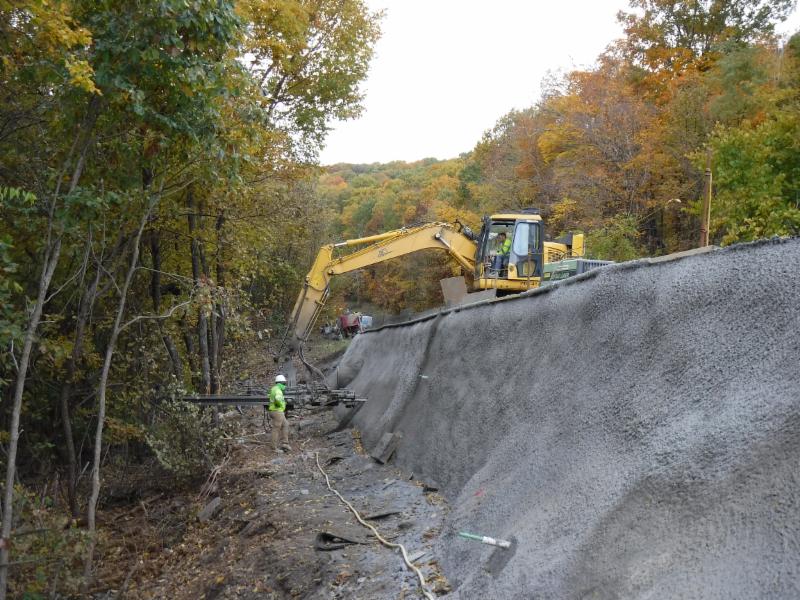
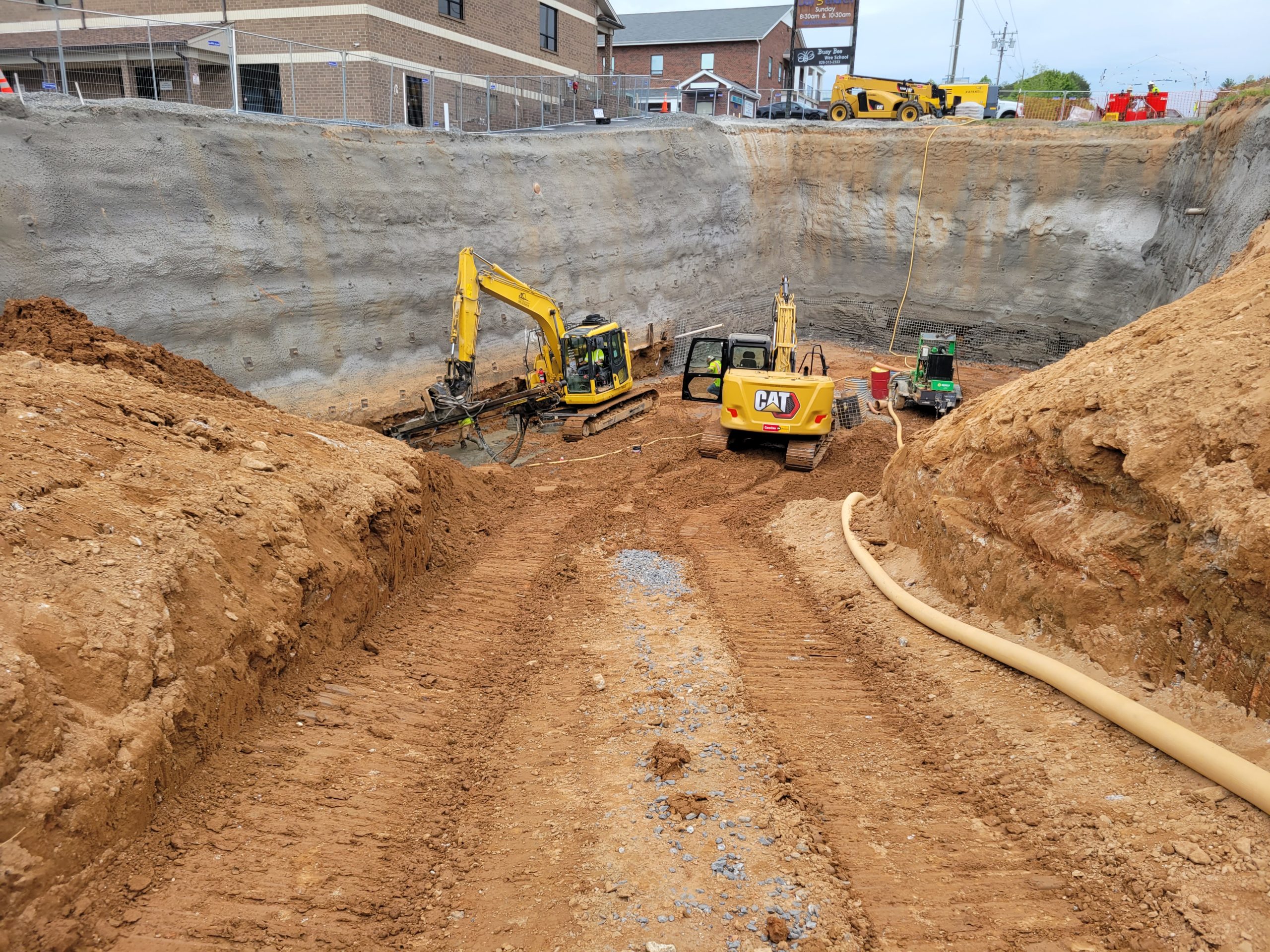
GSI routinely installs horizontal drains as a component of soil nail wall and slope stabilization programs. Designing drainage and stabilization together produces a more effective and more cost-efficient system — drain locations and spacing are coordinated with the nail pattern to maximize coverage without conflicts.
Standalone Drainage Programs
Where a slope or retaining wall is structurally adequate but showing signs of water-related movement, a targeted horizontal drain program may be all that is required. GSI designs and installs standalone drain arrays based on site-specific groundwater conditions.