Expansive Soil Stabilization in Georgia

Expansive Soil Stabilization in Georgia

Chemical stabilization and helical pier systems for Georgia's Piedmont clay formations—Atlanta metro, Columbus, and Macon corridors.

Request Soil Assessment
Micropile installation for foundation footing stabilization

Stabilize Georgia’s Piedmont Clay Before Damage Spreads

Georgia's Piedmont region—stretching from Atlanta through Columbus and Macon—sits atop residual soils derived from the weathering of metamorphic and igneous bedrock. These soils contain high-plasticity clay minerals that swell when saturated and shrink during drought, generating ground movements that crack commercial slabs, heave highway pavements, displace retaining walls, and shear utility connections across the state's most developed corridors.

Atlanta's rapid development has placed billions in infrastructure directly on Piedmont clays that were stable under forest cover but become active when grading, impervious surfaces, and drainage changes alter the natural moisture regime. The result is progressive, compounding damage that conventional maintenance cannot resolve.

Geohazard Mitigation in Georgia

Georgia Soils Swelling Under Infrastructure?

Request Soil Assessment

Experience You Can Count On

View Project Gallery

How GSI Stabilizes Georgia's Expansive Piedmont Soils

Chemical Stabilization for Piedmont Clays

Hydrated lime reacts with Piedmont residual clay minerals to produce non-expansive calcium silicate compounds—eliminating swell potential permanently. GSI engineers specify lime dosage and treatment depth based on site-specific mineralogy testing, because Piedmont clays vary significantly from site to site depending on parent rock type.

  • Lime dosage calibrated to site-specific clay mineralogy and Atterberg limits
  • Treatment depth matched to the active moisture zone in Georgia's humid subtropical climate
  • Mechanical mixing or pressure injection depending on site access and depth requirements
  • Post-treatment swell testing to verify permanent modification

Helical Pier Foundation Repair

For structures already damaged, helical piers transfer loads through the active zone to stable bearing material below. GSI installs piers and relevels structures to design grade—isolating foundations from continued soil movement.

  • Helical piers through Piedmont clay to weathered rock or competent saprolite bearing
  • Hydraulic releveling of displaced structures
  • Void forms that allow soil movement without structural force transfer
  • Load testing at each pier to verify capacity

Drainage Control for Moisture Management

Georgia's humid climate means Piedmont clays rarely reach full desiccation—but seasonal fluctuations still drive damaging swell cycles. GSI designs French drains, interceptor systems, and surface grading improvements that reduce moisture amplitude beneath infrastructure.

Georgia Expansive Soil Treatment Process

From damage assessment through verified stabilization, five steps to permanently eliminate Piedmont clay swell damage.

Step 1

Damage Assessment

Engineers evaluate cracking, heave, and settlement patterns to confirm expansive Piedmont clay is driving infrastructure damage.

Step 2

Piedmont Clay Characterization

Lab testing on site-specific samples determines mineralogy, swell pressure, and active zone depth for Georgia's variable residual soils.

Step 3

Treatment Design

Lime dosage, treatment depth, and application method specified for the site's particular Piedmont clay parent rock mineralogy.

Step 4

Chemical Treatment Execution

Crews apply lime stabilization through the full active zone—permanently transforming swelling minerals into stable compounds.

Verified Stability

Post-treatment swell testing and Atterberg limits confirm permanent clay modification. Documentation supports GDOT and asset management records.

Verified Stability

Post-treatment swell testing and Atterberg limits confirm permanent clay modification. Documentation supports GDOT and asset management records.

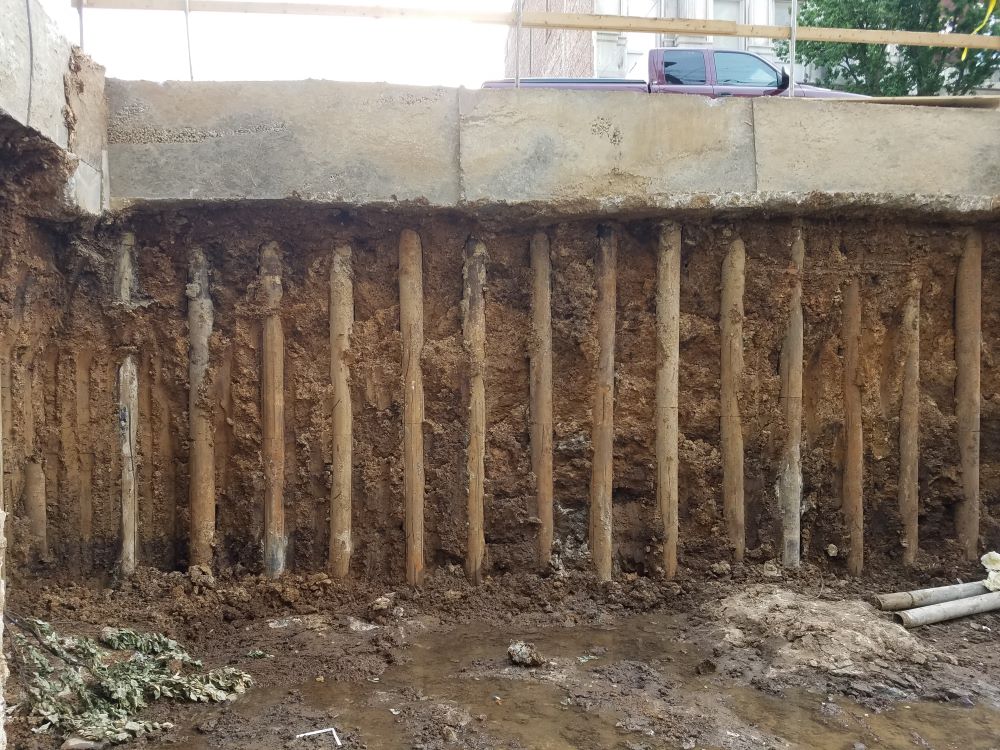
Micropiles installed in excavated trench for foundation work

Piedmont Clays Vary—Treatment Must Match

Unlike uniform marine clay deposits, Georgia's Piedmont clays vary from site to site based on parent rock type. GSI's treatment reflects this variability:

  • Parent rock-specific dosage. Clay derived from granite responds to lime differently than clay from mica schist. GSI tests each site individually.
  • Humid-climate active zone design. Georgia's moisture regime keeps Piedmont clays closer to saturation than western states—active zones are shallower but more frequently active.
  • Development-triggered activation. GSI understands how grading, paving, and drainage changes activate previously stable Piedmont soils.

View Project Gallery

Client Reviews

Emergency Landslide Repair in Wyoming

In 2017, another well above normal snowpack winter and heavy spring rains resulted in 23 new landslides, which damaged or threatened WYDOT roads. WYDOT turned to GSI to help respond to these emergency situations. GSI was able to respond very quickly and in most cases had personnel on site to assess the site within 24 hours. They would provide a proposal for remediation with a preliminary design and estimated costs within 48 hours in most cases. During 2017, GSI was selected to perform remediation with contracts at six separate sites. In all cases, they were prepared to mobilize to the sites and begin work within a week of being given notice to proceed.

A unique element of these emergency contracts was a partnership, between WYDOT and GSI, by which WYDOT provided some logistical support such as traffic control and providing water for drilling operations so that GSI could focus its efforts on performing the specialty work. This arrangement resulted in cost effective, efficient, successful projects. When responding to emergency landslide repair, time truly is money, the sooner a landslide can be remediated before it has a chance to grow, the less expensive it is to repair. In the past, WYDOT has experienced situations in which, landslides could possibly have been remediated quicker, experienced further failure during drawn out conventional design and contracting methods resulting in higher costs due to the additional failure. GSI uses various types of innovative geo-technology in their landslide remediation projects….

All of these projects were completed on schedule, even with cold weather conditions and snow storms ….

All of the stabilization projects that GSI completed for WYDOT included a warranty to repair any of the remediation that would happen to fail, but to date none of the work that they have performed has required any repair. I would highly recommend GeoStabilization International to perform emergency landslide and slope remediation work. They have the resources, personnel, and expertise to respond to your emergency in a timely, professional manner.

Geohazard Stabilization for Railway Infrastructure

GSI was very professional and easy to work with throughout the whole process. They communicated well and were accommodating to our production needs, while allowing us to work with them to help them accomplish what they needed to get done as well. Dan, Amanda, Zech, Craig, and Justin were all great. It was actually pretty refreshing to be able to work with a group that was so easy deal with, especially for a contractor coming in from out of town. They all seemed to have Midwestern values and work ethic. If you have any questions whatsoever, I would be more than happy to discuss. Based on our experience, I would confidently and quickly recommend GSI to anyone needing similar geo stabilization.

Rock Scaling for Mining Operations in Georgia

Mr. Aguirre, I want to personally thank you for all the effort you and your crew on site at [the quarry] did for me. You were very accommodating. Special point needs to be given to GSI's safety program and its employees for following them strictly. I would honestly say that your organization is one of the top in safety that I have seen in every rope access industry. Please give a couple extra kudos to Fred and Courtney for putting up with me and observing me in order to keep me out of harm’s way. There is no doubt I slowed down their progress. I wish I could remember the whole crews name for they all deserve praise for the jobs that they do. After only two half days of peeling rock, my back is killing me from pushing that bar around. This is a really hard and dirty job (not to copy Rowe) and its workers deserve the utmost respect from the rope access community. I seriously believe you have one of the nastiest. Right up there with the oil industry. This time spent observing and hands on gave me a plethora of information and understanding. I, of course need to see a few other aspects of your industry, not limited to, but to include: drilling (especially horizontally), rigging and lifting (cranes, helicopters, etc.), explosives, and installations of the final products. I hope that with your efforts and others in your industry we can accomplish this soon. In conclusion, thank you again for all your hard work.

Stabilize Georgia's Piedmont Clays

Development-triggered swell damage compounds every season. GSI's chemical treatment permanently modifies the Piedmont clay mineralogy at your Georgia site.
Call (855) 579-0536

    How Can We Help?

    • Personal Info
    • Contact Info
    • Project Info
    ***Fees May Apply For Residential Site Visits***

    How Can We Help?

    • Personal Info
    • Contact Info
    • Project Info

    How Can We Help?

    • Personal Info
    • Contact Info
    • Project Info

    By using this website, you acknowledge and agree to our Privacy Policy. This site is protected by reCAPTCHA, and the Google Privacy Policy and Terms of Service apply.