
Karst Subsidence Repair in Indiana

Karst Subsidence Repair in Indiana

Permeation and compaction grouting for progressive karst subsidence across Indiana's Mitchell Plain — arresting dissolution-driven settlement before it becomes collapse.

Request Subsidence Assessment
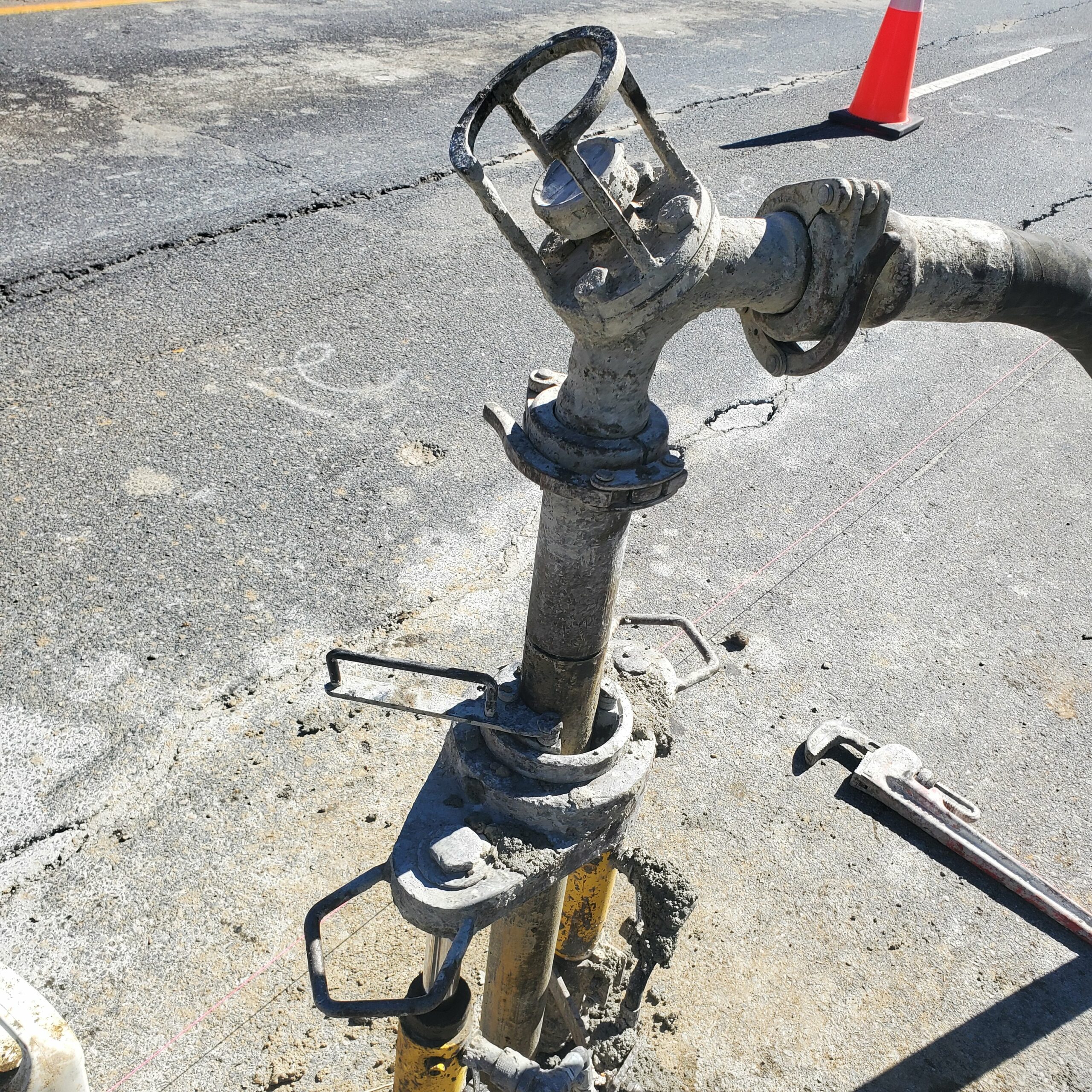
Close-up of permeation grouting equipment and operation

Indiana's Ground Is Shifting Beneath the Surface

Indiana's Mitchell Plain is one of the most extensively documented karst engineering challenges in the Midwest. The plateau's Mississippian-age limestones — including the Salem, St. Louis, Ste. Genevieve, and Paoli formations of the Sanders and Blue River Groups — are exceptionally pure carbonate, roughly 500 feet thick in places, and highly susceptible to dissolution by the weak carbonic acid produced as rainwater percolates through soil. The Mitchell Plain was largely spared by glaciation, which means these limestone formations are exposed or thinly covered — and have been dissolving continuously for hundreds of thousands of years.

The result is a subsurface honeycombed with fractures, solution channels, and caves that INDOT's own engineering guidance identifies as the primary challenge for highway route selection, design, and construction across Lawrence, Orange, and Washington counties. When groundwater flow accelerates during wet periods, the dissolution rate increases, soil particles migrate into growing rock cavities, voids expand upward through the overburden, and infrastructure above settles — gradually at first, then suddenly.

That progression — from invisible dissolution to pavement cracking to approach slab misalignment to collapse — is what makes karst subsidence on Indiana's US-50 corridor and county highway network so difficult to manage reactively. By the time surface damage is obvious, the subsurface condition has already been developing for months.

Geohazard Mitigation in Indiana

Indiana Ground Settling Unexpectedly?

Request Assessment

Experience You Can Count On

View Project Gallery

How GSI Treats Karst Subsidence in Indiana

Permeation Grouting to Seal Dissolution Pathways

The Salem Limestone's massive-bedded, infrequent fracture character creates singular master conduits that channel groundwater through the Mitchell Plain's karst system. These conduits are where dissolution is most active and where treatment must begin. GeoStabilization International injects low-viscosity chemical grouts into limestone fractures and solution channels, sealing the pathways that carry aggressive groundwater through the rock mass before it can enlarge them further.

Indiana's Mitchell Plain presents a specific challenge here: groundwater flow in the shallow karst aquifers is directly and rapidly linked to rainfall events. Treatment that only addresses visible voids without sealing the fracture network feeding them will see those voids reactivate when the next wet season arrives.

  • Microfine cement grout for fractures too small for standard portland cement
  • Sodium silicate gel treatment for active water-bearing solution channels
  • Injection pressure monitoring to control grout spread and prevent surface breakout
  • Post-treatment dye tracing to verify dissolution pathway closure — a method documented in INDOT's karst investigation protocols for confirming flow pattern changes

Compaction Grouting to Densify Overburden

Indiana's Mitchell Plain has a distinctive overburden: terra rosa, the clayey residual soil produced by centuries of limestone dissolution. When voids develop in the Salem Limestone below, terra rosa particles migrate downward into the rock cavities — the soil arch weakens, bearing capacity drops, and surface settlement follows. When the water table fluctuates rapidly — rising or falling with seasonal rainfall — the effective stress on the soil arch changes, accelerating the process.

Compaction grouting addresses this overburden condition directly. Stiff grout columns displace and densify the disturbed terra rosa zone, restoring bearing capacity from the bedrock interface upward through the soil column.

  • Staged injection from bedrock interface upward through the terra rosa profile
  • Volume-controlled placement to achieve target density without surface heave
  • Grid spacing optimized based on void geometry and overburden thickness confirmed by site investigation
  • Settlement monitoring arrays document arrest of ground movement through seasonal groundwater cycles

Long-Term Monitoring for Progressive Conditions

The shallow karst aquifers of the Mitchell Plain are directly and rapidly recharged by rainfall — meaning groundwater levels, dissolution rates, and subsidence risk all fluctuate seasonally. Post-treatment monitoring on Indiana corridors needs to track behavior through at least one full wet-dry cycle to confirm that dissolution pathways are sealed and that the treated overburden is stable under the groundwater conditions that drive Mitchell Plain subsidence.

GeoStabilization International installs settlement monitoring systems calibrated to detect the subtle ground movements that precede visible surface damage — providing early warning if seasonal recharge is reactivating untreated zones before damage reaches the pavement.
Indiana Karst Subsidence Treatment Process

GSI's five-step approach addresses both the dissolution cause and the settlement effect through staged engineering and verified treatment.

Step 1

Settlement Assessment

GSI engineers evaluate damage patterns, review geologic maps, and determine whether karst dissolution is driving the observed settlement.

Step 2

Dissolution Mapping

Geophysical surveys and targeted borings characterize the fracture network, void development, and overburden conditions beneath the subsiding area.

Step 3

Dual-Stage Treatment Design

Engineers design permeation grouting for fracture sealing followed by compaction grouting for overburden densification—each stage specified independently.

Step 4

Staged Injection Execution

Crews execute permeation grouting first to seal dissolution, then compaction grouting to densify—each stage monitored independently for quality control.

Verified Treatment

Post-treatment geophysics and settlement monitoring confirm dissolution arrest and ground stabilization. Ongoing monitoring detects any reactivation early.

Verified Treatment

Post-treatment geophysics and settlement monitoring confirm dissolution arrest and ground stabilization. Ongoing monitoring detects any reactivation early.

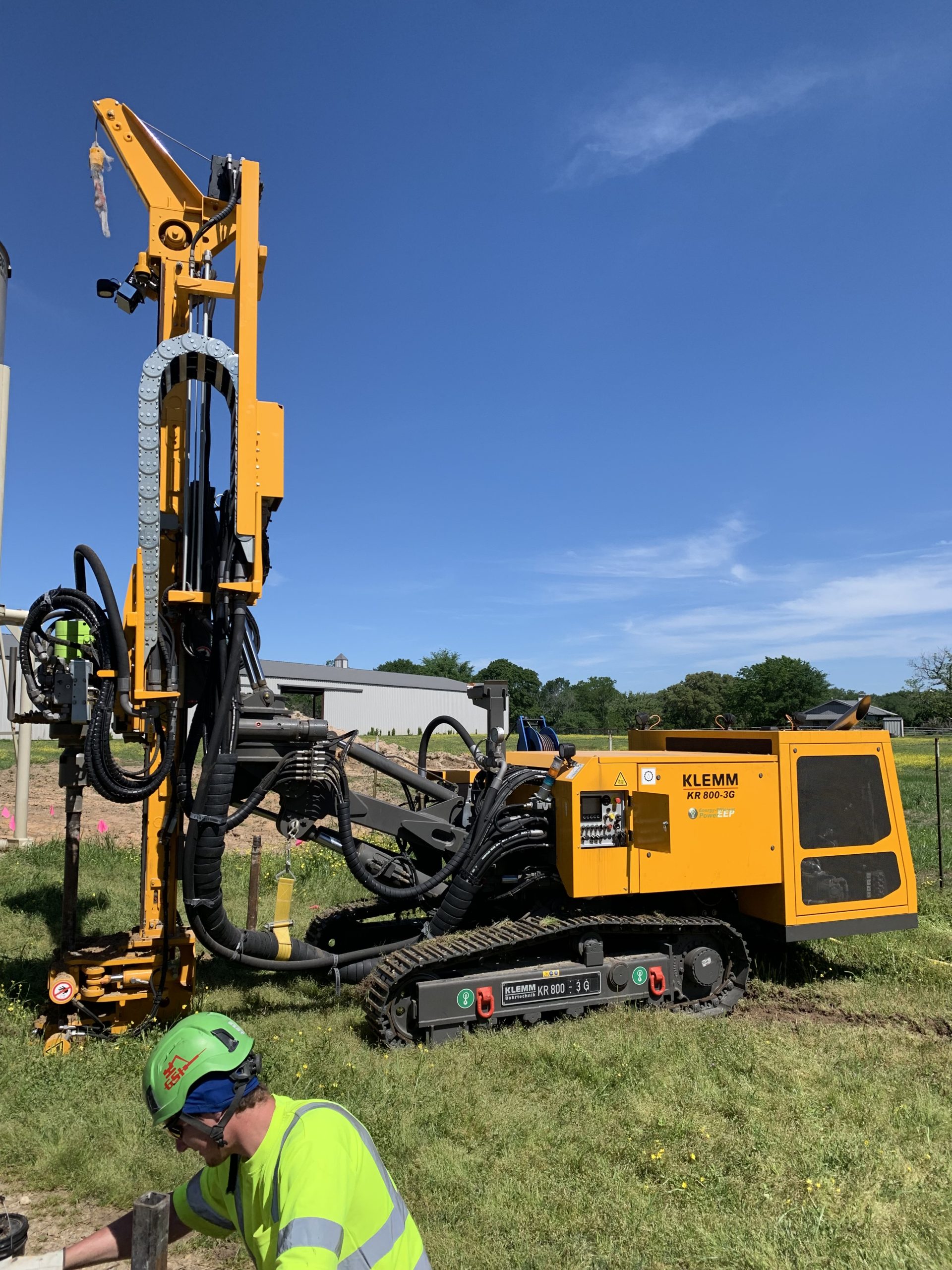
Compaction grouting on farm with sunken ground settlement

Not All Karst Problems Are the Same

On Indiana's Mitchell Plain, both mechanisms can occur on the same corridor — progressive subsidence where overburden is gradually migrating into fractures, and sudden collapse where a soil arch spanning a larger cavity fails. Treating one without correctly diagnosing the other produces incomplete results. GeoStabilization International's karst specialists design programs matched to the actual mechanism at your site:

  • Dual-stage methodology specific to Indiana's geology. Sealing Salem Limestone dissolution pathways before densifying the terra rosa overburden — treating cause and effect in sequence, not simultaneously.
  • Geophysical-guided targeting. Treatment zones identified through GPR and resistivity data calibrated to the Mitchell Plain's fracture patterns, not assumptions about where voids might be.
  • Seasonal monitoring. Indiana's shallow karst aquifers recharge rapidly and directly from rainfall. Monitoring systems track behavior through wet-dry cycles to confirm treatment durability under the conditions that drive Mitchell Plain subsidence.
  • INDOT compliance built in. Treatment programs designed from the start to satisfy INDOT's karst investigation documentation requirements and licensed professional geologist pre-qualification standards.

View Project Gallery

Client Reviews

Foundation Grouting and Structural Repair for Homeowner

I wanted to drop you a quick note. Late last year I had Tom Szynakiewicz come by and advise me as to what I needed to do to fix my house structure. Tom and GSI were great to work with to find a solution for my structure issues. GSI did an excellent job for us and got us on the right track with the work that was performed. We just sold the home last week, and disclosed the work that was done. We had zero issues with selling the home because it was fixed by GSI. I am very thankful I called and got you guys involved! Thanks again for steering me in the right direction Wayne!

Geohazard Stabilization for Railway Infrastructure

GSI was very professional and easy to work with throughout the whole process. They communicated well and were accommodating to our production needs, while allowing us to work with them to help them accomplish what they needed to get done as well. Dan, Amanda, Zech, Craig, and Justin were all great. It was actually pretty refreshing to be able to work with a group that was so easy deal with, especially for a contractor coming in from out of town. They all seemed to have Midwestern values and work ethic. If you have any questions whatsoever, I would be more than happy to discuss. Based on our experience, I would confidently and quickly recommend GSI to anyone needing similar geo stabilization.

Emergency Safety Response for Mining Operations

On our weekly project update call at the mine, our meetings begin with a ‘safety share’. It’s usually filled with personal observations, mine traffic pattern changes to be conscientious of, or in this week’s meeting, a good catch by GSI’s Courtney Smith. There is a protocol to alert mine personnel working in the pit of any hazardous conditions, which includes highwall instabilities or severe weather approaching. Early hazard detection is critical at the mine as it is over 2.5 miles wide by almost a 1 mile deep. If warranted, the crews will need ample time to evacuate. With all the systems, risk controls and procedures in place to protect over 300 people working there, an onsite contractor (GSI) picked up on the lightning / weather quickly approaching and evacuated the slope. He then proceeded to advise mine dispatch of the situation, who in turn advised relevant mine crews (such as the drill & blast crew) that need to evacuate in the event of lightning. Courtney and crew should be commended on their proactive effort to let mine personnel know and not assume someone else was watching. The mine recognized this action and we should also take note of this courageous leadership to advise a mine with so many intimidating procedures in place to take action.

Stop Indiana Karst Subsidence Before Collapse

Progressive settlement in Indiana's Mitchell Plain limestone today becomes sinkhole collapse tomorrow. GeoStabilization International's karst specialists design treatment programs built for the Salem and Ste. Genevieve formations — addressing the dissolution driving your subsidence before it reaches the surface. Request a subsidence assessment to get started.

Call (855) 579-0536

    How Can We Help?

    • Personal Info
    • Contact Info
    • Project Info
    ***Fees May Apply For Residential Site Visits***

    How Can We Help?

    • Personal Info
    • Contact Info
    • Project Info

    How Can We Help?

    • Personal Info
    • Contact Info
    • Project Info

    By using this website, you acknowledge and agree to our Privacy Policy. This site is protected by reCAPTCHA, and the Google Privacy Policy and Terms of Service apply.