Alabama ranks among the most sinkhole-affected states in the country, and the geology driving that problem is concentrated in the north. Much of northern Alabama — including Limestone County, the Huntsville plain, Morgan County, and the Cahaba Valley corridor — is underlain by carbonate rock formations, primarily limestone, that dissolve gradually under groundwater flow. As those underground voids grow, the soil and overburden above loses support, and subsidence or sudden collapse follows.
GeoStabilization International delivers permeation grouting, compaction grouting, and engineered void filling across Alabama's most at-risk corridors — backed by in-house geotechnical engineers who investigate the subsurface, design the treatment, and manage the field work under a single contract.
ALDOT and Alabama's infrastructure owners choose GeoStabilization International because integrated engineering and construction eliminates the accountability gaps and schedule delays that multi-contract procurement creates.
Alabama's karst conditions don't follow a predictable pattern. Void locations, dissolution rates, overburden depth, and groundwater behavior vary significantly from one corridor to the next — and subsidence can occur gradually or catastrophically, with little surface warning. Standard contractors working from general parameters are not equipped to assess or treat those conditions reliably. GeoStabilization International's engineers and geologists conduct instrument-verified subsurface investigations before any design decision is made. For Alabama's carbonate formations, that means dissolution mapping and borehole-sourced data calibrated to the actual site — not assumptions borrowed from unrelated geology.
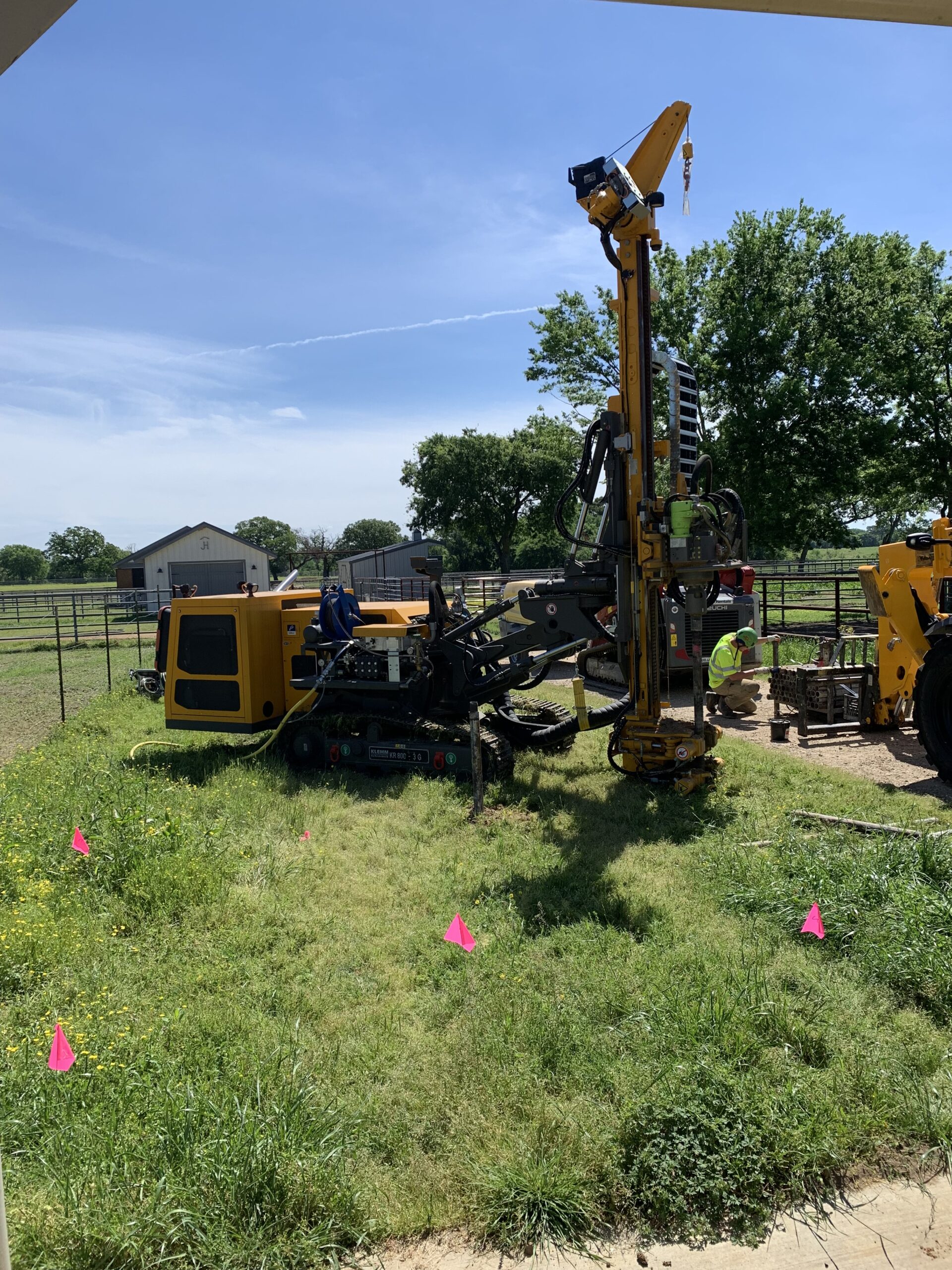
Roads, bridges, and utilities built over karst terrain in Alabama face ongoing risk as dissolution continues beneath them. Voids that develop under pavements or embankments can collapse suddenly, making detection and treatment before failure the most effective protective strategy. GeoStabilization International's compaction grouting and void filling programs are designed specifically for active infrastructure environments — using low-vibration methods and compact equipment that allow work to proceed with minimal disruption to operations.
ALDOT corridors and Alabama infrastructure operators benefit from GeoStabilization International's unified delivery model. The engineers who characterize your subsurface conditions remain engaged through field execution. When drilling reveals void extents or overburden conditions that differ from initial assessment — which karst terrain regularly produces — our team adapts the treatment program in real time. No change orders waiting on a separate designer. No lost time between engineering decisions and field response.

GeoStabilization International's engineers don't design from a desk. They investigate the site directly — evaluating void locations, measuring groundwater behavior, and testing overburden conditions — then build a treatment plan grounded in what they personally observed. That field-connected engineering is what separates a solution that performs from one that simply gets installed.
Subsurface voids in Alabama's limestone terrain continue to develop whether or not they've surfaced yet — and deferred treatment increases both risk and cost. GeoStabilization International's engineers are ready to assess your site, map the problem, and deliver an engineered repair backed by a performance warranty. Request an assessment to get started.