Coastal Erosion Control in Michigan

Coastal Erosion Control in Michigan

Engineered coastal erosion control across Michigan — Lake Michigan bluffs from South Haven to Sleeping Bear Dunes, Lake Superior shoreline, Lake Erie corridor. Revetment systems, bluff stabilization, and design-build delivery for MDOT corridors and Great Lakes infrastructure.

Request Coastal Assessment
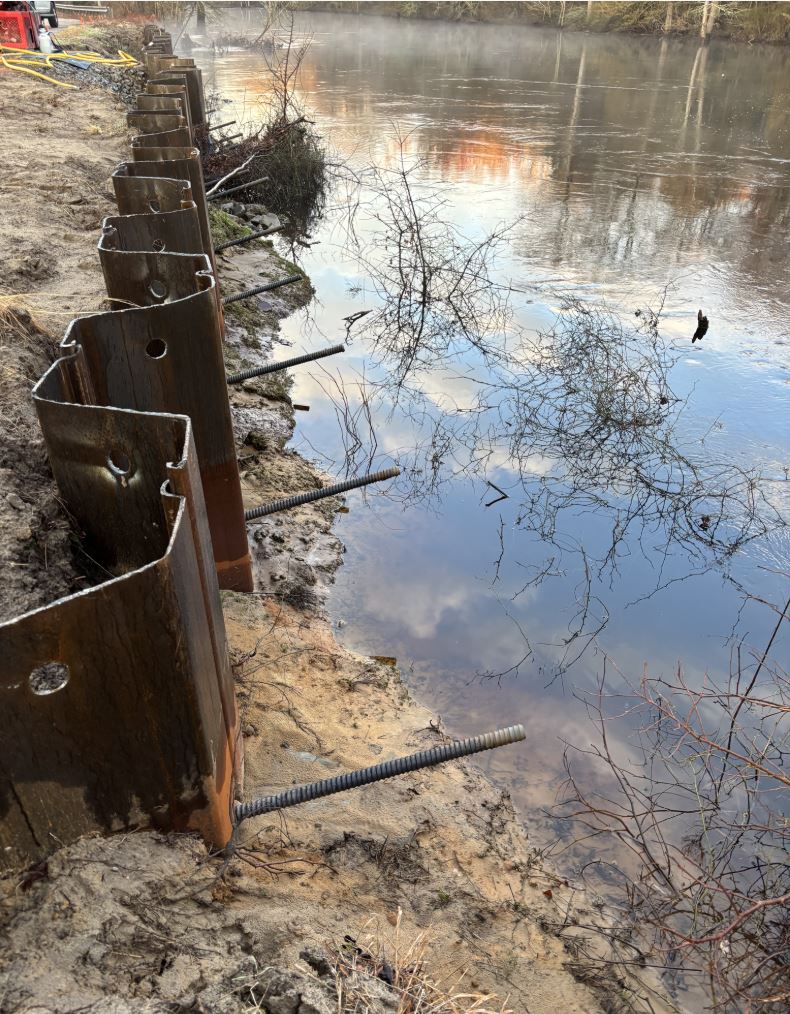
Sheet piles and soil nails stabilizing river scour embankment, Route 619

Coastal Erosion in Michigan

Michigan's Great Lakes shoreline is one of the most erosion-active coastlines in North America — and the past decade made that clear. From 2013 to 2020, Lake Michigan water levels rose dramatically, reaching record highs in 2020 and driving widespread bluff failure, beach loss, and infrastructure damage along the eastern shore. In South Haven, consultants identified over $16 million in needed infrastructure repairs. In St. Joseph and Berrien County, beaches and coastal roads disappeared. MDOT tracked more than 40 sites compromised by erosion during that period.

Michigan's Lake Michigan bluffs are composed largely of glacial till and clay deposited by the Laurentide Ice Sheet — materials that erode rapidly under sustained wave attack and destabilize from freeze-thaw cycling and groundwater movement within the bluff face. When lake levels rise and the protective beach buffer narrows, wave energy reaches the bluff toe directly, accelerating retreat.

GeoStabilization International engineers revetment systems, bluff stabilization, and bioengineered slope protection across Michigan's most vulnerable corridors — with in-house geotechnical engineers who design the solution and field crews who build it under a single MDOT-ready contract.

Geohazard Mitigation in Michigan

Michigan Coastline Retreating?

Protect Coastline

Experience You Can Count On

View Project Gallery

Coastal Erosion Control Across Michigan

Michigan's erosion conditions aren't uniform along the lakeshore. Bluff height, glacial till composition, groundwater drainage patterns, wave exposure, and proximity to infrastructure all vary significantly between the Sleeping Bear corridor in Leelanau County, the Allegan and Berrien County shorelines, and Lake Superior's Upper Peninsula coast. A protection approach that performs well in one setting can underperform in another without site-specific investigation. GeoStabilization International's engineers and geologists assess formation-level conditions at each site before any design decision is made — using survey-confirmed data on bluff geometry, soil stratigraphy, drainage behavior, and wave energy to determine the appropriate protection system for your specific corridor.

Bluff Retreat Rate Assessment

Quantifying how fast a bluff is retreating — and what's driving that retreat — is the foundation of any durable protection design. GeoStabilization International uses UAV surveys, historical aerial comparison, and field investigation to establish site-specific retreat rates and identify the primary failure mechanisms, whether bluff toe erosion from wave attack, internal drainage and slumping, or freeze-thaw deterioration of the bluff face. That assessment directly informs revetment sizing, armor placement, and drainage design.

Great Lakes Ice Scour and Erosion Patterns

Michigan's coastal erosion season doesn't end when summer does. Freeze-thaw cycling weakens glacial till in bluff faces through winter and early spring. Ice scour along the shoreline can displace protection materials and expose previously stabilized bluff toes. And when significant ice cover fails to develop — as occurred during the high-water years — wave energy reaches the bluff throughout winter with no seasonal buffer. GeoStabilization International's engineers account for Great Lakes-specific seasonal loading in every protection system design. MDOT and Michigan's infrastructure asset owners benefit from GeoStabilization International's integrated engineering and construction model. The engineers who characterized your bluff conditions and designed the protection system stay connected to the crews building it. When unexpected stratigraphy or drainage conditions appear during construction — which Michigan's glacially deposited bluffs regularly produce — the team adapts without losing project momentum.
Michigan Coastal Erosion Control Process

GeoStabilization International delivers Michigan coastal erosion control solutions through a proven five-step process—from first contact through warranted completion.

Step 1

Coastal Assessment

Contact (855) 579-0536. Our Michigan team evaluates conditions and mobilizes specialized resources for your coastal erosion control challenge.

Step 2

Wave Modeling

In-house engineers and geologists conduct thorough investigation of formation-level conditions across your Michigan project area.

Step 3

Protection Design

Custom revetment systems program engineered by the engineers who will construct the field work—under one MDOT-ready contract.

Step 4

Shoreline Construction

Specialized crews deploy purpose-built equipment across Michigan's Lake Michigan bluffs (Sleeping Bear Dunes corridor—delivering the engineered solution at accelerated speed.

Warranty

Complete documentation meeting MDOT specifications, with full performance warranty coverage on every installed element.

Warranty

Complete documentation meeting MDOT specifications, with full performance warranty coverage on every installed element.

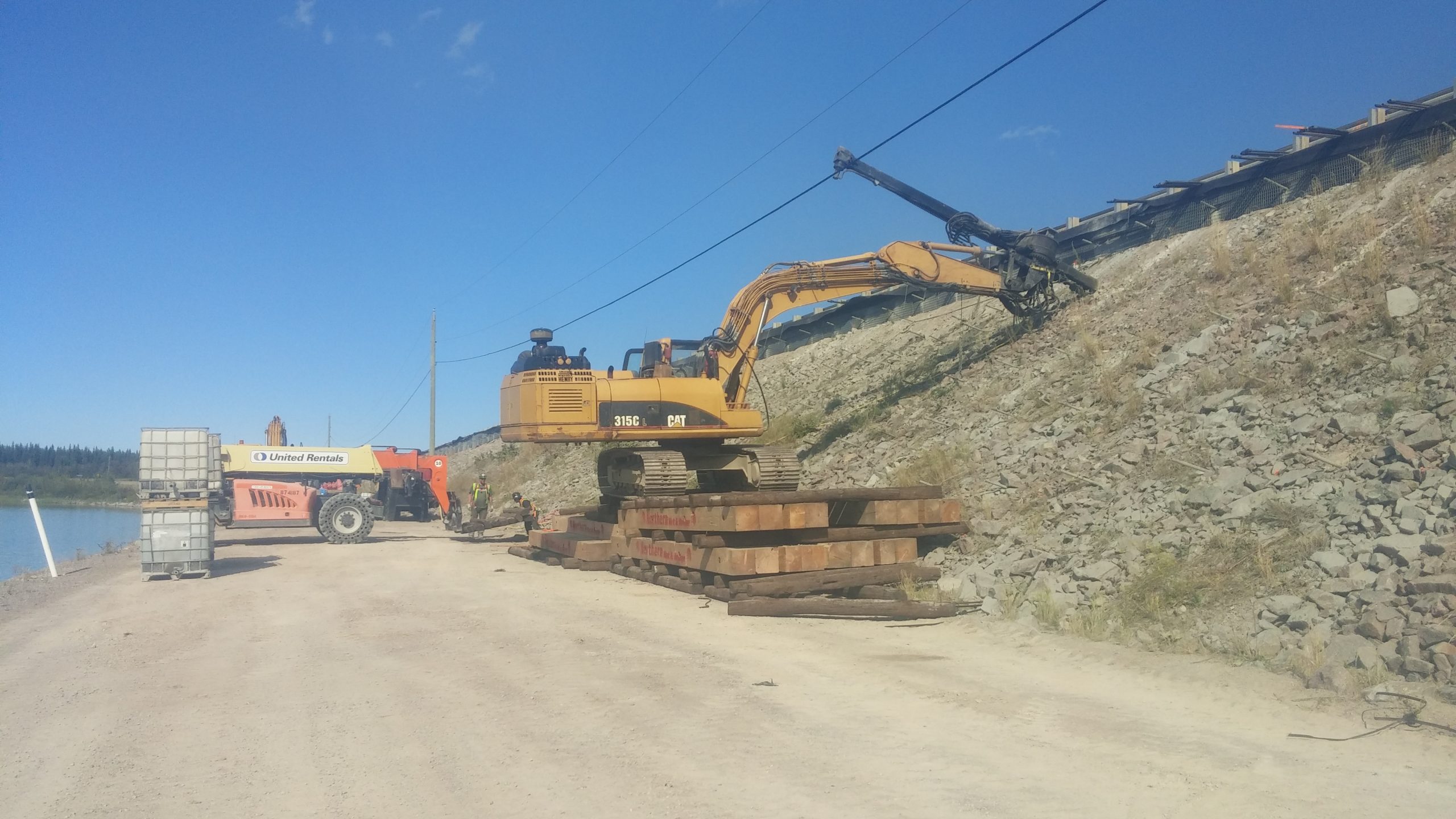
Soil nail installation for coastal stabilization

Lowest Lifecycle Cost, Not the Cheapest Bid

A protection system that fails after the first high-water season costs far more than one engineered for Michigan's actual conditions. GeoStabilization International designs for the root cause of bluff retreat — not just the visible damage — so the fix holds through the next cycle of high lake levels.

Explore Our Solutions

Client Reviews

Erosion Control for Water Infrastructure in Minnesota

I am sending this to you from Duluth Minnesota where 4 of your employees just finished working on a wall they had put in for us previously. That was a few years ago after Duluth suffered a flood. We are on Lake Superior and St. Louis County wanted to help stop erosion. The guys worked during the rain and just kept on going, like little Energizer bunnies. Nice fellows, all of them!! They are certainly a credit to your company and I feel it is always good to give thanks to people for a job well done. Please let them know how much we appreciated their dedication to get the job done. We will always wish you and your team good days ahead!!

Positive Experience Working with Project Team

Justin, I wanted to reach out and let you know that is was a pleasure working with you all at the [….] Project. The guys on this job were very professional and never once wavered from the plans and specs. These guys did absolutely everything the right way and wanted to make sure that the customer was happy with the work. Again, I appreciate your guys’ hard work and professionalism and look forward to working with you again in the future.

Project Support for Water and Power in California

As told by GSI Project Development Engineer: We are currently close to finishing one of five sites proposed for repair to the [local Water and Power Agency]. The agency folks were very impressed with GSI’s professionalism and support during the repair procedures. Our approach to the project, our field crew’s commitment to safely, our expertise in what we do, and our continuous involvement in the project at multiple levels all contributed to their positive feelings about GSI.

Michigan's Shoreline Can't Wait

Lake levels will cycle again — and Michigan's glacial bluffs will face the next period of high water in whatever condition they're in today. GeoStabilization International's engineers are ready to assess your site and deliver a protection system built for Great Lakes conditions. Request a coastal assessment to get started.


Call (855) 579-0536

    How Can We Help?

    • Personal Info
    • Contact Info
    • Project Info
    ***Fees May Apply For Residential Site Visits***

    How Can We Help?

    • Personal Info
    • Contact Info
    • Project Info

    How Can We Help?

    • Personal Info
    • Contact Info
    • Project Info

    By using this website, you acknowledge and agree to our Privacy Policy. This site is protected by reCAPTCHA, and the Google Privacy Policy and Terms of Service apply.