Florida's sinkhole problem is rooted in one of the most productive carbonate aquifer systems on Earth. The Floridan Aquifer — a deep series of Eocene to Oligocene limestone formations including the Ocala Limestone and Avon Park Formation — underlies virtually the entire state. Acidic groundwater has been dissolving these limestones for millions of years, creating an extensive network of underground voids, conduits, and cavities that exist at varying depths beneath Florida's roads, bridges, and developed corridors.
Florida's karst is classified as "covered karst" — the porous limestone is overlain by marine sands and cohesive clays rather than exposed at the surface. That overburden layer is what makes Florida's sinkholes particularly hazardous for infrastructure. Subsidence typically begins when sand or clay slowly ravels downward into voids in the underlying limestone. In west-central Florida's Zone 3 — which includes Tampa, St. Petersburg, and Tallahassee — cohesive, low-permeability soils produce sudden, abrupt cover-collapse sinkholes that can open with little surface warning. Along the I-4 corridor and in the Orlando and Gainesville areas, the head difference between the surficial aquifer and the confined Floridan Aquifer is a documented driver of sinkhole formation.
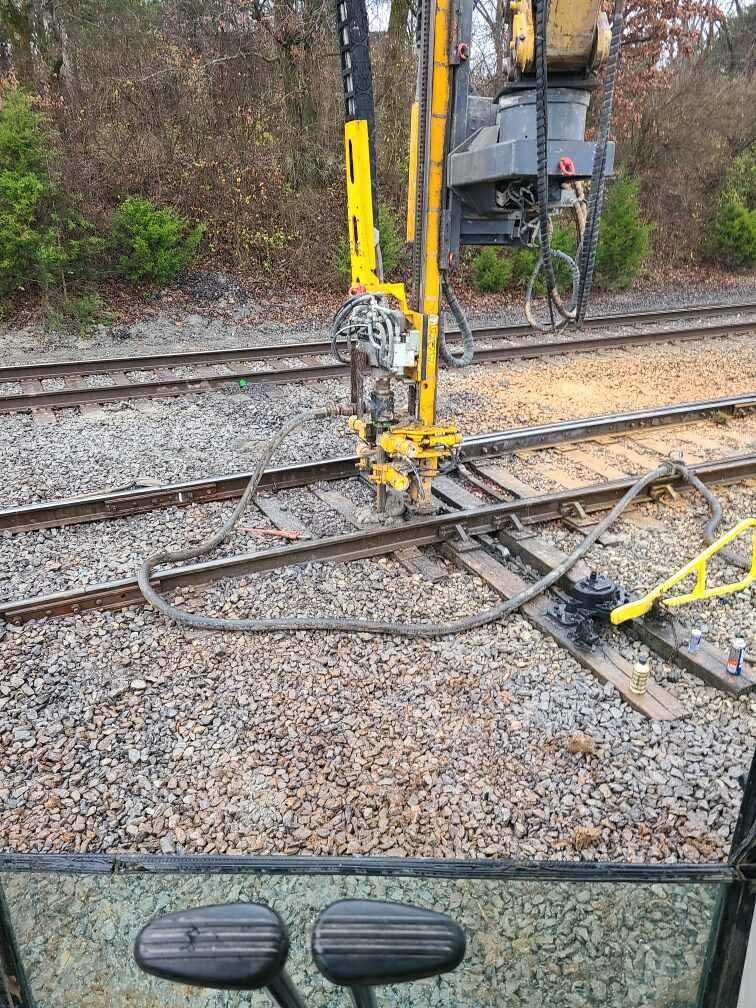
GeoStabilization International delivers permeation grouting, compaction grouting, and void filling programs across Florida's most active corridors — with in-house geotechnical engineers who investigate, design, and manage field execution under a single FDOT-ready contract.
Florida's sinkhole conditions vary significantly across the state's four karst zones. In areas where the Floridan Aquifer limestone is exposed or thinly covered — such as parts of the Miami area and the Ocala region — broad, shallow cover-subsidence sinkholes are typical. In west-central Florida, where cohesive clay overburden spans underlying voids, collapse events can be sudden and catastrophic. Along active transportation corridors, seasonal heavy rainfall, groundwater pumping, and construction activity can all accelerate void development or trigger collapse in areas that appeared stable.
Treatment programs that address only the visible surface expression without characterizing the full extent of subsurface dissolution leave infrastructure at risk of recurrence. GeoStabilization International's engineers and geologists conduct borehole investigation and geophysical surveys before any grouting program is designed — defining void geometry, overburden conditions, and groundwater behavior at your specific site.
Confirming long-term ground stability after grouting is as important as the treatment itself, particularly in Florida's dynamic karst environment where groundwater fluctuations continue after repair. GeoStabilization International's approach includes post-treatment verification protocols — borehole confirmation of void fill, real-time injection monitoring, and documentation aligned with FDOT compliance requirements — ensuring the repair is fully substantiated before closeout.
FDOT and Florida's infrastructure operators benefit from GeoStabilization International's integrated engineering and construction model. The engineers who characterized your site's dissolution conditions and designed the grouting program stay directly connected to the crews executing the injection work. When staged grouting reveals void connectivity or overburden conditions beyond initial findings — a common occurrence in Florida's complex covered karst — our team adjusts the program in the field without breaking project momentum.

Every GeoStabilization International design draws on field performance data built across thousands of completed projects in every geologic setting North America presents. When our engineers specify a grout mix, injection pressure, or treatment pattern for a Florida karst site, that specification is informed by real field outcomes — not textbook assumptions.
Groundwater fluctuations, seasonal rainfall, and ongoing limestone dissolution keep Florida's subsurface in constant change — and infrastructure built over covered karst faces that risk year-round. GeoStabilization International's engineers are ready to investigate your site, map what's happening below, and deliver an engineered repair built for Florida's karst conditions. Request a subsidence assessment to get started.