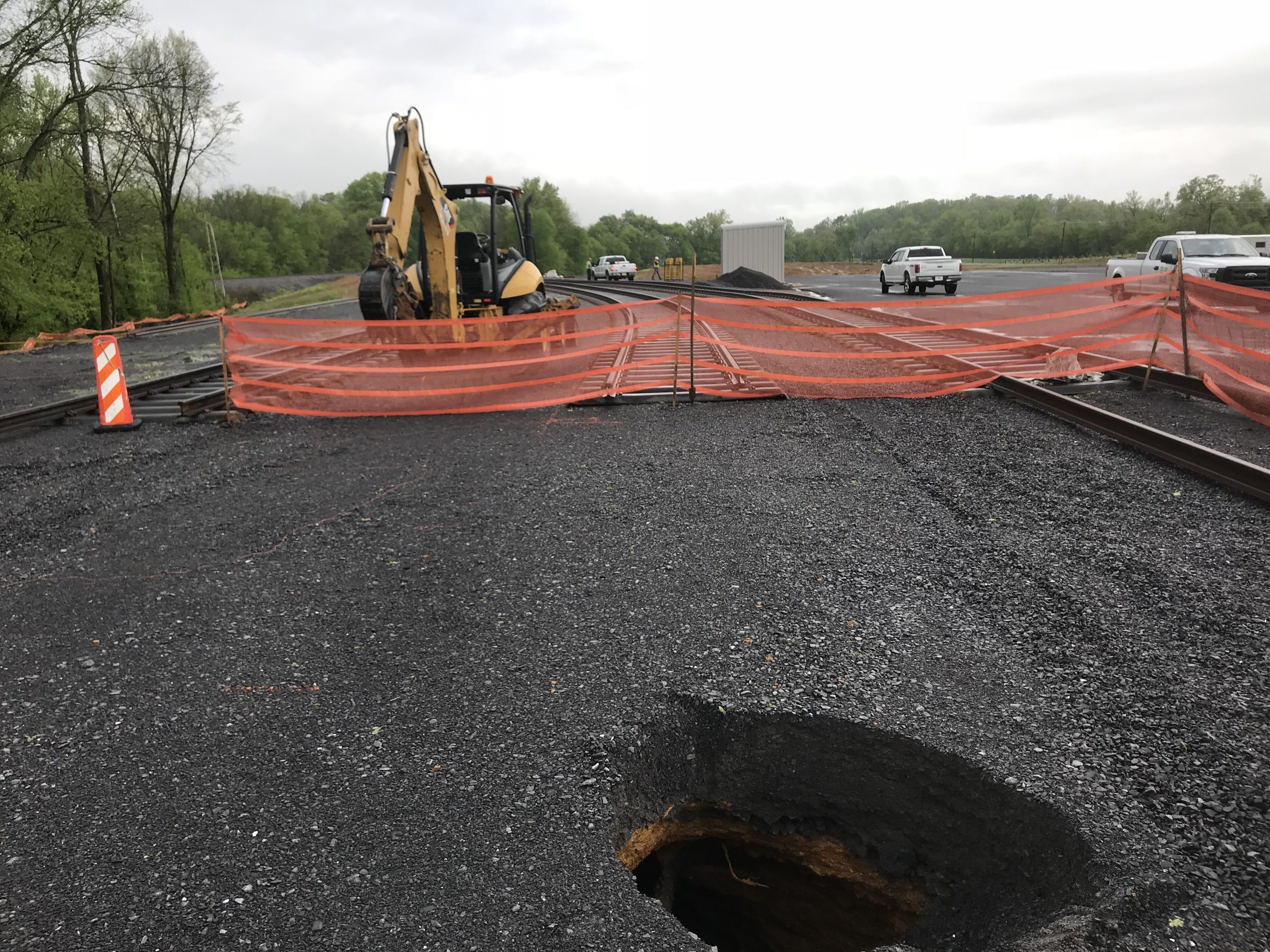
Florida's sinkhole activity is concentrated and well-documented. Hernando, Pasco, and Hillsborough counties — the corridor often called "Sinkhole Alley" — accounted for 66 percent of Florida's sinkhole insurance claims between 2006 and 2010. West-central Florida's Zone 3 geology, where cohesive, low-permeability soils overlie Floridan Aquifer limestone, is particularly prone to cover-collapse sinkholes that open suddenly and with limited surface warning. In February 2026, a roadway collapse in Lake County — estimated at 90 feet wide, 200 feet long, and roughly 50 feet deep — prompted a full road closure and geotechnical investigation.
On Florida's transportation corridors, the consequences of inadequate repair are severe. A sinkhole patched at the surface without treating the underlying limestone void and overburden instability will fail again — often under traffic load or during the next heavy rainfall event. GeoStabilization International installs void filling, compaction grouting, and chemical grouting programs engineered to address what's actually driving the collapse — with in-house geotechnical engineers who investigate, design, and oversee field execution under a single FDOT-ready contract.
Florida's four sinkhole zones require different treatment approaches. In Zone 1 areas — where Floridan Aquifer limestone is exposed or thinly covered, including parts of the Miami, Coral Springs, and Hollywood areas — broad, gradual cover-subsidence sinkholes are typical and respond well to targeted grouting. In Zone 3 — Tampa, St. Petersburg, Tallahassee — cohesive clay overburden spanning subsurface voids can fail suddenly, requiring immediate void characterization and staged compaction grouting to densify the overburden and fill the underlying cavity.
Along the I-4 corridor and through the Orlando and Gainesville areas, the pressure differential between the surficial aquifer and the confined Floridan Aquifer is a documented driver of sinkhole formation — meaning treatment programs need to account for active groundwater conditions, not just the void geometry at the time of investigation. GeoStabilization International's engineers assess those hydrogeological factors alongside void extent and overburden conditions before any grouting program is designed.
Confirming that a Florida sinkhole repair is complete requires more than recording grout volumes placed. GeoStabilization International uses borehole camera systems and real-time injection monitoring to verify void fill during treatment — and post-treatment borehole verification to confirm overburden densification before documentation is submitted to FDOT. That verification standard is what distinguishes a warranted repair from one that reopens.
FDOT and Florida's infrastructure operators rely on GeoStabilization International's integrated engineering and construction delivery. The engineers who characterized your site's karst conditions and designed the grouting program stay directly connected to the crews executing the repair. When staged injection reveals void connectivity or overburden behavior beyond initial findings — a common occurrence in Florida's covered karst — our team adjusts the treatment program in the field without losing project momentum.
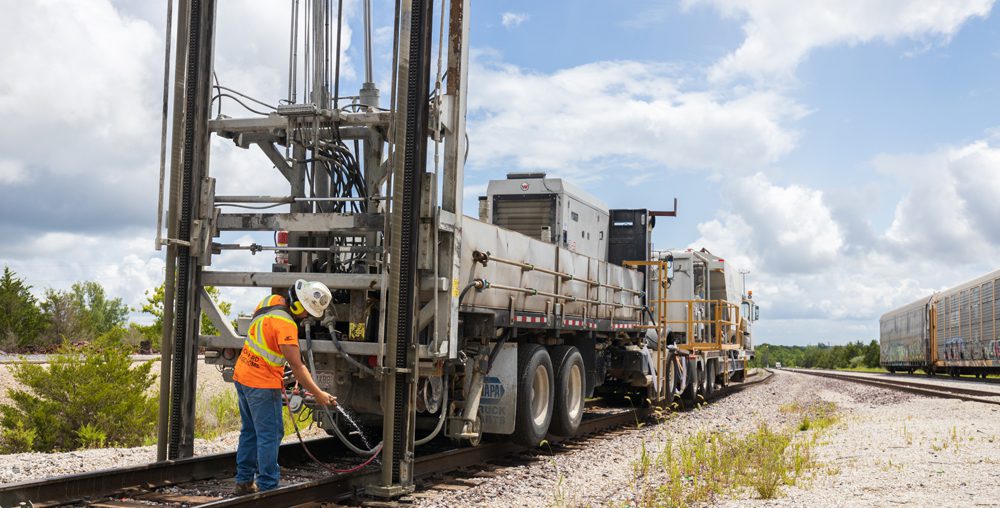
GeoStabilization International's Soil Nail Launcher™ and SPIDER excavator fleet are owned, maintained, and operated in-house — purpose-built for geohazard work that conventional equipment cannot perform. When a Florida sinkhole project requires more than standard methods, our fleet is ready.
Cover-collapse sinkholes in west-central Florida can open in hours — and surface patches without subsurface treatment will fail again. GeoStabilization International is ready to assess your site, characterize what's underground, and deliver an engineered repair built for Florida's karst conditions. Request a sinkhole assessment to get started.