Rockfall Mitigation in Hawaii

Rockfall Mitigation in Hawaii

Engineered rockfall mitigation across Hawaii's most critical corridors — Pali Highway (HI-61), Kamehameha Highway, Honoapiilani Highway, Kauai Kuhio Highway. Rock bolts, attenuator barriers, draped mesh, and design-build delivery for HDOT corridors.

Request Rockfall Assessment
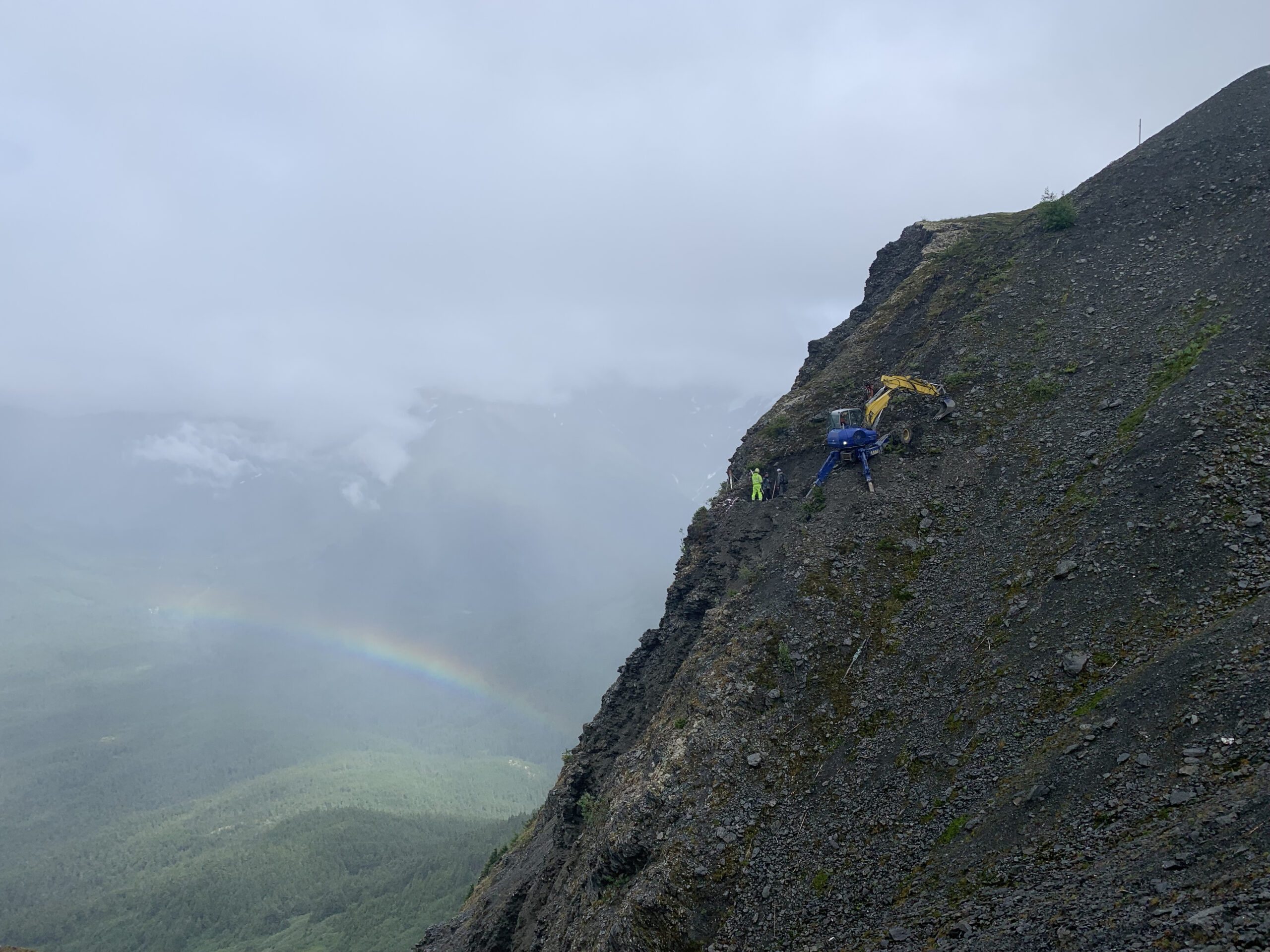
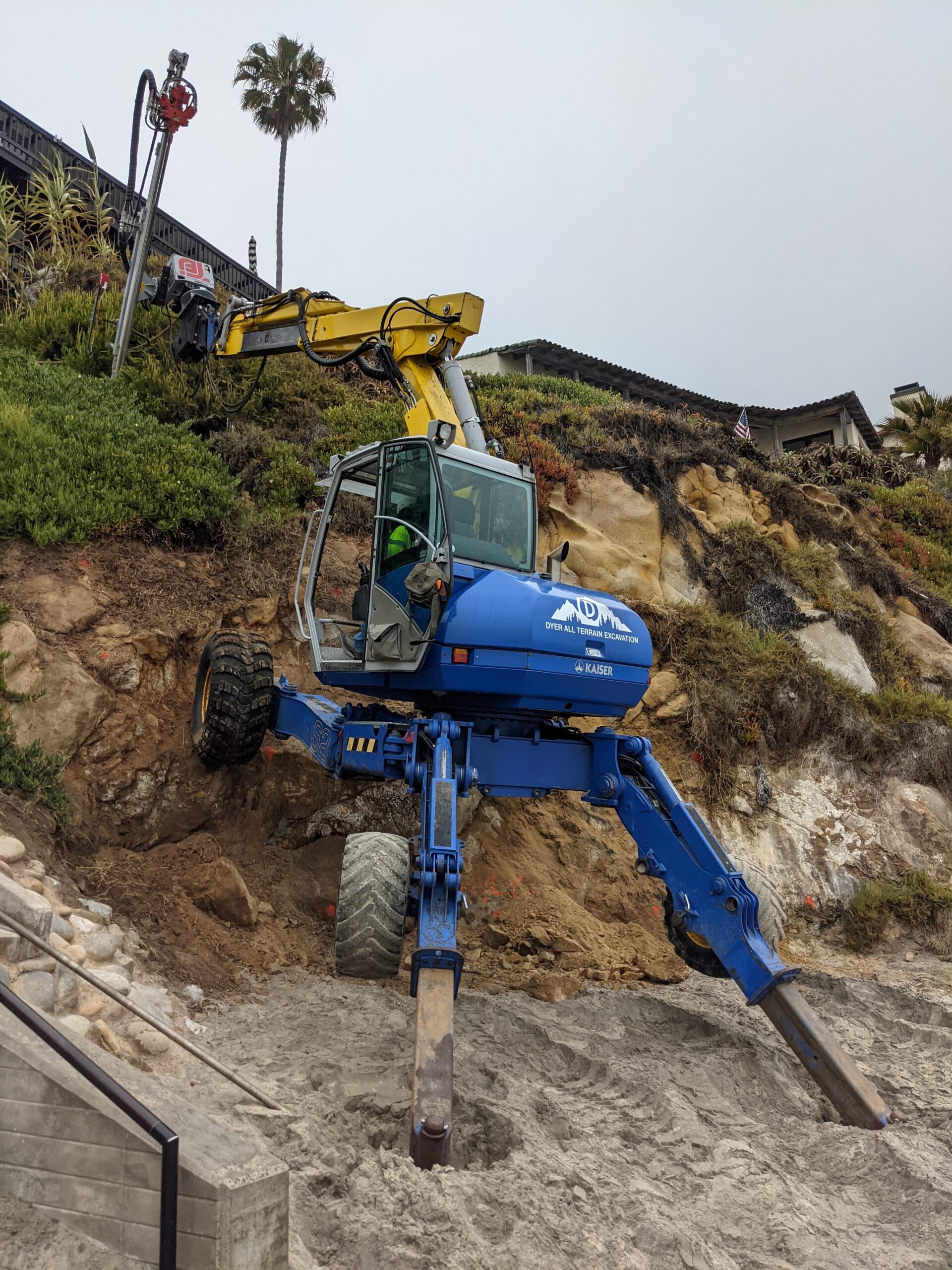
Spider excavator working on steep slope stabilization

Rockfall Mitigation in Hawaii Expertise

Hawaii has approximately 168 miles of state roads exposed to rockfall and landslide risk — and the events on those corridors are documented, recurring, and operationally disruptive. In February 2023, a rockfall closed Kamehameha Highway near Waimea Bay, triggering an emergency traffic zone declaration by HDOT. Rock scaling, debris removal, and barrier installation were required for the immediate response, with a follow-on impact fence installation needed for long-term protection. Two sections of the Pali Highway on Windward Oahu rank 8th and 10th on HDOT's statewide rockfall risk list — and a 2019 rockfall on the Pali required months of repairs to restore the corridor.


The geology driving these events is consistent across Hawaii's highway corridors: thin to medium bedded basalt flows interbedded with loose clinker and scoria layers. As the soft clinker erodes, it removes support from overlying massive basalt beds — allowing cantilevers and overhangs to form and eventually topple. Earthquakes, intense rainfall, and plant root action all accelerate that process. On the Maui Pali Tunnel corridor, HDOT has documented large boulders up to 20 feet long perched above a roadway carrying up to 60,000 vehicles per day.


GeoStabilization International deploys rock bolts, attenuator barriers, draped mesh, and rope access scaling operations across Hawaii's most active rockfall corridors — with in-house geotechnical engineers who design every solution and field crews who execute it under a single HDOT-ready contract.


Geohazard Mitigation in Hawaii

Rockfall on Hawaii Highway?

Report Hazard Now

Mitigation Starts Here

Explore GSI Solutions

Rockfall Mitigation Challenges Across Hawaii

Hawaii's rockfall conditions are not uniform across the state. On Windward Oahu's Pali Highway, the Koolau Range produces large-volume rockfall events driven by cooling joint systems and differential weathering between hard basalt and weak interbedded layers. On Kamehameha Highway's North Shore section, slopes above the road shed material during and after rainfall events, with HDOT maintaining impact barriers at multiple locations as a first line of defense. On Maui's Honoapiilani Highway and Hana Highway, steep volcanic cliffs above coastal road segments generate ongoing rockfall hazards that require active monitoring and staged mitigation.

Each corridor's failure mechanics differ — block size, trajectory angle, runout distance, and impact energy all depend on the specific rock mass structure at that site. GeoStabilization International's engineers and geologists assess those variables directly in the field before any protection system is specified, ensuring barrier energy ratings, bolt patterns, and mesh configurations match the actual hazard at your corridor.

How GSI Addresses Hawaii Rockfall

Our engineering team analyzes site-specific geology, discontinuity patterns, weathering profiles, and failure mechanisms before designing any protection system. For Hawaii's volcanic rock corridors, that means 3D trajectory modeling informed by field-measured rock mass data — not generic trajectory assumptions from mainland formations. The result is a protection system sized for what's actually above your road.

Emergency Response Capability

When a rockfall event closes a Hawaiian highway, GeoStabilization International maintains 24-hour emergency mobilization with pre-staged equipment and on-call crews. One call activates an integrated response — engineering assessment, solution design, and field execution under one contract — compressing the timeline from emergency call to active mitigation that traditional procurement cannot match.
Hawaii Rockfall Protection Process

GeoStabilization International delivers rockfall mitigation across Hawaii's corridors through an integrated five-step process.

Step 1

Rock Mass Assessment

Geologists evaluate formation characteristics, discontinuity patterns, and weathering profiles along Hawaii's highway corridors.

Step 2

Trajectory Simulation

3D rockfall models calculate block trajectories, bounce heights, and impact energies driving protection system specification.

Step 3

System Design

In-house engineers specify bolt patterns, mesh systems, or barrier configurations matched to site-specific rock mass demands.

Step 4

Rope Access Installation

RRTs and specialized equipment install protection directly on rock faces—highways remain open during construction.

Warranty

Complete as-built records, anchor testing documentation, and warranty coverage delivered to HDOT project specifications.

Warranty

Complete as-built records, anchor testing documentation, and warranty coverage delivered to HDOT project specifications.

Spider excavator working on steep rocky slope stabilization

Why Hawaii Chooses GSI

Hawaii's infrastructure operators need a contractor that owns the technology, employs the engineers, and warranties the performance — not one who subcontracts the engineering and rents the equipment. GeoStabilization International's in-house engineering team, purpose-built equipment fleet, and SPRAT/IRATA-certified rope access program deliver rockfall mitigation solutions that compress timelines and eliminate the coordination gaps that inflate costs on traditional procurement.

Explore Our Solutions

Client Reviews

Rockfall Mitigation in Virginia

I wish I had been smart enough to let you design the rock mitigation. You and your team turned in an excellent performance. The work ethic of your team impressed everyone on our side of the table. Most companies print a slogan on their company clothing. However, your folks demonstrated every hour that they “Work Hard or Go Home”. You sent us a world class construction team – thanks!

Rockfall Mitigation and Removal in Wyoming

Richard, I wanted to take a quick minute and thank you and Courtney and the awesome crew that you sent here to take care of our huge rock. Courtney, John, and Andrew are some of the hardest working people I have had the privilege to be around. Their attention to safety professionalism, and never quit attitude was amazing to watch. Even when things did not go our way they were committed to finishing the job. I appreciate you sending these great guys to help us out and look forward to the opportunity to work with you again in the future.

Rock Scaling for Mining Operations in Georgia

Mr. Aguirre, I want to personally thank you for all the effort you and your crew on site at [the quarry] did for me. You were very accommodating. Special point needs to be given to GSI's safety program and its employees for following them strictly. I would honestly say that your organization is one of the top in safety that I have seen in every rope access industry. Please give a couple extra kudos to Fred and Courtney for putting up with me and observing me in order to keep me out of harm’s way. There is no doubt I slowed down their progress. I wish I could remember the whole crews name for they all deserve praise for the jobs that they do. After only two half days of peeling rock, my back is killing me from pushing that bar around. This is a really hard and dirty job (not to copy Rowe) and its workers deserve the utmost respect from the rope access community. I seriously believe you have one of the nastiest. Right up there with the oil industry. This time spent observing and hands on gave me a plethora of information and understanding. I, of course need to see a few other aspects of your industry, not limited to, but to include: drilling (especially horizontally), rigging and lifting (cranes, helicopters, etc.), explosives, and installations of the final products. I hope that with your efforts and others in your industry we can accomplish this soon. In conclusion, thank you again for all your hard work.

Rock Doesn't Wait for a Schedule

Hawaii's volcanic corridors shed material after every major rainfall event — and HDOT's statewide rockfall rankings show the risk is well understood and persistent. GeoStabilization International's engineers are ready to assess your site, model the hazard, and deliver a protection system built for Hawaii's geology. Request a rockfall assessment to get started.

Call (855) 599-5217

    How Can We Help?

    • Personal Info
    • Contact Info
    • Project Info
    ***Fees May Apply For Residential Site Visits***

    How Can We Help?

    • Personal Info
    • Contact Info
    • Project Info

    How Can We Help?

    • Personal Info
    • Contact Info
    • Project Info

    By using this website, you acknowledge and agree to our Privacy Policy. This site is protected by reCAPTCHA, and the Google Privacy Policy and Terms of Service apply.