
Alaska's steep mountain drainages—fed by glacial melt, intense summer rainfall, and spring snowmelt—generate debris flows that threaten highway corridors, pipeline crossings, and remote community access routes. The Seward Highway through Turnagain Arm, Parks Highway, and Glenn Highway traverse channels where catastrophic debris mobilization can bury roadways under meters of material in minutes. GeoStabilization International engineers and installs flexible debris flow barriers, specialized drainage systems, and slope reinforcement calibrated to Alaska's extreme flow volumes and impact energies.
Each barrier installation is designed using site-specific runout modeling that accounts for glacial sediment loads, permafrost meltwater contribution, and Alaska's steep channel gradients—conditions fundamentally different from lower-48 debris flow settings.
Alaska's steep mountain drainages concentrate glacial meltwater, summer thunderstorm runoff, and spring snowmelt into channels that can mobilize thousands of cubic yards of debris in minutes. The Seward Highway through Turnagain Arm, Parks Highway near Denali, and Glenn Highway all traverse active debris flow channels where events can bury roadways, destroy bridges, and isolate communities that depend on single-access corridors. Climate-driven glacial retreat is increasing debris flow frequency by exposing unstable moraine deposits to rainfall and meltwater.
GeoStabilization International designs flexible ring-net debris flow barriers engineered for Alaska-specific conditions—extreme cold temperatures that affect steel performance, glacial debris loads with boulder fractions exceeding conventional assumptions, and flow volumes driven by glacial melt contributions that lower-48 design standards do not address. Each barrier installation uses corrosion-resistant materials rated for Alaska's marine and arctic exposure conditions.
Alaska's construction window for mountain highway work spans roughly May through September—demanding contractors who execute efficiently within compressed timelines. GeoStabilization International's pre-staged equipment, experienced Alaska crews, and design/build delivery model eliminate the mobilization delays that consume weeks of a lower-48 contractor's limited Alaska season. Our team deploys and installs at the pace Alaska's construction calendar demands.
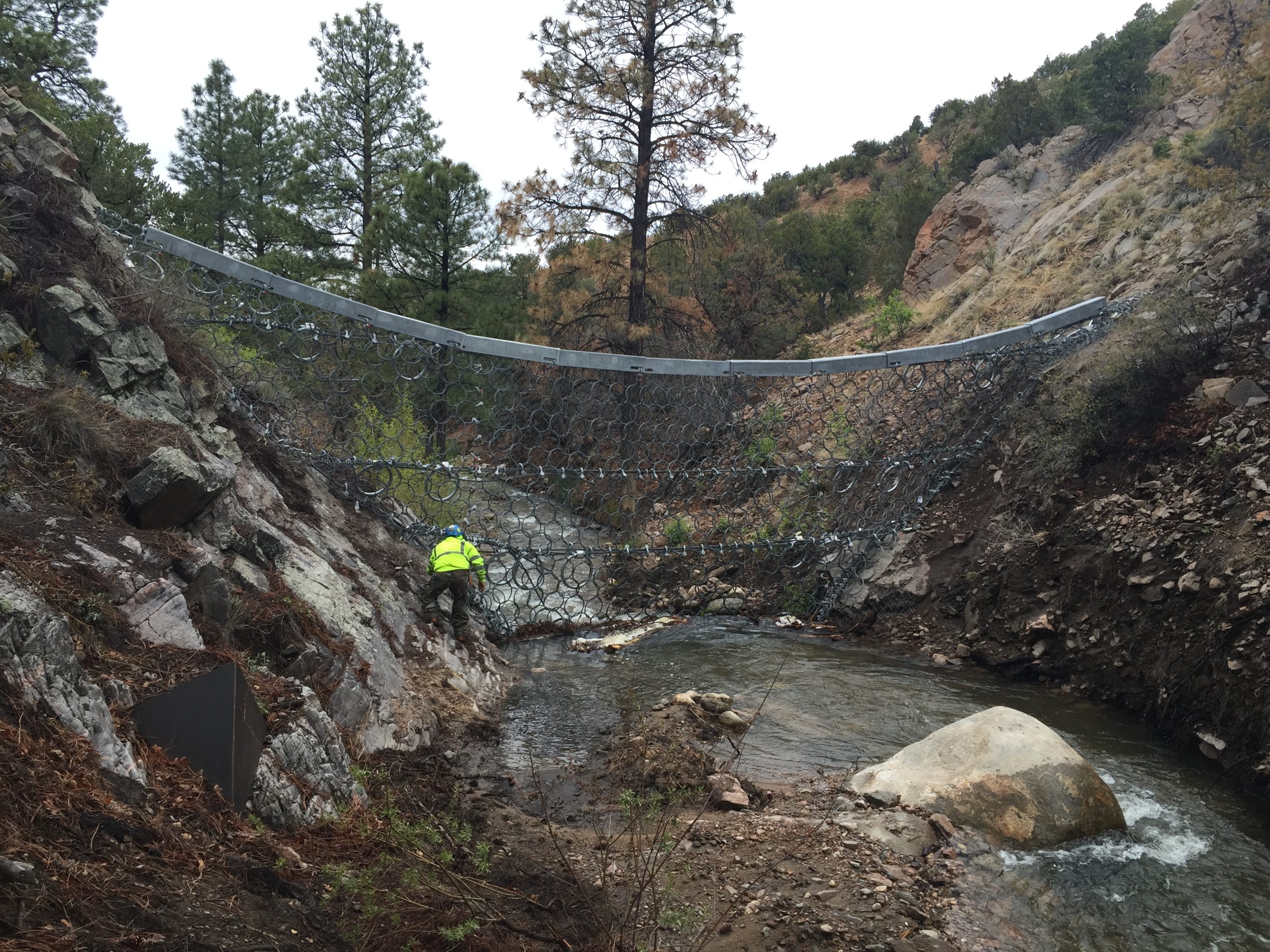
Lower-48 debris flow design standards assume sediment-dominated flows with limited boulder content. Alaska's glacial channels mobilize cobbles and boulders that exceed these assumptions by orders of magnitude. GeoStabilization International designs Alaska debris flow barriers for glacial-specific loading—specifying ring-net capacities, anchor forces, and foundation designs that withstand the impact energies Alaska's channels actually generate. Generic barrier specifications from temperate environments will not protect your Alaska corridor.
Infrastructure operators across North America describe the performance of GeoStabilization International's engineered barrier systems.
Glacial channels demand glacial-grade barriers. GeoStabilization International engineers and installs debris flow protection rated for Alaska's extreme conditions. Act now.