
Alaska's extreme terrain—steep glacial valleys, saturated volcanic soils, and seismically active mountain ranges—produces some of the most challenging landslide conditions in North America. The Seward Highway through Turnagain Arm, Parks Highway approaching Denali, Glenn Highway, and Richardson Highway all experience recurring slope failures driven by freeze-thaw cycles, glacial meltwater saturation, and seismic loading from the Denali Fault system. GeoStabilization International deploys soil nailing, slope pinning, ground anchors, and engineered retaining systems designed for Alaska's unique combination of extreme cold, seismic activity, and limited construction seasons.
Our Soil Nail Launcher™ installs SuperNails™ into actively moving slides without excavation—critical in Alaska's remote, access-limited terrain where mobilization of conventional drilling equipment can take weeks.
Alaska experiences more landslides per capita than any other U.S. state. The combination of extreme terrain relief, seismic activity along the Denali Fault and Alaska-Aleutian subduction zone, glacial meltwater saturation, and freeze-thaw weathering produces slope failures that threaten the state's limited highway network—corridors that serve as lifelines for communities with no alternative access. The Seward Highway through Turnagain Arm is particularly vulnerable, with steep slopes rising directly from tidewater to 3,000+ feet.
Alaska's landslide sites often involve extreme access challenges—narrow mountain roads, absence of staging areas, and distances measured in hundreds of miles from equipment depots. GeoStabilization International's Soil Nail Launcher™ and limited-access equipment fleet are purpose-built for these conditions. The Launcher installs reinforcement without the excavation and conventional drilling rigs that require wide staging areas and road access that Alaska's mountain corridors cannot provide.
Every Alaska landslide repair must account for seismic loading from one of the most tectonically active regions on Earth. GeoStabilization International's engineers incorporate USGS Alaska Seismic Hazard data into every slope design—ensuring your stabilization system resists both static earth pressures and the seismic ground accelerations that Alaska's fault systems routinely generate. This seismic integration is standard practice for our Alaska work, not an optional add-on.
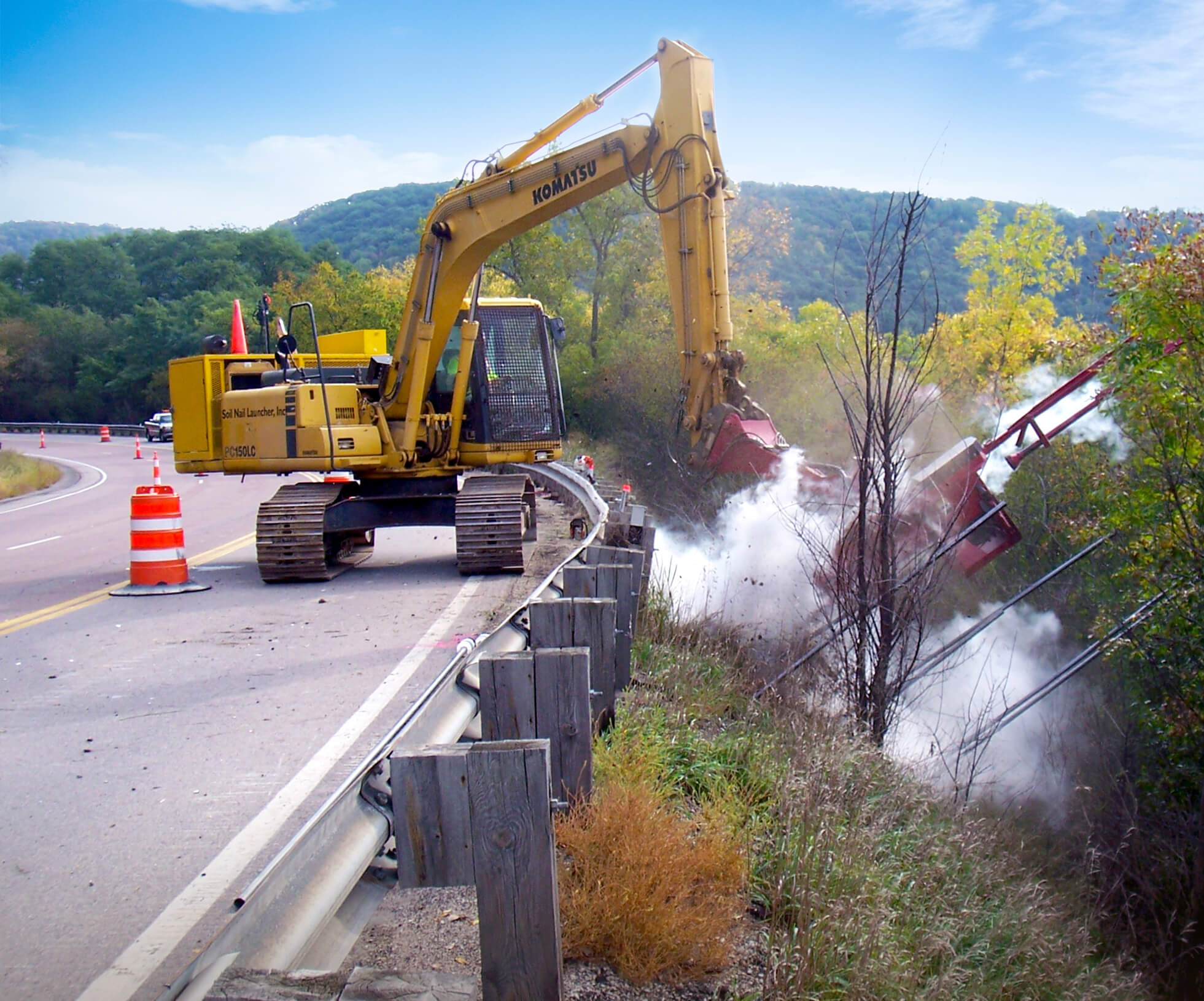
Alaska's landslide sites involve helicopter-access-only locations, single-lane mountain roads, and staging areas measured in feet—not acres. GeoStabilization International's Soil Nail Launcher™ fleet installs reinforcement without the excavation, conventional drill rigs, and wide staging areas that Alaska's remote terrain cannot provide. Our Launcher fires SuperNails™ at 250 mph from a compact platform that reaches sites where nothing else can operate. 8,000+ completed projects across every terrain type in North America prove this technology works where conventional methods fail.
From Alaska to the lower 48's most inaccessible terrain, see what clients say about GeoStabilization International's remote-access capability.
Seward Highway to Parks Highway—GeoStabilization International's remote-access Soil Nail Launcher™ teams deploy to Alaska's most challenging terrain. Call today.