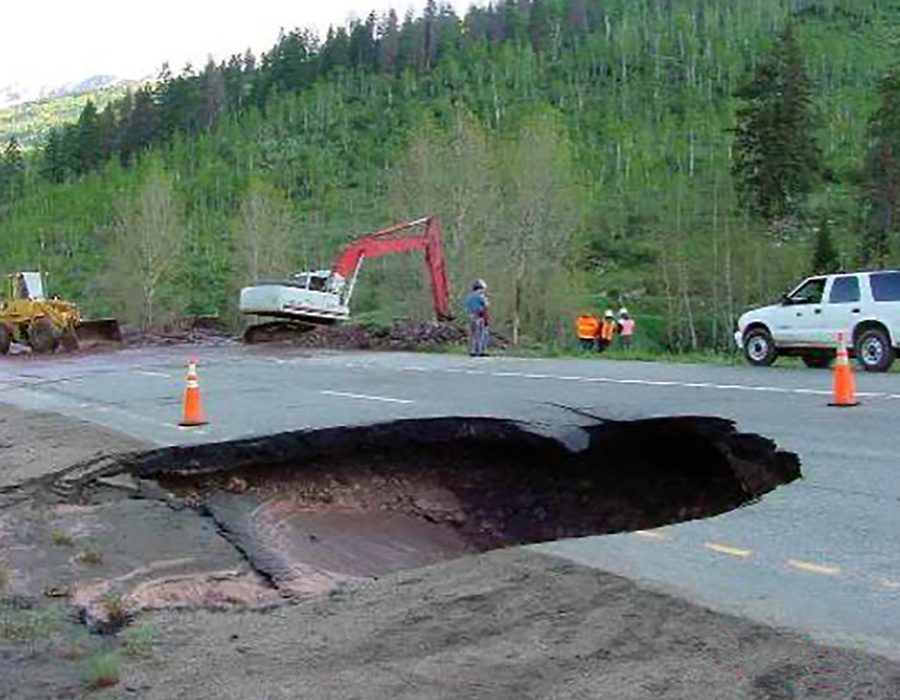
Progressive karst subsidence across Virginia's Shenandoah Valley develops as limestone bedrock dissolves along fractures and bedding planes, creating soil piping, differential settlement, and expanding voids that undermine pavements, bridge foundations, and utility systems. Unlike sudden sinkhole collapse, karst subsidence manifests gradually—cracking pavement, shifting structures, and misaligning utilities before any visible hole appears at the surface. GeoStabilization International engineers permeation and compaction grouting programs that seal active dissolution pathways and densify overburden soils.
With 8,000+ completed projects including karst treatment across the Appalachian limestone belt, our engineers bring field-validated grouting techniques to every Virginia subsidence repair.
Progressive karst subsidence in Virginia's Shenandoah Valley develops over months to years as dissolution slowly enlarges fractures and bedding planes in the Cambrian-Ordovician limestone sequence. Unlike sudden sinkhole collapse, karst subsidence creates gradual differential settlement—cracking pavements, shifting bridge piers, misaligning utility connections, and distorting building floors. By the time surface symptoms become visible, subsurface void development has often progressed far beyond the visible footprint.
GeoStabilization International engineers a two-stage approach for Virginia karst subsidence. Permeation grouting first—injecting low-viscosity grout into dissolution-enlarged fractures to seal the pathways that allow soil migration and progressive void growth. Compaction grouting second—injecting stiffer grout to displace and densify the overburden soils that have loosened above karst features. This dual treatment stops the dissolution process and restores bearing capacity simultaneously.
Karst terrain requires ongoing awareness even after treatment. GeoStabilization International can install monitoring systems—settlement markers, inclinometers, and periodic GPR surveys—that track ground conditions in treated zones and detect any new dissolution activity. This monitoring converts reactive emergency response into proactive asset management—the approach that sophisticated infrastructure owners across Virginia's karst belt increasingly demand.
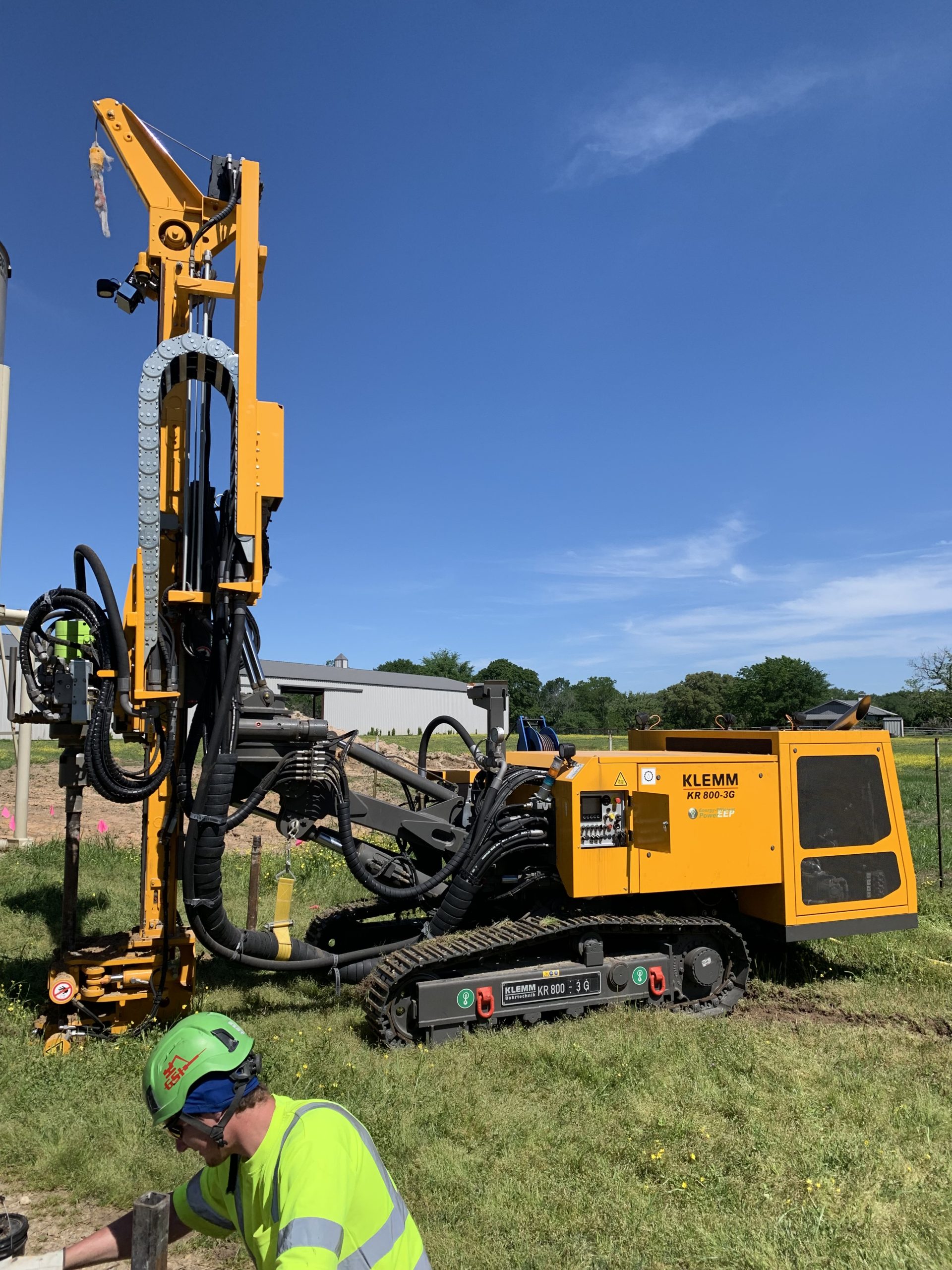
Karst terrain does not stop dissolving after treatment. GeoStabilization International installs monitoring instrumentation that tracks ground conditions in treated zones—settlement markers, periodic GPR surveys, and piezometric readings that detect new dissolution activity before it threatens surface infrastructure. This proactive monitoring converts reactive emergency response into planned maintenance—the approach that Virginia's most sophisticated infrastructure owners demand for karst-belt asset management.
Agencies and asset owners across the Appalachian limestone belt share long-term results from GeoStabilization International's subsidence treatment programs.
Progressive subsidence destroys infrastructure silently. GeoStabilization International's dual-stage grouting seals dissolution and restores bearing capacity before surface failure.