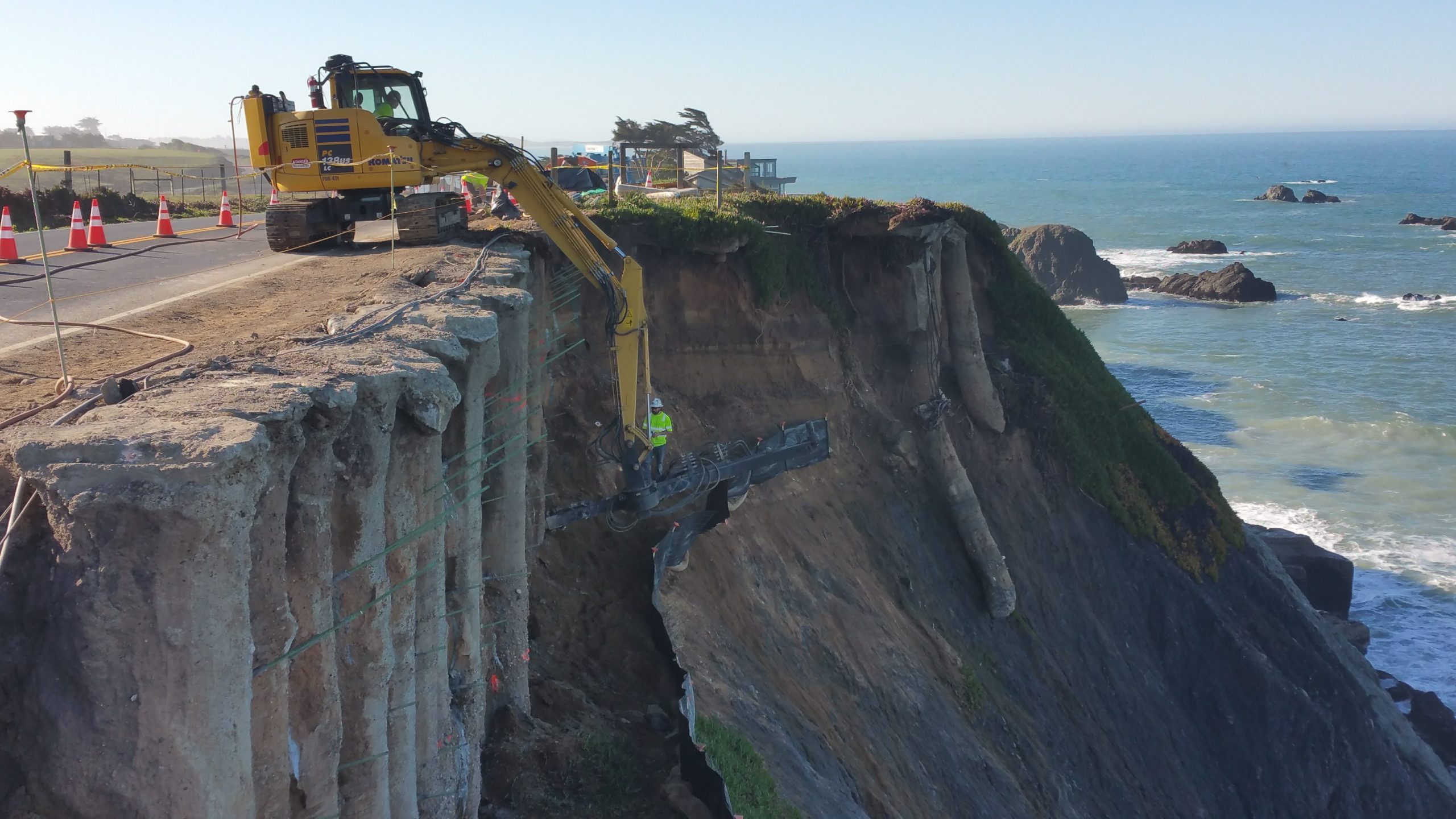
Oregon's Pacific coastline—exposed to open-ocean wave energies that dwarf protected shoreline conditions—erodes at rates that threaten coastal highways, state parks, community infrastructure, and the bluffs supporting Highway 101. Lincoln City, Neskowin, Pacific City, and Depoe Bay face accelerating bluff retreat driven by intensifying winter storms and rising sea levels. GeoStabilization International designs bluff stabilization systems, engineered revetments, and soil bioengineering solutions calibrated to Oregon's extreme wave climate and regulatory requirements.
Our in-house coastal engineers design solutions that meet Oregon Department of Land Conservation and Development (DLCD) standards and OPRD guidelines from initial concept—avoiding the permitting delays that derail projects designed without regulatory awareness.
Oregon's 363-mile Pacific coastline faces some of the most aggressive wave energy in North America. Winter storms drive 20-30 foot swells directly into exposed bluffs composed of weakly cemented sandstone, siltstone, and Quaternary terrace deposits. Lincoln City, Neskowin, Pacific City, and Depoe Bay experience chronic bluff retreat that threatens Highway 101, state park infrastructure, and community lifelines. El Niño episodes and climate-driven storm intensification accelerate erosion rates beyond historical averages.
GeoStabilization International designs coastal protection calibrated to Oregon's open-ocean wave conditions—significantly more demanding than protected harbor or sound environments. Bluff stabilization combines soil nail reinforcement with face drainage that controls the groundwater seepage driving internal erosion. Revetment systems use wave energy dissipation principles validated through field performance across similar Pacific coastline settings. Bioengineering solutions establish living root systems that provide long-term erosion resistance as vegetation matures.
Oregon's coastal development permitting involves the Department of Land Conservation and Development (DLCD), Oregon Parks and Recreation Department (OPRD), and often the Army Corps of Engineers. GeoStabilization International's engineers design solutions that satisfy all applicable regulatory frameworks simultaneously—avoiding the sequential permit applications and redesign cycles that add months and cost to projects designed without Oregon-specific regulatory fluency.
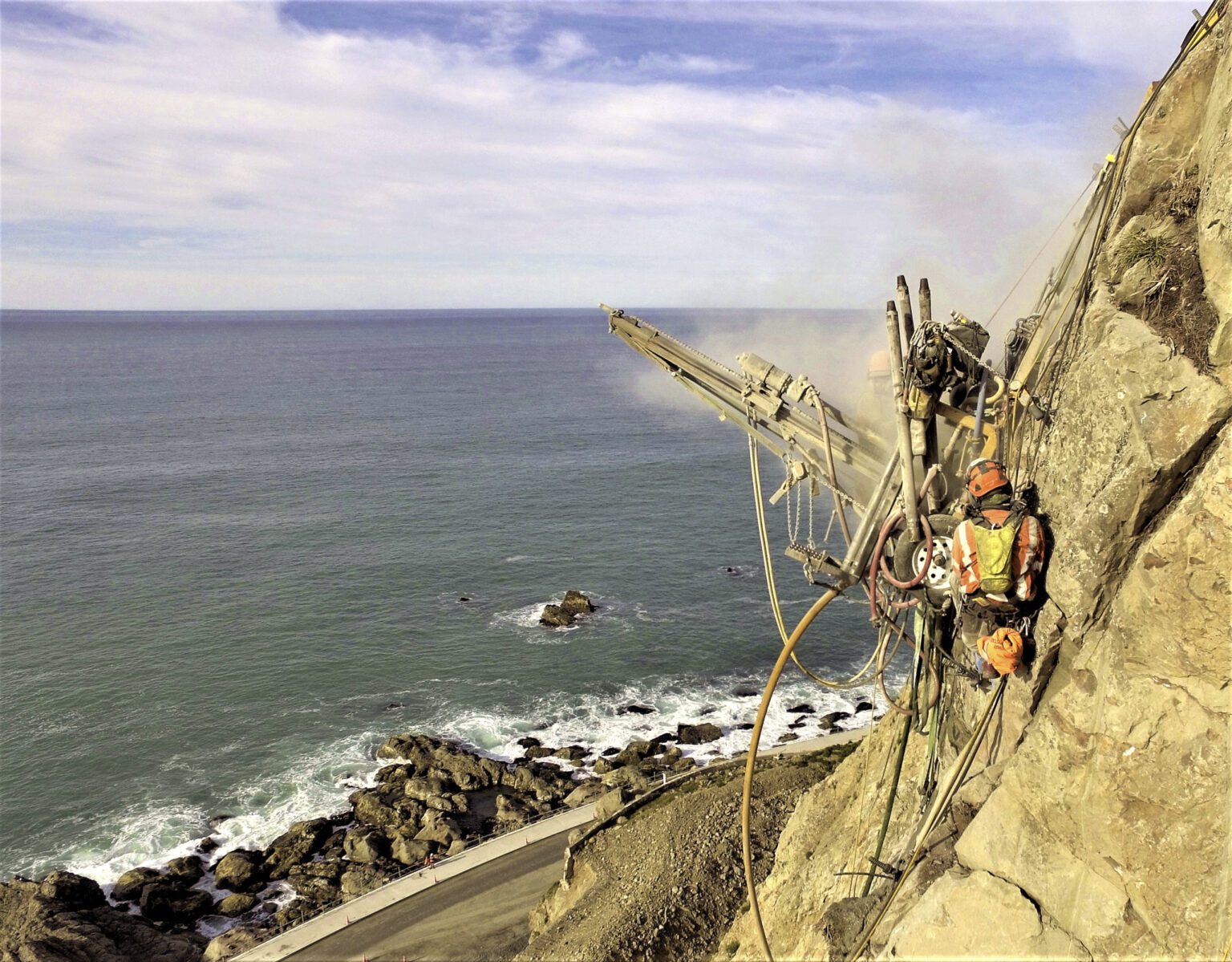
Oregon's storm season sets the deadline for coastal protection. GeoStabilization International mobilizes bluff stabilization and revetment installation crews before winter storms arrive—getting engineered protection in place while conditions still allow construction. Our pre-storm deployment capability is built on 8,000+ projects of field mobilization experience, a pre-staged equipment fleet, and Pacific Northwest crews who work through the challenging weather windows that Oregon's coast demands.
Pacific storm energy is relentless. GeoStabilization International's bluff stabilization and revetment teams deploy at coastal pace—getting protection in place before the next winter assault.