Colorado's Front Range canyons—Clear Creek, Boulder Creek, Cache la Poudre, and Big Thompson—channel intense summer thunderstorms through steep, narrow drainages, generating debris flows that have historically caused catastrophic damage to downstream communities and transportation corridors. Post-fire conditions in burned watersheds amplify this risk dramatically. GeoStabilization International engineers and installs flexible debris flow barriers, specialized drainage systems, and slope reinforcement that intercepts debris flows before they reach vulnerable infrastructure.
Each barrier installation is designed using site-specific runout modeling, catchment volume analysis, and historical precipitation data—not generic catalog specifications. Our engineering team references real debris flow performance data from 8,000+ completed projects to optimize every Colorado barrier design.
Colorado's Front Range canyons—Clear Creek, Boulder Creek, Cache la Poudre, and Big Thompson—concentrate intense summer thunderstorm runoff through steep, narrow drainages. The September 2013 Front Range flood event demonstrated the catastrophic potential of canyon debris flows, causing over $2 billion in damage across the region. Post-fire conditions in burned watersheds amplify debris flow risk by an order of magnitude, converting moderate rainfall events into catastrophic runoff.
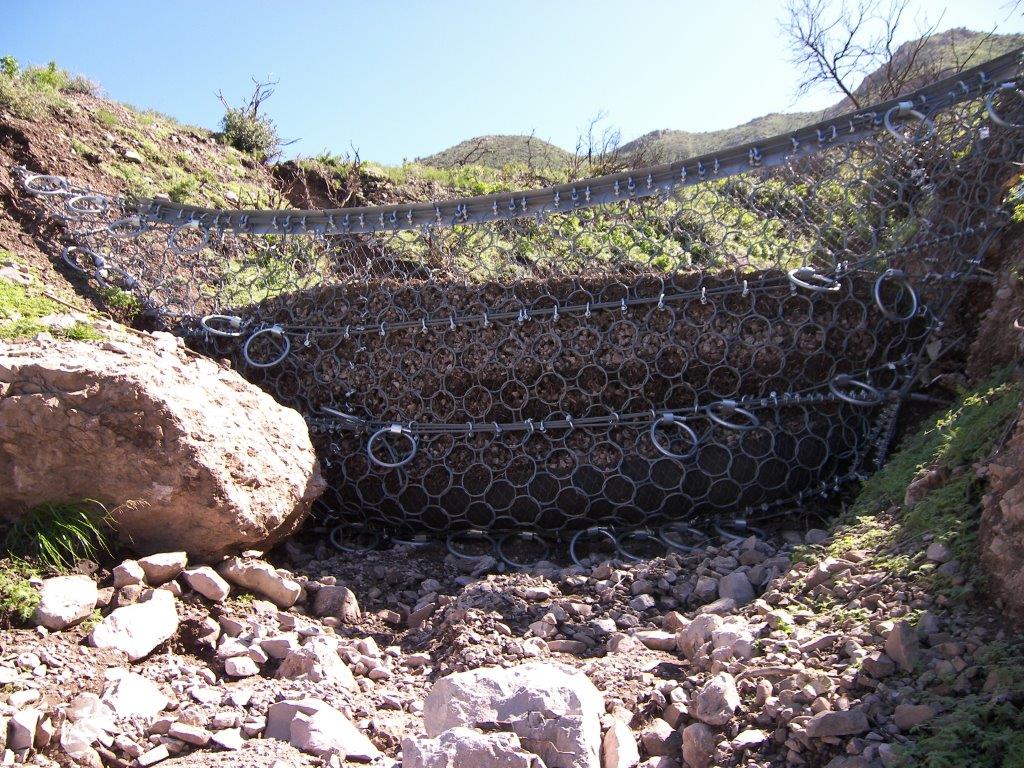
GeoStabilization International designs and installs flexible ring-net debris flow barriers engineered to absorb massive dynamic impact loads. These barriers span canyon channels at calculated positions, intercepting debris flow surges before they reach downstream infrastructure. Each installation includes energy-absorbing brake elements, anchored cable systems, and maintenance access provisions designed for Colorado's specific canyon geometries and expected debris volumes.
Colorado wildfires create urgent debris flow risk in burned watersheds ahead of every monsoon season. GeoStabilization International mobilizes post-fire barrier installation teams at emergency pace—deploying flexible barriers across burned canyon channels before the first significant rainfall event. Our engineers design barrier arrays using post-fire runout modeling that accounts for hydrophobic soil conditions, increased sediment availability, and reduced vegetation resistance. This pre-storm deployment has protected Front Range communities and corridors from the secondary disaster that often exceeds fire damage itself.

Colorado's monsoon season creates a hard deadline for debris flow protection. GeoStabilization International deploys barrier installation crews at emergency pace—getting flexible debris flow barriers anchored across canyon channels before the first significant summer thunderstorm. Our pre-storm deployment capability has protected Front Range communities and corridors from the catastrophic secondary damage that debris flows cause in burned and saturated watersheds. When the deadline is fixed by weather, you need a contractor who executes at weather speed.
Monsoon season sets the deadline. GeoStabilization International installs canyon barriers at emergency speed—protecting Front Range communities before the next summer storm.