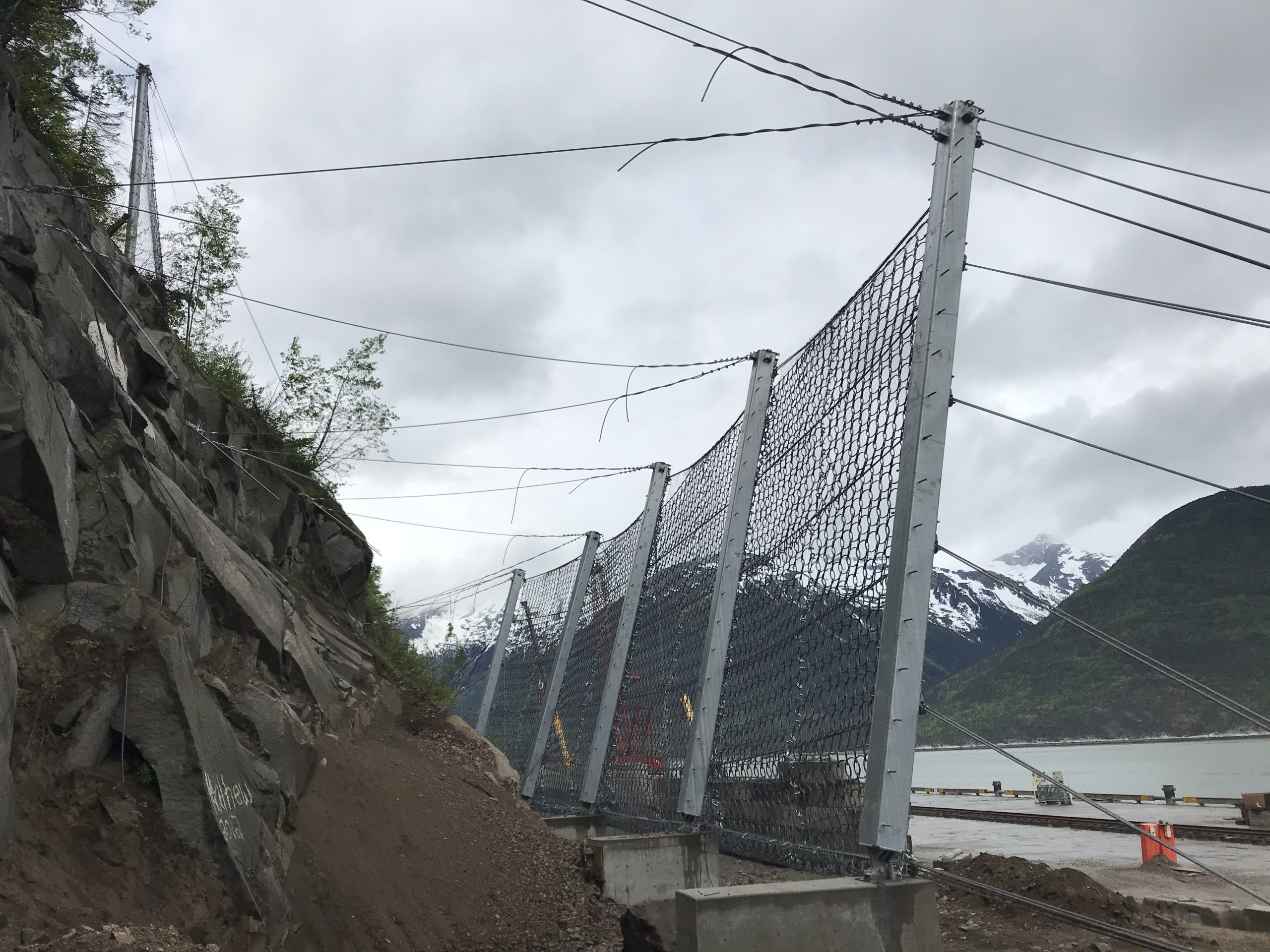
New York's highway network traverses geologically complex terrain—from the metamorphic gneiss of the Adirondack Northway (I-87) to the diabase columns of the Hudson River Palisades (US-9W) and the folded sedimentary formations along NY-17 approaching the Catskills. These diverse rock types produce rockfall events that endanger motorists and force NYSDOT emergency closures. GeoStabilization International installs rock bolt systems, draped mesh, and attenuator barriers engineered to New York's specific rock mass characteristics.
Our rope access capability means rockfall protection is installed from the rock face—not the roadway—keeping traffic flowing during construction on New York's highest-volume corridors.
New York's highway network crosses geologically diverse terrain that produces rockfall across multiple regions. The Adirondack Northway (I-87) cuts through Precambrian gneiss and anorthosite formations with deep freeze-thaw fracturing. The Hudson River Palisades along US-9W feature massive diabase columns prone to toppling failures. NY-17 approaching the Catskills traverses folded sedimentary formations with complex discontinuity patterns. NYSDOT manages rockfall hazards across all these corridors, requiring solutions engineered for each region's specific rock type and failure mechanism.
GeoStabilization International engineers rockfall protection systems calibrated to each site's rock mass characteristics. Adirondack gneiss demands different bolt patterns and mesh specifications than Hudson Palisades diabase or Catskill sedimentary sequences. Our geologists and engineers perform site-specific rock mass characterization—mapping discontinuities, evaluating weathering grades, and modeling failure kinematics—to design protection that addresses the actual hazard mechanism, not a generic assumption.
New York's rockfall corridors carry some of the highest traffic volumes in the Northeast. I-87, US-9W, and NY-17 cannot tolerate extended closures for rockfall protection installation. GeoStabilization International's rope access technicians install bolts, mesh, and barriers from the rock face—maintaining traffic flow throughout the construction period. This traffic-free installation capability reduces project costs, eliminates detour routing, and gets protection in place faster than conventional methods.
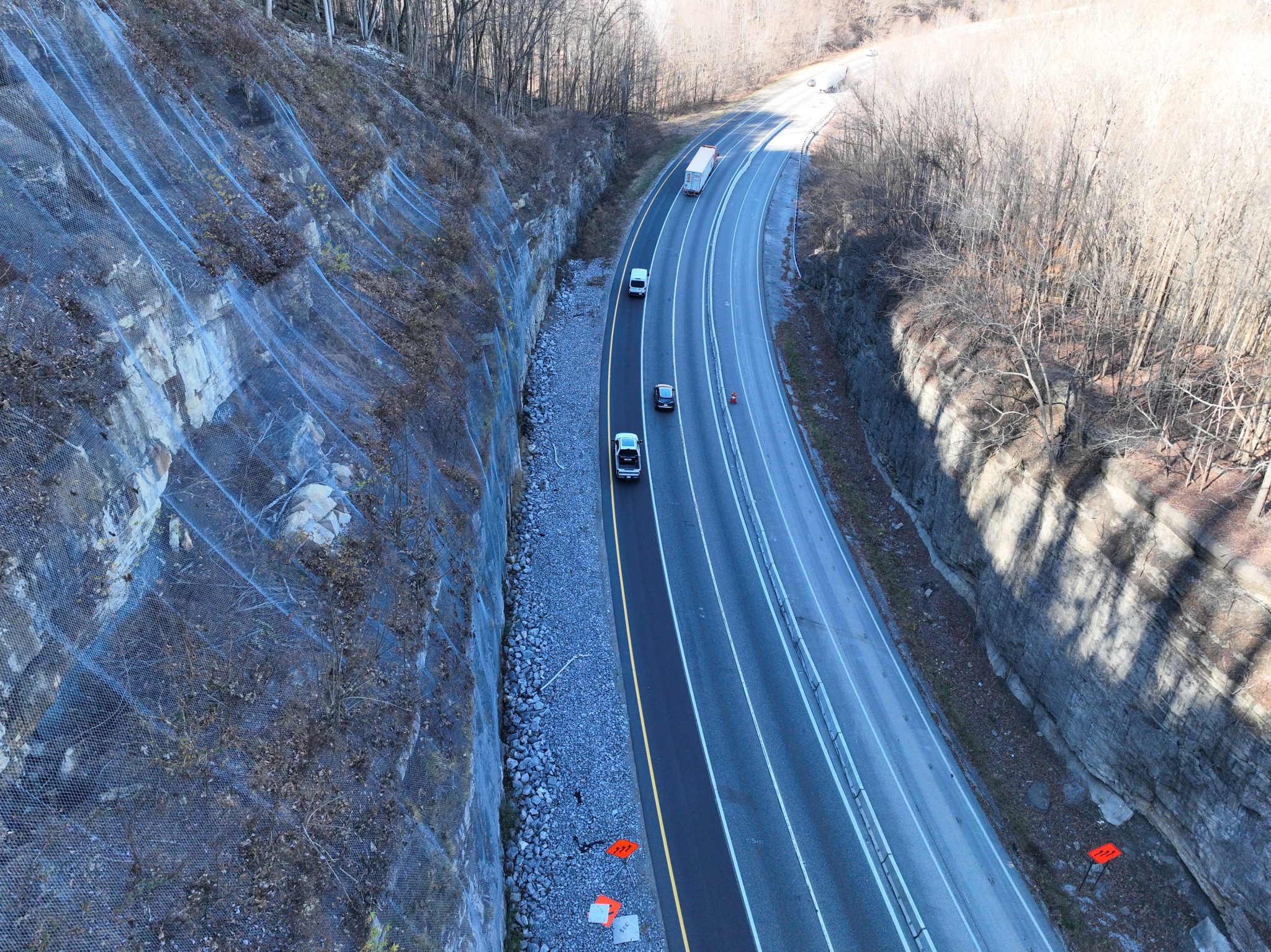
New York's rockfall corridors span three fundamentally different geologic settings—Adirondack metamorphics, Hudson Palisades igneous diabase, and Catskill folded sedimentary sequences. Each demands different engineering approaches, different bolt specifications, and different mesh configurations. GeoStabilization International's geologists and engineers design site-specific solutions calibrated to each formation's actual rock mass properties—not generic specifications applied regardless of geology. This precision engineering is why our rockfall protection systems outperform conventional installations.
Highway agencies and infrastructure operators share their experience with GeoStabilization International's design/build delivery.
Adirondacks to the Hudson Palisades—GeoStabilization International delivers engineered rockfall protection that keeps New York's highest-volume corridors safe. Contact our eastern team now.