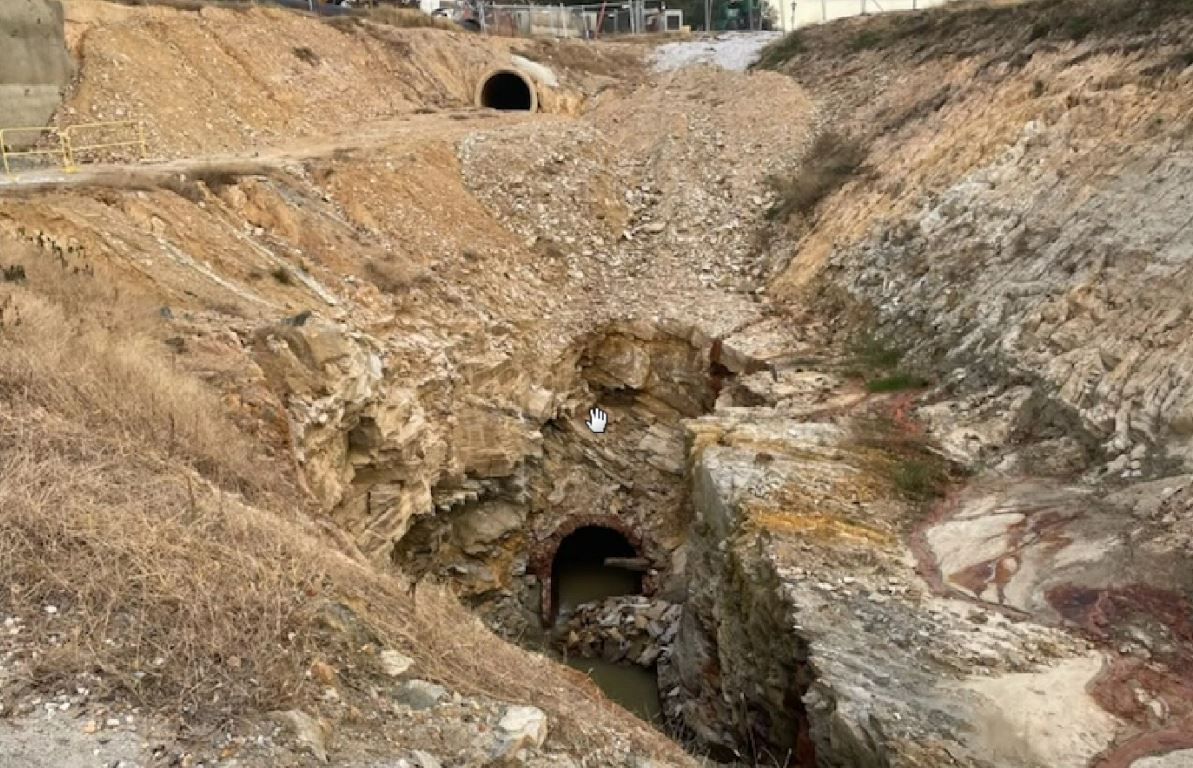

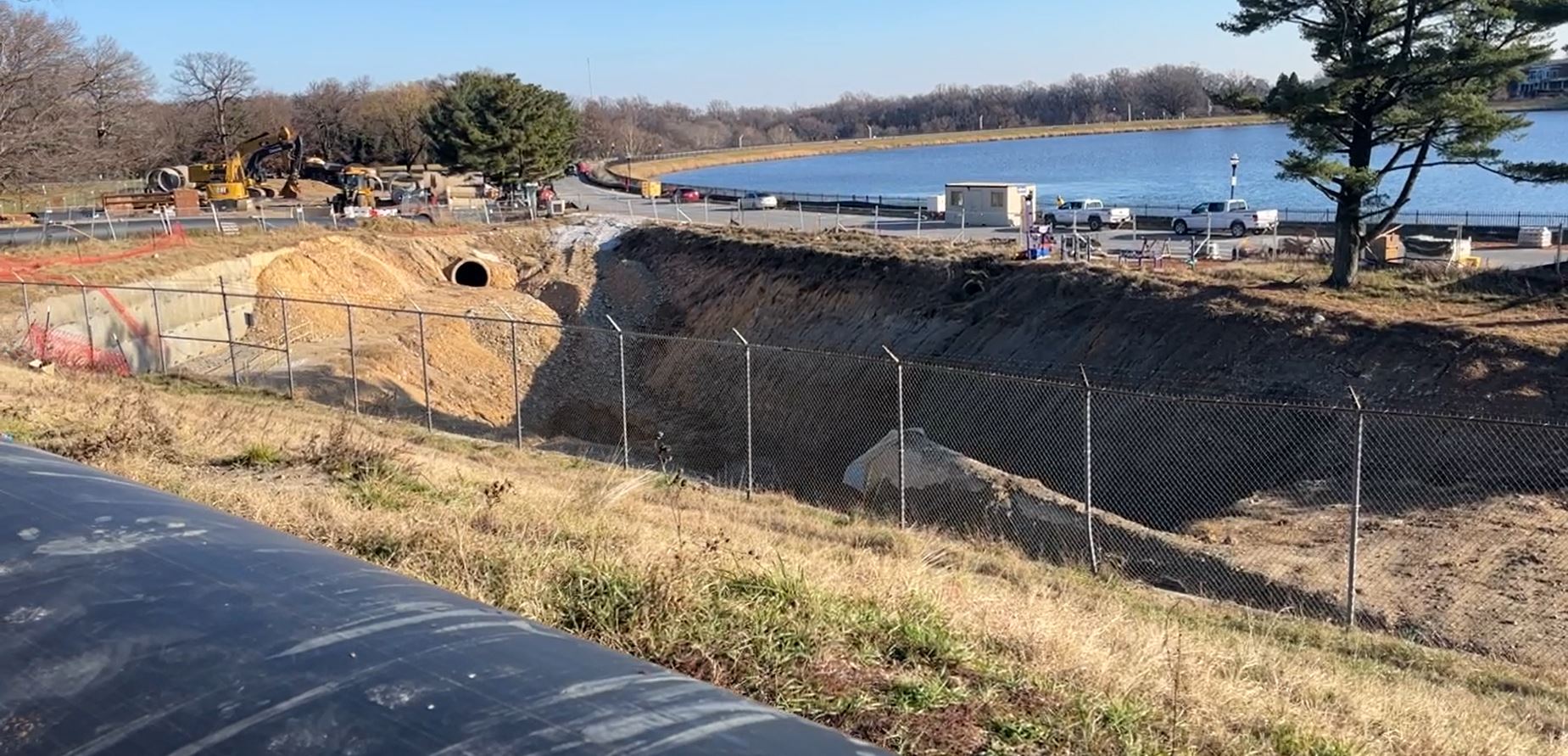


In mid-2022, a 108-inch brick-lined storm sewer collapsed beneath the ground between Baltimore's Montebello Water Filtration Plant and Lake Montebello, opening a sinkhole near the base of an active slope. The Tiffany Run Drain sits 53 feet below grade at its invert — and repairing it required excavating to that depth safely, in unstable ground, adjacent to a 100-year-old sewer, nearby building foundations, and utility viaducts. GeoStabilization International designed and built the support of excavation system that made that repair possible.
The failure of the Tiffany Run storm sewer created an immediate and complex problem for the City of Baltimore. The sinkhole that emerged at the base of the slope was not simply a surface void — it was a symptom of deep structural failure in aging urban infrastructure. To access and repair 108 feet of mainline sewer on the south side of the collapse, excavation would need to reach an elevation of approximately 120 feet, exposing crews to significant geohazard risk from the adjacent active slide, nearby foundations, and the century-old brick barrel sewer itself.
The project demanded more than a standard shoring approach. It required a system engineered to protect workers, preserve surrounding structures, and adapt in real time to subsurface conditions in a dense urban environment.
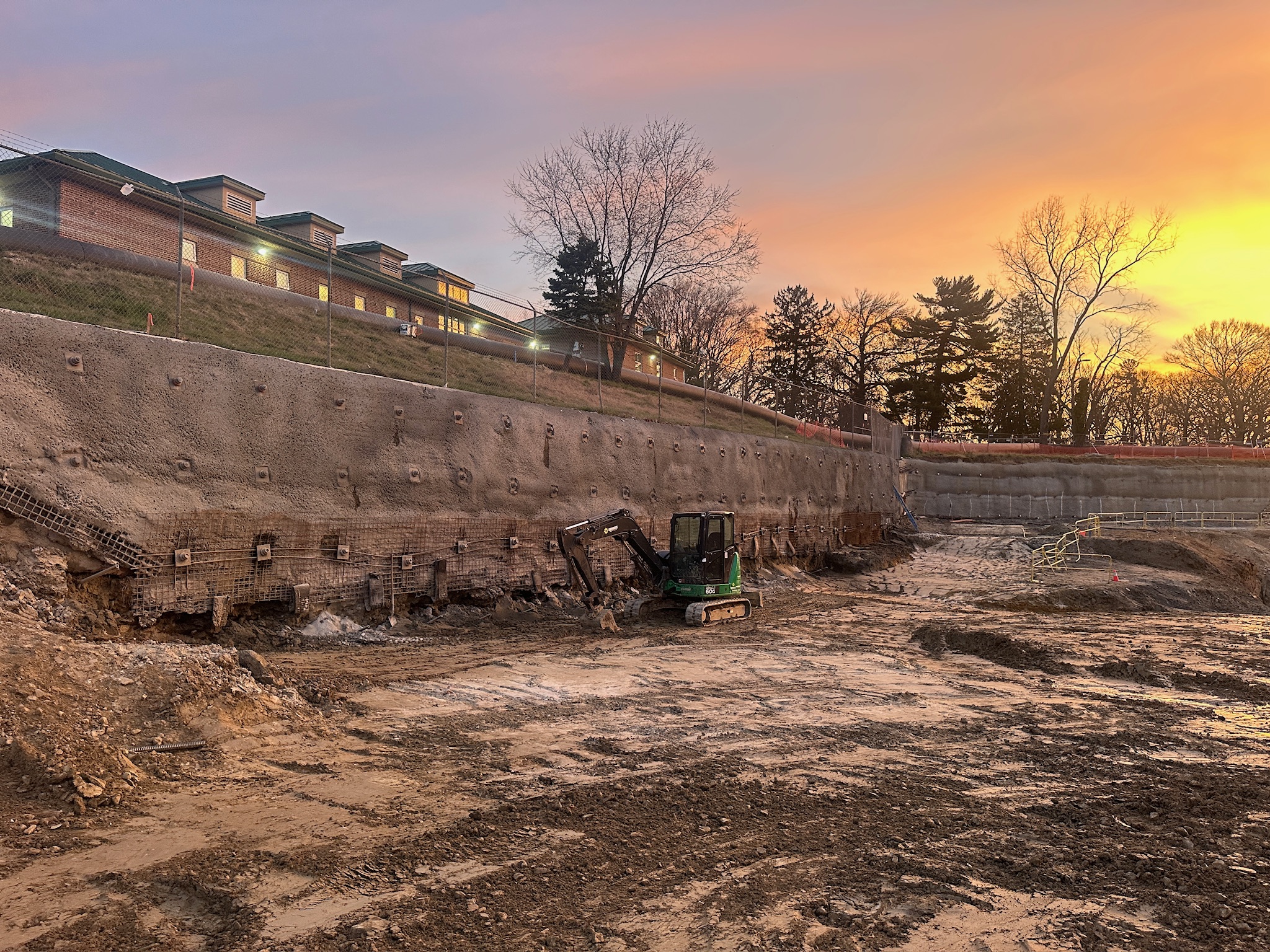
GeoStabilization designed and constructed a multi-tiered soil nail and shotcrete support of excavation wall — up to 50 feet tall and 330 feet long — built top-down following the contour of the excavation. The top-down construction method, which progresses in staged lifts as the excavation advances deeper, allowed the wall to develop structural capacity incrementally while keeping the working face protected at every stage.
Given the proximity to an active slide, adjacent building foundations, and utility viaducts, GSI and general contractor Garney Construction implemented a comprehensive real-time monitoring program throughout construction. The system included inclinometers to track lateral ground movement, piezometers to monitor groundwater conditions, and an Automated Motorized Total Station (AMTS) to continuously measure displacement of the wall, surrounding slope, and nearby structures. Working with the owner and owner's engineer, GSI established movement thresholds and developed a geotechnical risk reduction plan and action protocol — incorporated directly into the construction documents — to define response procedures if any threshold was approached or exceeded.
This level of instrumentation and proactive risk planning ensured that every party — from the field crew to the city's engineering team — had the information needed to make decisions in real time, not after the fact.
The completed support of excavation system gave the construction contractor the safe, stable working space needed to access and repair the Tiffany Run mainline sewer — a piece of Baltimore's critical stormwater infrastructure that, left unrepaired, would have continued to threaten the integrity of the slope, the surrounding utilities, and the structures above.
The Tiffany Run project reflects the kind of work GeoStabilization does best: engineered solutions for difficult urban subsurface problems, delivered with the monitoring rigor and collaborative field execution that high-stakes projects demand. When the job requires more than a standard excavation support system — when the stakes include a century-old sewer, an active slide, and the foundations of nearby buildings — the approach has to match the complexity of the challenge.