Landslides in Alaska result from steep slopes and weather. Areas like Seward Highway (Turnagain Arm) are particularly vulnerable. We use soil nailing, slope pinning, and drainage systems to stabilize slopes.

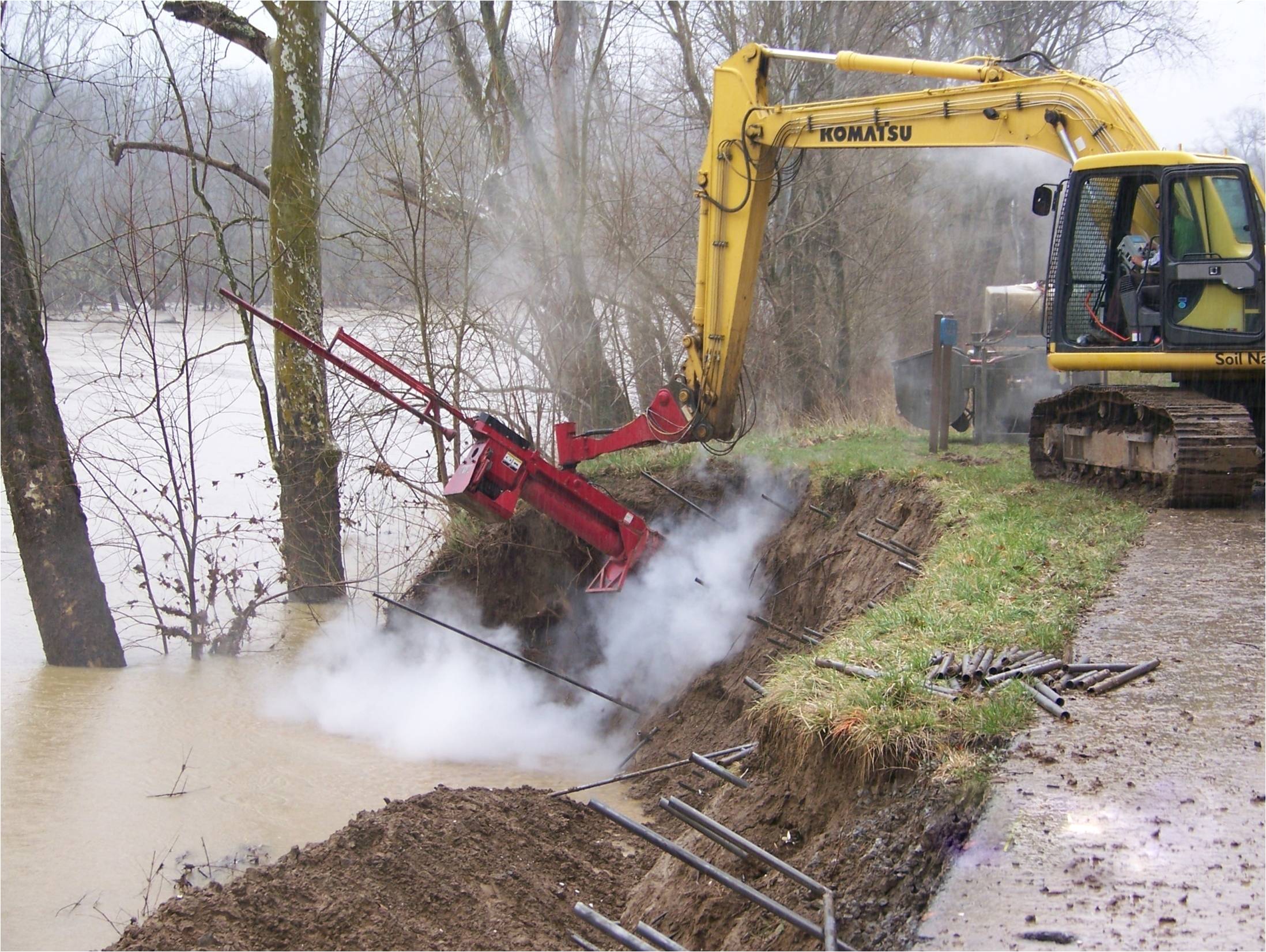
Permafrost degradation, debris flows, and landslides threaten infrastructure across Alaska. GeoStabilization leads stabilization efforts on Seward Highway and critical corridors.
Alaska presents some of the most complex geohazard conditions in North America due to its subarctic climate, continuous and discontinuous permafrost, high seismicity, and remote infrastructure corridors. Thawing permafrost and seasonal freeze-thaw cycles can lead to ground settlement, embankment instability, and structural movement. Major seismic zones, including subduction-related earthquakes, pose risks of ground shaking, lateral spreading, and coastal uplift or subsidence. Steep glacially carved terrain contributes to landslides and rockfall along highways, rail lines, and pipeline corridors, while coastal and riverine erosion threaten communities and critical infrastructure. In many regions, limited access and harsh weather conditions further complicate stabilization and long-term performance.
Permafrost Stabilization & Ground Improvement: Engineered systems designed to perform in frozen and thaw-unstable soils
Slope Stabilization: Soil nails, ground anchors, and retaining systems adapted for cold-region construction
Rockfall Mitigation: Rock bolting, scaling, and barrier systems for mountain highways and rail corridors
Seismic Resilience Solutions: Deep foundation systems and stabilization for high-magnitude earthquake zones
Embankment & Infrastructure Support: Reinforcement for transportation, pipeline, and remote facility corridors
Erosion & Coastal Protection: Riverbank and shoreline stabilization in dynamic environments
Remote Emergency Response: Rapid mobilization capabilities for isolated and weather-sensitive sites
Landslides in Alaska result from steep slopes and weather. Areas like Seward Highway (Turnagain Arm) are particularly vulnerable. We use soil nailing, slope pinning, and drainage systems to stabilize slopes.
As permafrost thaws, ice within the soil melts, causing ground settlement and loss of strength. This leads to roadway deformation, foundation settlement, and slope instability.
GSI installs high-energy attenuator fences, pinned mesh systems, rock bolts, and scaling operations along corridors such as the Seward Highway and Parks Highway.
Stabilization may include soil nails, tieback anchors, drainage improvements, and reinforced earth systems designed to withstand seismic loading.
Yes. GSI uses helicopter-supported access, spider excavators, and drone-based mapping to operate in remote Alaskan conditions.
Loss of protective sea ice increases wave energy during storms, accelerating bluff retreat and threatening entire communities.
Permafrost degradation, seismic events, and rugged terrain demand specialized mitigation strategies. We design and build engineered systems that perform in Alaska’s harshest environments.
Request a consultation today.