Landslides in Oregon result from steep slopes and weather. Areas like US-30 Columbia River Highway are particularly vulnerable. We use soil nailing, slope pinning, and drainage systems to stabilize slopes.

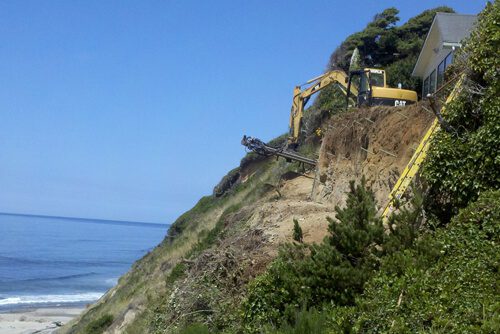
Columbia River Highway and Oregon Coast Range experience slide activity and coastal erosion. GeoStabilization has protected scenic corridors and critical highways.
Oregon's wet climate and heavily forested slopes require expertise in debris flow mitigation and slope drainage design.
Oregon’s steep coastal terrain, Cascade mountain corridors, high rainfall, and seismic exposure create significant geohazard risks throughout the state. Prolonged winter storms and saturated soils frequently trigger landslides and debris flows, particularly in coastal and mountainous regions. Rockfall hazards impact highways and transportation corridors, while coastal bluff erosion threatens infrastructure and development. Seismic risk from the Cascadia Subduction Zone also presents concerns including ground shaking, slope instability, and lateral spreading. Variable soils, erosion, and scour further contribute to foundation movement and infrastructure vulnerability across Oregon.
Slope Stabilization: Soil nails, ground anchors, and engineered retaining systems for steep, high-rainfall environments
Rockfall Mitigation: Rock bolting, scaling, draped mesh, and barrier systems for highways and rail corridors
Landslide Remediation: Geotechnical evaluation through permanent stabilization construction
Deep Foundation Solutions: Micropiles and structural underpinning systems
Erosion & Coastal Bluff Protection: Stabilization and reinforcement for storm-impacted slopes
Seismic Mitigation: Engineered systems designed for earthquake resilience
Emergency Response: Rapid mobilization following major storm or seismic events
Design-Build Delivery: Integrated engineering and construction with single-source accountability and warranty
Landslides in Oregon result from steep slopes and weather. Areas like US-30 Columbia River Highway are particularly vulnerable. We use soil nailing, slope pinning, and drainage systems to stabilize slopes.
Steep basalt cliffs and heavy rainfall produce frequent rock detachments.
Bluff stabilization, tieback anchors, and seawall reinforcement protect US-101.
Extended heavy rainfall saturates slopes, reducing soil strength and triggering failure.
We start with comprehensive site evaluation to identify hazards and risk. For Oregon, this includes slope analysis, soil testing, and hydrology review to design proper solutions.
Yes. Rapid-response teams stabilize slopes and reopen transportation corridors.
Heavy rainfall, landslides, coastal erosion, and seismic risk threaten Oregon infrastructure and development. We design and build engineered mitigation systems that perform in high-moisture and seismically active environments.
Request a consultation today.