Integrated Geohazard Mitigation for New Mexico's Infrastructure
New Mexico's geology is volcanic, and its rockfall behaves like no other state's. Rather than the progressive fracture widening that characterizes mountain rockfall, New Mexico's mesa failures happen when the soft tuff erodes a critical overhang depth and the cap rock snaps — a sudden, binary failure mode. Access Limited brings the specialized equipment and field experience to address each of these conditions with solutions proven in New Mexico's specific geologic environment.
New Mexico's volcanic mesas present a geohazard found almost nowhere else — hard basalt cap rock sitting atop soft volcanic tuff that erodes from below, creating progressively larger overhangs that eventually collapse without warning, dropping massive basalt blocks onto highways, structures, and communities built beneath the mesa edges. Access Limited brings the full spectrum of geohazard mitigation — rockfall, earth retention, and ground improvement — to address the specific conditions that define New Mexico's terrain.
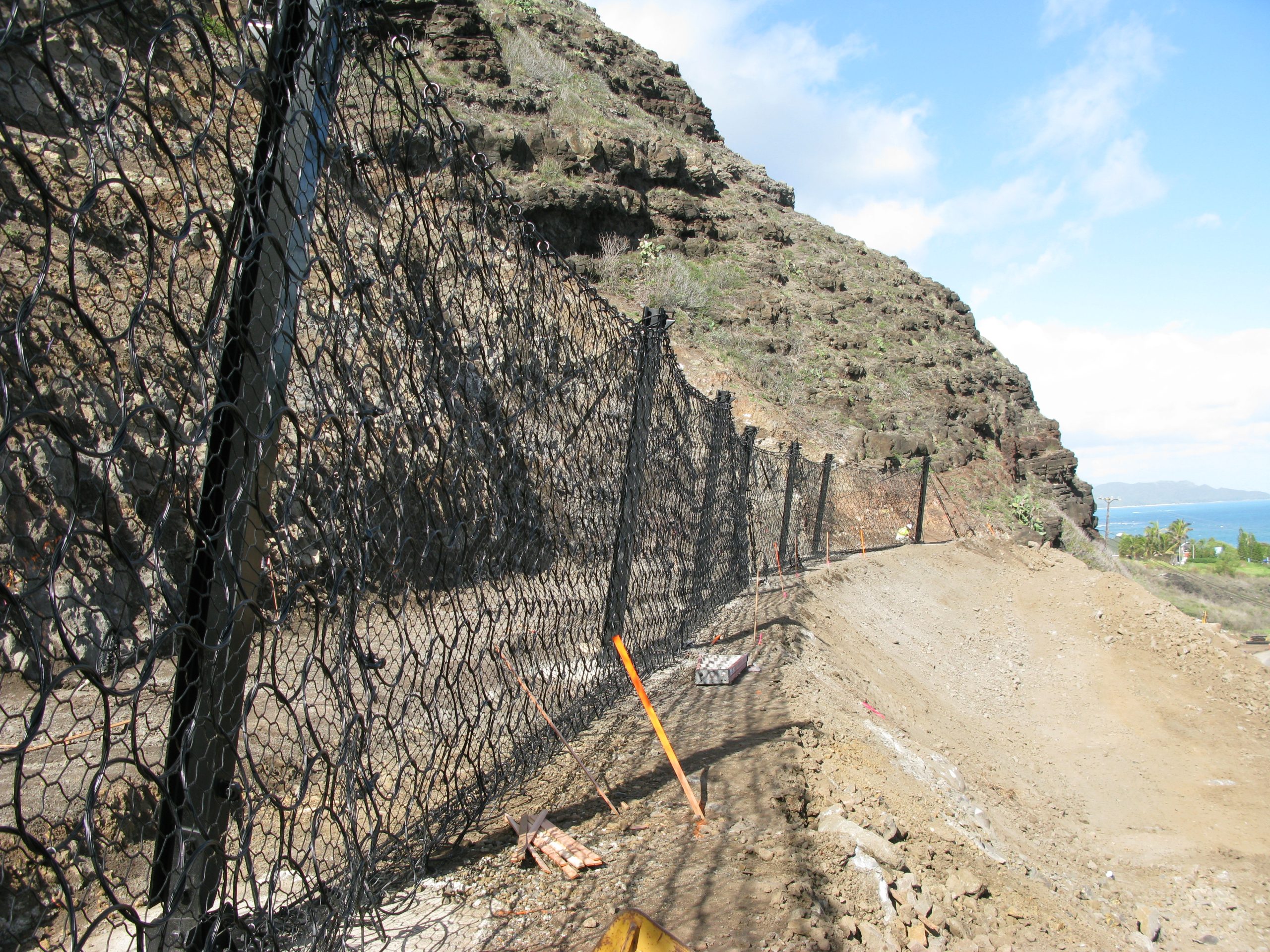
Rockfall Mitigation Along New Mexico's Critical Corridors
Volcanic mesa rockfall, where hard basalt cap rock overhangs eroding tuff, creating overhangs that fail catastrophically, post-wildfire debris flows in burned montane watersheds — particularly after the state's severe wildfire seasons, and canyon wall instability along the Rio Grande and its tributaries. Access Limited deploys wire mesh, draped mesh, high capacity steel mesh, rock bolting, flexible barriers, catch fences, and rockfall attenuation systems along I-25 through the Sangre de Cristo Range, I-40 through the Sandia Mountains, US-550 through the San Juan Basin, US-82 through the Sacramento Mountains, and US-64 across the Rio Grande Gorge — each installation engineered for the specific rock type, energy level, and infrastructure exposure at the site.
Earth Retention
Stabilizing volcanic mesa slopes where basalt cap rock overhangs eroding tuff, retaining Rio Grande Gorge highway corridors anchored into variable volcanic formations, and anchoring canyon wall infrastructure. Access Limited installs soil nail walls, shotcrete facing, ground anchors, micropiles, tiebacks, and retaining wall systems designed for New Mexico's basalt-over-tuff geological transition and arid-climate rock mechanics.
Ground Improvement
Subsurface stabilization beneath volcanic mesas where tuff erosion creates hidden voids below the basalt cap, compaction grouting for mine-related subsidence in the uranium and copper districts, and post-fire drainage management in burned montane watersheds. Access Limited's ground improvement includes launched horizontal drains, permeation grouting, erosion control, critical slope monitoring, and UAS-based assessment across New Mexico's volcanic and sedimentary terrain.
Emergency Response & Steep Slope Drilling
Mesa collapse events, post-wildfire debris flows in severely burned watersheds like those after the Hermit's Peak/Calf Canyon fire, and canyon wall rockfall blocking highway corridors. Access Limited mobilizes spider excavators, Spider drill rigs, and rope-access crews for immediate deployment. Our equipment fleet reaches terrain across New Mexico where conventional contractors cannot operate — and our 24/7 availability means the response matches the urgency of the hazard.
Industries Protected
NMDOT highway corridor protection through complex volcanic and sedimentary terrain, uranium and potash mining in the northwest, Los Alamos and Sandia National Laboratory infrastructure, and oil and gas facilities in the Permian basin — Access Limited serves each sector with geohazard solutions engineered for the specific operational, regulatory, and terrain requirements that define New Mexico's infrastructure landscape.