Delaware's narrow Piedmont section in northern New Castle County exposes gneiss, schist, and mafic rock of the Wilmington Complex along highway cuts. Along corridors like I-95 through Wilmington's Piedmont section, Route 52 along Brandywine Creek, US-202 through the Piedmont, and Route 100 in northern New Castle County, rockfall events threaten public safety, close critical transportation routes, and cost agencies millions in emergency response and repair.
Freeze-thaw cycling, intense Nor'easter precipitation, and aging highway rock cuts through Piedmont metamorphic formations produce rockfall concentrated in Delaware's northernmost corridors. When rockfall strikes, the consequences range from lane closures and traffic disruption to structural damage and catastrophic failure of retaining systems. Delaware's DelDOT, Amtrak Northeast Corridor, utility providers, and I-95 corridor management agencies need a rockfall contractor that understands these conditions.
DelDOT corridors through Delaware face persistent rockfall where delaware's narrow piedmont section in northern new castle county exposes gneiss, schist, and wilmington complex mafic rock along highway cuts. Access Limited works along routes including I-95 through Wilmington's Piedmont section, Route 52 along Brandywine Creek, US-202 through the Piedmont, and Route 100 in northern New Castle County with systems engineered for the specific rock mass conditions at each installation.
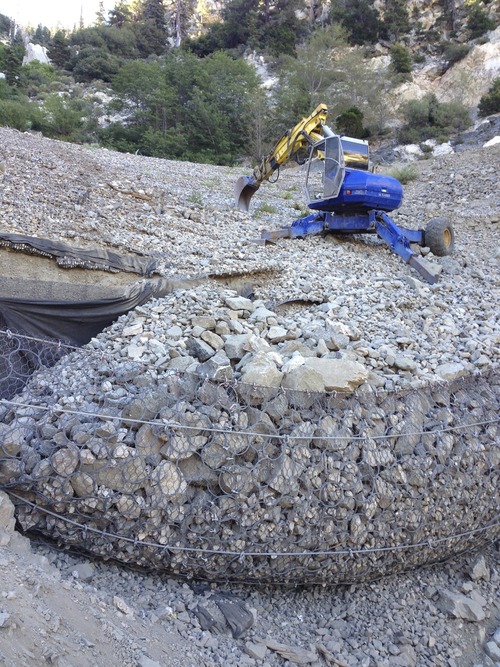
Delaware's rockfall corridors along I-95 through Wilmington's Piedmont section, Route 52 along Brandywine Creek, US-202 through the Piedmont, and Route 100 in northern New Castle County require systems that keep rock on the face. Access Limited's control solutions include rockfall mesh, pinned mesh, wire mesh, draped mesh, cable net mesh, anchored mesh, and rockfall netting. Each is specified for the rock mass quality, block size distribution, slope angle, and energy level at the installation site.
Rock bolting and rock anchors reinforce fractured zones — anchoring through failure planes before blocks can detach. These are specified anywhere DelDOT corridors expose identifiable failure geometries in the rock mass.
Flexible rockfall barriers intercept material after it leaves the face — rated from moderate-energy catch systems to ultra-high-energy barriers for Delaware's most severe trajectories. Catch fences provide practical containment at ditch lines and benches. Attenuation systems reduce energy across long slopes through staged mesh curtains, delivering manageable forces at the final containment point.
Where the hazard includes saturated debris as well as rock, debris flow barriers provide containment engineered for the sustained loading and hydrostatic pressure that conventional rockfall barriers cannot absorb.
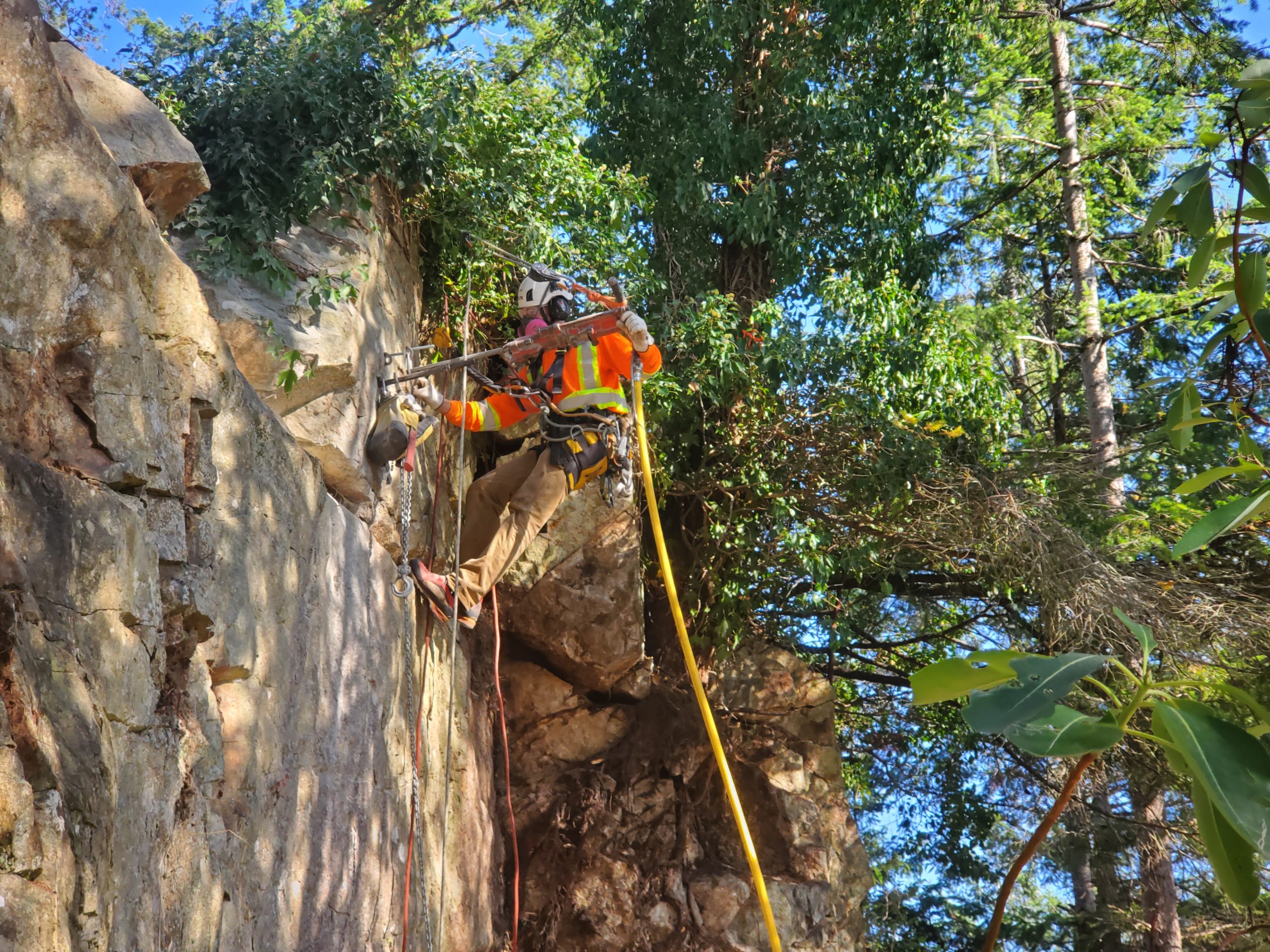
Access Limited's scaling operations in Delaware span mechanical scaling with Spider Excavators, manual scaling by rope-access certified crews, remote scaling for the most hazardous faces, controlled blasting for large mass removal, and boulder breaking for oversized blocks in the catchment zone.
Every system Access Limited installs in Delaware is engineered for the conditions at the specific site. View all geohazard mitigation services available in Delaware.
See why DelDOT, Amtrak Northeast Corridor, utility providers, and I-95 corridor management agencies trust Access Limited for rockfall mitigation in Delaware and across the nation.
Whether you need rockfall containment, emergency scaling, or a comprehensive slope assessment — Access Limited is Delaware's rockfall mitigation specialist.