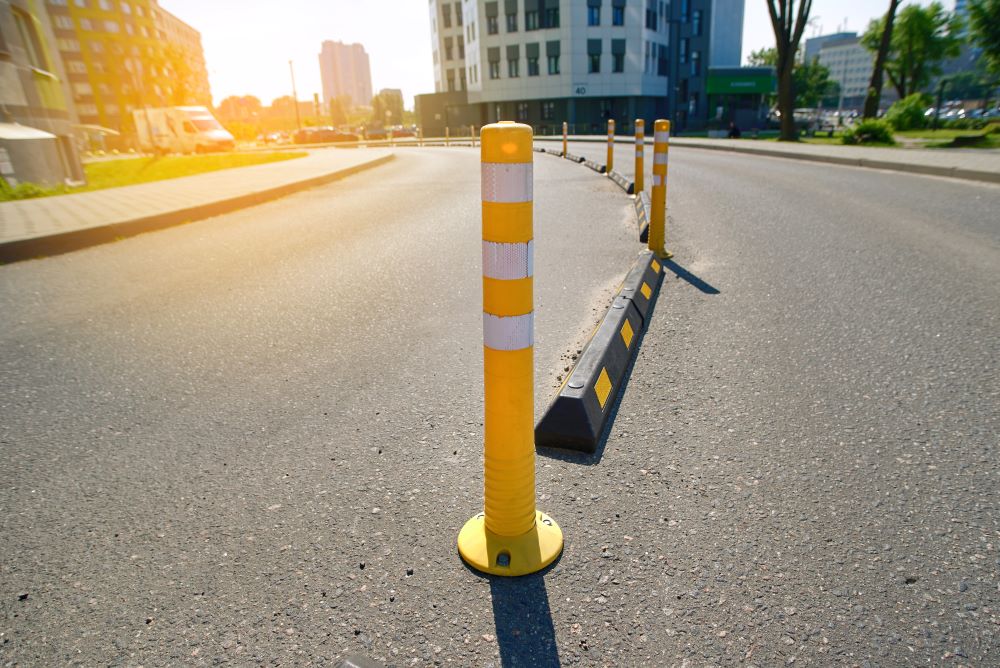
A bollard is a small, low-cost piece of hardware compared to the equipment, building corner, fuel island, or pedestrian area it protects from vehicle intrusion.
Parking structures, loading docks, retail entrances, and utility infrastructure across Colorado all face the same risk: a vehicle backing into or striking a fixed asset because nothing was in place to stop it. A missing or undersized bollard turns a minor traffic mistake into a major repair bill.
RoadGuard installs bollards across Colorado to protect infrastructure, pedestrians, and property from vehicle impact.

Ideal Fencing Corp (IFC) and its Colorado-based Adarand Constructors division deliver roadside safety work across Colorado. Adarand has installed CDOT-approved guardrail and bridge rail systems from its Colorado Springs office for more than 40 years, and IFC pairs that track record with the crews, equipment, and material inventory it takes to keep a Colorado project moving through CDOT inspection.
RoadGuard installs fixed and removable bollards across Colorado to protect equipment, building entrances, fuel islands, and pedestrian areas from vehicle intrusion.
Permanent, embedded bollards suit locations that need constant protection, while removable or fold-down bollards allow controlled vehicle access when needed, such as loading docks and service entrances.
The right bollard spacing, diameter, and foundation depend on what's being protected and the type of vehicle traffic nearby. RoadGuard specifies bollards to fit the site rather than a one-size-fits-all approach.
Bollards are common at parking structures, retail entrances, warehouse loading areas, and utility infrastructure across Colorado's Front Range commercial corridors.
Bollards are one part of RoadGuard's complete highway barriers scope in Colorado, alongside concrete barriers and safety barriers.
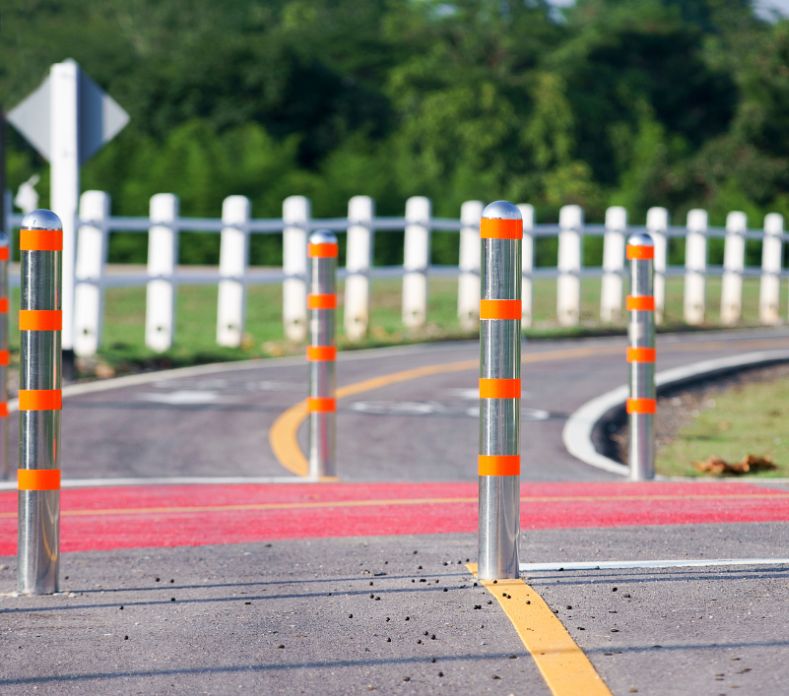
Ideal Fencing Corp and Adarand Constructors bring more than 40 years of CDOT-approved guardrail and bridge rail experience to every Colorado project, so crews already know the state's approved products list, permitting steps, and inspection standards before work begins.
IFC is 100% employee-owned, which means the crew on your job has a direct stake in getting it right the first time. Crews are OSHA 30-Hour certified, and IFC carries $25 million-plus in bonding capacity, $5 million in general liability coverage, DBE certification, and ATSSA membership, the documentation CDOT, general contractors, and municipal procurement teams typically require before award.
Every project starts with a free, no-obligation site visit and a fixed-cost proposal, and finishes with a one-year warranty covering materials, installation, and performance.
Request a free, no-obligation site visit from your local RoadGuard team. We'll assess conditions and develop a fixed-cost proposal.