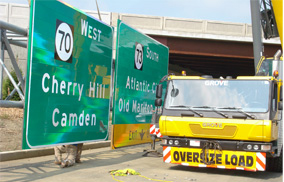
An overhead sign structure carries real weight and wind load above live traffic lanes, and a corroded connection or fatigue crack in that structure is a very different kind of risk than a bent roadside post.
Colorado's high winds along the Front Range and heavy snow loading in the mountain corridor both add stress that structures in milder climates don't see. Structures designed or maintained without accounting for that are the ones that fail first.
RoadGuard installs and inspects sign structures across Colorado, engineered for the state's wind and snow load requirements.
Ideal Fencing Corp (IFC) and its Colorado-based Adarand Constructors division deliver roadside safety work across Colorado. Adarand has installed CDOT-approved guardrail and bridge rail systems from its Colorado Springs office for more than 40 years, and IFC pairs that track record with the crews, equipment, and material inventory it takes to keep a Colorado project moving through CDOT inspection.
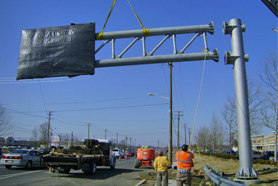
RoadGuard installs overhead truss, cantilever, and roadside sign structures across Colorado, engineered to AASHTO structural standards for the wind and snow loads each site carries.
Overhead truss structures span multiple lanes for guide and lane-control signage, while cantilever structures extend over a single lane or shoulder where a full span isn't needed.
Structures along the Front Range and mountain corridor are designed for higher wind and snow loads than structures in milder climates, a factor RoadGuard accounts for in every installation.
RoadGuard inspects existing sign structures for corrosion, connection fatigue, and foundation condition, and retrofits or replaces structures that no longer meet current standards.
Sign structures support the sign panels RoadGuard fabricates as part of the same highway signage project.
Ideal Fencing Corp and Adarand Constructors bring more than 40 years of CDOT-approved guardrail and bridge rail experience to every Colorado project, so crews already know the state's approved products list, permitting steps, and inspection standards before work begins.
IFC is 100% employee-owned, which means the crew on your job has a direct stake in getting it right the first time. Crews are OSHA 30-Hour certified, and IFC carries $25 million-plus in bonding capacity, $5 million in general liability coverage, DBE certification, and ATSSA membership, the documentation CDOT, general contractors, and municipal procurement teams typically require before award.
Every project starts with a free, no-obligation site visit and a fixed-cost proposal, and finishes with a one-year warranty covering materials, installation, and performance.
Request a free, no-obligation site visit from your local RoadGuard team. We'll assess conditions and develop a fixed-cost proposal.