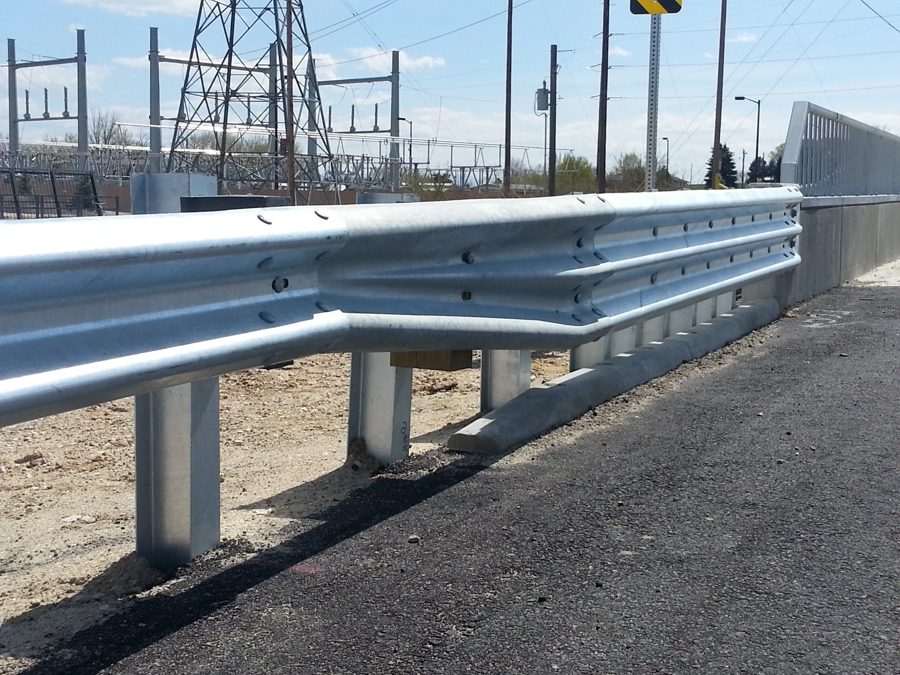
The transition from standard guiderail to bridge rail is one of the highest-risk points on a structure. A vehicle that snags at a poorly transitioned joint can be redirected into the rail instead of along it.
Tubular thrie beam is engineered specifically to smooth that stiffness change, and a damaged or missing transition section leaves the approach to a Colorado bridge without that protection.
RoadGuard installs and repairs tubular thrie beam transitions across Colorado to MASH standards.
Ideal Fencing Corp (IFC) and its Colorado-based Adarand Constructors division deliver roadside safety work across Colorado. Adarand has installed CDOT-approved guardrail and bridge rail systems from its Colorado Springs office for more than 40 years, and IFC pairs that track record with the crews, equipment, and material inventory it takes to keep a Colorado project moving through CDOT inspection.
RoadGuard installs tubular thrie beam across Colorado at bridge approach and departure transitions.
Thrie beam uses a three-corrugation steel profile, stiffer than standard two-corrugation W-beam, engineered to bridge the stiffness gap between flexible guiderail and rigid bridge rail or concrete parapet.
Without a proper transition, a vehicle traveling along standard W-beam can snag at the joint where it meets a stiffer bridge rail system. Tubular thrie beam is designed to prevent that.
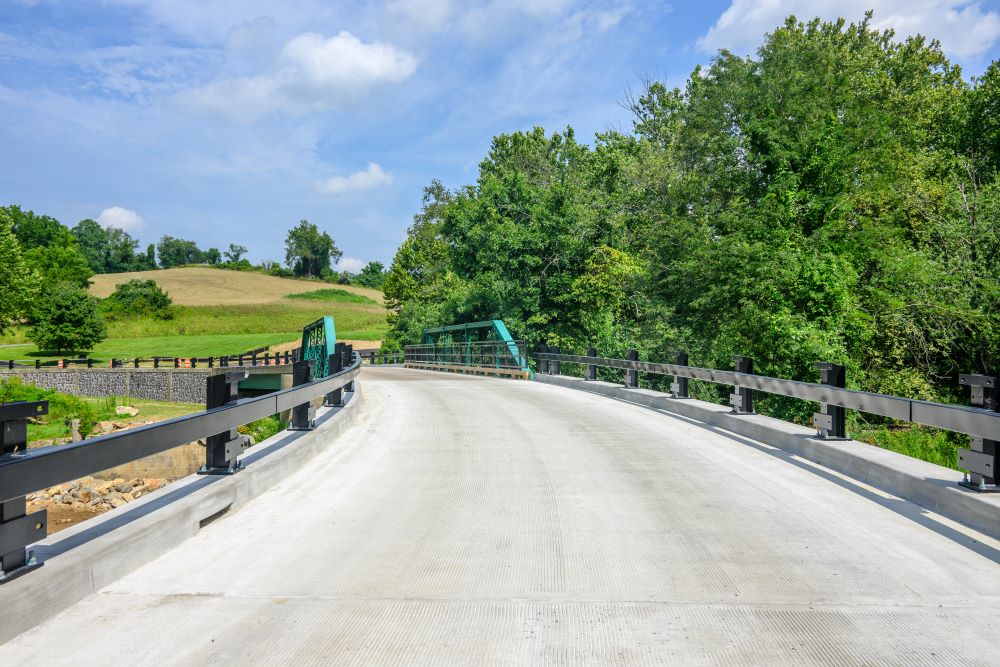
Tubular thrie beam is typically installed alongside bridge rail as part of one coordinated project, not as a standalone system.
RoadGuard coordinates thrie beam transitions with the approach guiderail installation so the full run performs as one engineered system.
Ideal Fencing Corp and Adarand Constructors bring more than 40 years of CDOT-approved guardrail and bridge rail experience to every Colorado project, so crews already know the state's approved products list, permitting steps, and inspection standards before the first post goes in the ground.
IFC is 100% employee-owned, which means the crew on your job has a direct stake in getting it right the first time. Crews are OSHA 30-Hour certified, and IFC carries $25 million-plus in bonding capacity, $5 million in general liability coverage, DBE certification, and ATSSA membership, the documentation CDOT, general contractors, and municipal procurement teams typically require before award.
Every project starts with a free, no-obligation site visit and a fixed-cost proposal, and finishes with a one-year warranty covering materials, installation, and performance.
Request a free, no-obligation site visit from your local RoadGuard team. We'll assess conditions and develop a fixed-cost proposal.