Rapid Geohazard Mitigation for Rail Corridors Across Canada

Rail Emergency Response

Rail systems are critical to the movement of goods and people across Canada, but rail corridors are particularly vulnerable to geohazard events. Severe storms, floods, wildfires, earthquakes, rapid snowmelt, and freeze-thaw cycling can cause sudden and widespread damage to rail infrastructure. When these hazards strike, the consequences extend beyond operational disruption to immediate safety risks, environmental concerns, and significant costs for rail owners and operators.

GSI specializes in rapid, design-build rail emergency response solutions tailored to the demands of the industry. Whether responding to a washed-out embankment, a rockfall-prone slope above an active corridor, or a compromised bridge foundation, our engineers and field crews mobilize quickly with the specialized equipment and expertise needed to restore safe operations.

Contact Us

Common Geohazard Impacts on Rail Infrastructure

Natural disasters can destabilize terrain, expose vulnerabilities in the rail corridor, and create new hazards with little warning. Common geohazard impacts include:

Rockfall

Freeze-thaw cycling, wildfire-related vegetation loss, and heavy rainfall can destabilize cliff faces and slopes above rail lines, sending debris onto tracks with limited warning.

Landslides and Slope Failures

Slope movement can undermine railbeds, embankments, and access roads, often requiring immediate stabilization before track inspection or repair can proceed.

Bridge Scour

Floodwaters eroding soils around bridge piers and abutments can lead to dangerous settlement or structural instability requiring urgent foundation intervention.

Sinkholes and Voids

Underground water movement or soil erosion beneath track subgrade can create voids that compromise track geometry and bearing capacity.

Wildfire Damage

Loss of vegetation and root systems on adjacent slopes increases erosion risk and debris flow potential, particularly in the first rainfall seasons following a fire.

Flooding and Storm Surge

Floodwaters can wash out ballast, erode subgrade soils, and collapse retaining walls or culverts supporting the rail corridor.

Our Rail Emergency Response Process

GSI has developed an emergency response process suited to the operational and safety requirements of rail environments. Our teams are available around the clock and ready to mobilize to remote and challenging terrain across Canada.

  • Rapid Deployment: Upon contact, regional crews and specialized equipment are dispatched to the site without delay.
  • On-Site Hazard Assessment: Geotechnical engineers and field personnel assess the site quickly to identify immediate threats and inform the stabilization approach.
  • Design-Build Mitigation: Site-specific solutions are engineered and constructed concurrently to minimize downtime and restore safe access as quickly as possible.
  • Stakeholder Coordination: We work with rail operators, regulatory bodies, and other stakeholders to ensure clear communication and compliance throughout the response.
  • Long-Term Mitigation: Following the emergency phase, GSI offers monitoring and longer-term mitigation services to reduce the risk of recurrence.
RailJET Canada
We're Here to Help!

Request an Assessment

Mitigation Capabilities for Rail Corridors

Our rail emergency response services are purpose-built for the access constraints, safety requirements, and ground conditions common to Canadian rail corridors.

Scaling of unstable rock, installation of mesh and cable net drapery systems, and anchored rockfall barriers to intercept debris before it reaches the tracks.

Soil nails, tiebacks, and shotcrete facing to reinforce weakened embankments and natural slopes adjacent to rail infrastructure.

Micropiles, compaction grouting, and riprap installation to restore structural integrity to scour-affected or settlement-impacted bridge supports.

Compaction grouting and low-mobility fill to re-establish subgrade support beneath tracks and structures.

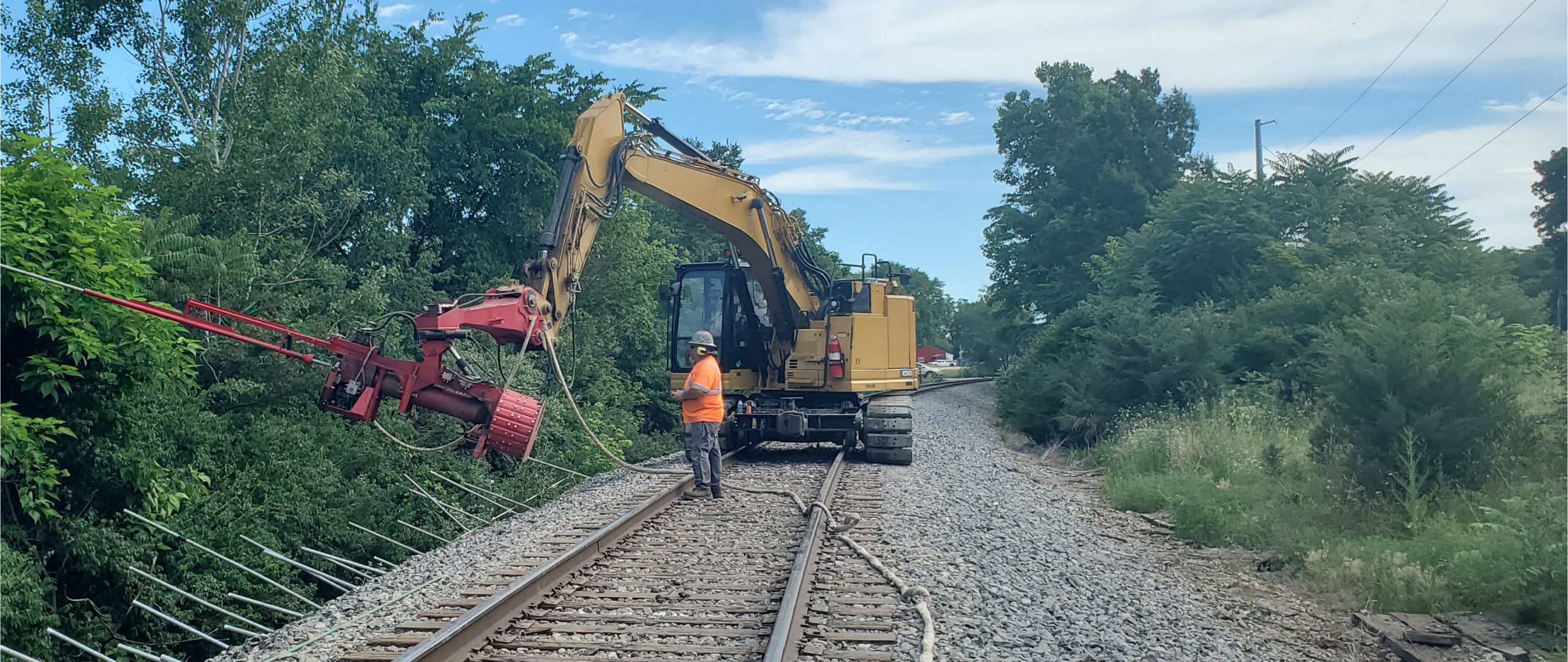
Spider excavators, long-reach drills, and other specialty equipment allow our crews to work in narrow rail corridors, remote mountain passes, and on or adjacent to active rail lines with minimal disruption to operations.

RailJET Canada

RailJET®

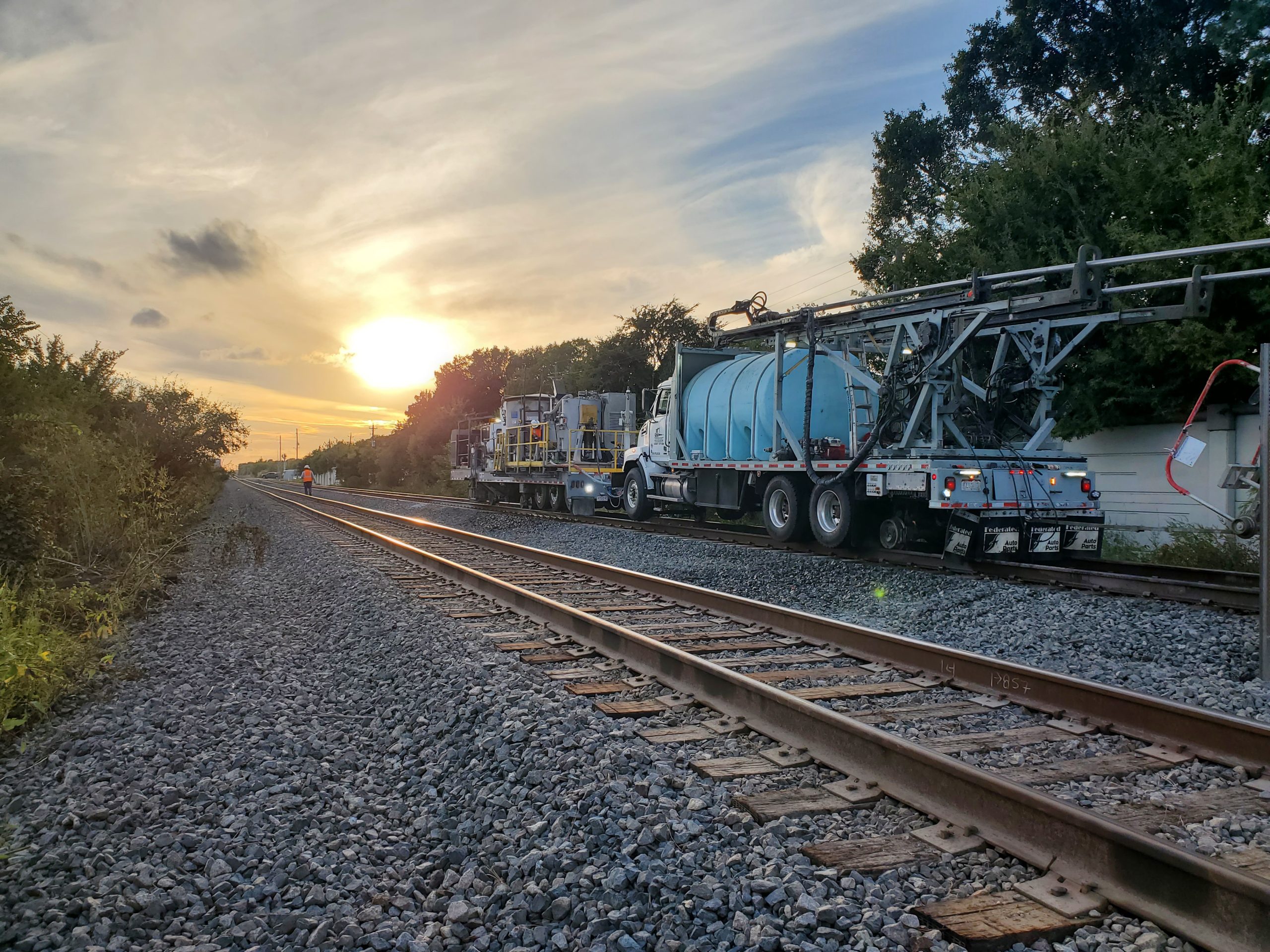
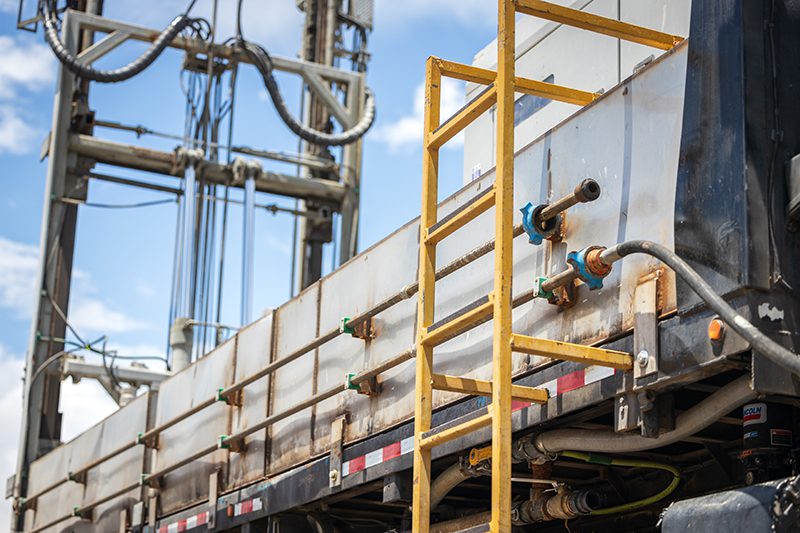
RailJET® is a modified jet grouting process specifically for railroad subgrade stabilization that utilizes a high-flow, horizontal jet of fluid to mix existing soil with a cementitious slurry. It is a hydrodynamic mix-in-place technique producing a soil-cement column or rigid inclusion to reinforce the subgrade in both bearing and shear. The diameter of inclusions is dependent on actual in-situ soil conditions; however, it will be a minimum of 9-inches based on injection pressures and drill bit configurations. The process will also inherently fill ballast pockets where they exist.

RailJET

Applications

GSI's rail emergency response services support Class 1 freight railroads, short line operators, commuter rail systems, and industrial rail corridors. Our experience spans mountain rail corridors in British Columbia and Alberta, where rockfall and slope instability are persistent concerns, as well as lower-gradient corridors in central and eastern Canada where flooding, frost heave, and subgrade instability are more common drivers of geohazard events.

Engineering and Operational Benefits

GSI's design-build model integrates geotechnical engineering and construction under a single team, eliminating the delays of sequential design and contracting. This approach allows stabilization work to begin immediately, reduces total response time, and ensures that field conditions are directly informing engineering decisions in real time. The result is faster restoration of safe rail operations and documented, defensible mitigation outcomes.

Why GSI

Rail corridors in Canada present demanding response conditions: steep and unstable terrain, remote locations with limited access, active operations, and strict safety and environmental requirements. GSI has the equipment, engineering capability, and field experience to respond effectively in these environments.

We maintain emergency-ready crews across Canada and bring direct experience working with major rail operators in some of the country's most geohazard-prone corridors. Our integrated teams combine geotechnical engineering, geology, and construction execution to deliver solutions that are technically sound and practically achievable under emergency conditions.

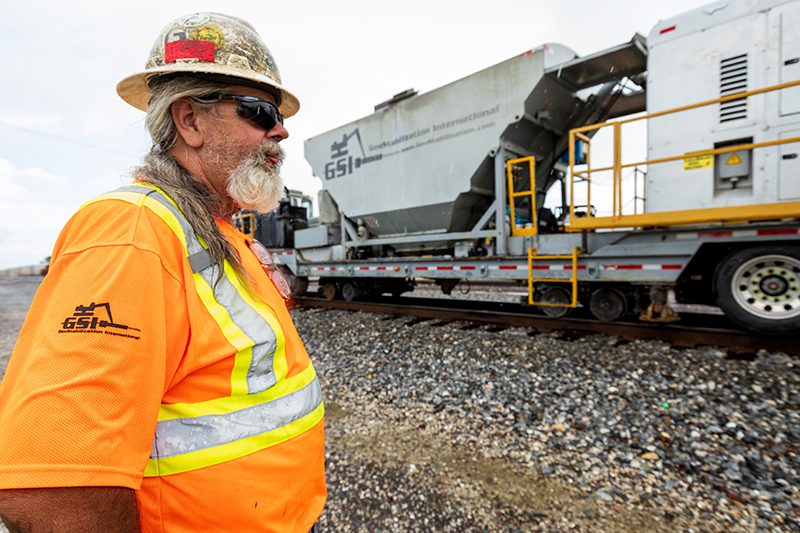
Worker next to railroad.

Client Reviews

Professional and Responsive Project Support in Canada

Steve [Wahl] has been gracious with his time during our visits. The feedback … has been very positive (almost glowing) and also your quick action to resolve any concerns from our last visit ... was greatly appreciated…. Keep up the great work, you and your team’s professionalism has not gone unnoticed.

Successful Project and Teamwork in British Columbia, Canada

The final product for the winter looks very well done and Matthew was great to work with. I look forward to working with your team next Spring and on future projects.

Geohazard Stabilization for Railway Infrastructure

GSI was very professional and easy to work with throughout the whole process. They communicated well and were accommodating to our production needs, while allowing us to work with them to help them accomplish what they needed to get done as well. Dan, Amanda, Zech, Craig, and Justin were all great. It was actually pretty refreshing to be able to work with a group that was so easy deal with, especially for a contractor coming in from out of town. They all seemed to have Midwestern values and work ethic. If you have any questions whatsoever, I would be more than happy to discuss. Based on our experience, I would confidently and quickly recommend GSI to anyone needing similar geo stabilization.

GET IN TOUCH

Contact Us

When a geohazard event compromises your rail corridor, GSI is prepared to assess conditions, deploy stabilization crews, and restore safe operations. Contact our team to discuss your immediate needs or arrange a rapid site evaluation.

855.559.5217

    How Can We Help?

    • Personal Info
    • Contact Info
    • Project Info
    ***Fees May Apply For Residential Site Visits***

    How Can We Help?

    • Personal Info
    • Contact Info
    • Project Info

    How Can We Help?

    • Personal Info
    • Contact Info
    • Project Info

    By using this website, you acknowledge and agree to our Privacy Policy. This site is protected by reCAPTCHA, and the Google Privacy Policy and Terms of Service apply.