Geohazard Mitigation Services in Saskatchewan

Saskatchewan Geohazard Mitigation Services

GSI stabilizes Saskatchewan's expansive Cretaceous clay soils and protects riverbank infrastructure along the South Saskatchewan River and Qu'Appelle Valley.

Get Expert Ground Analysis
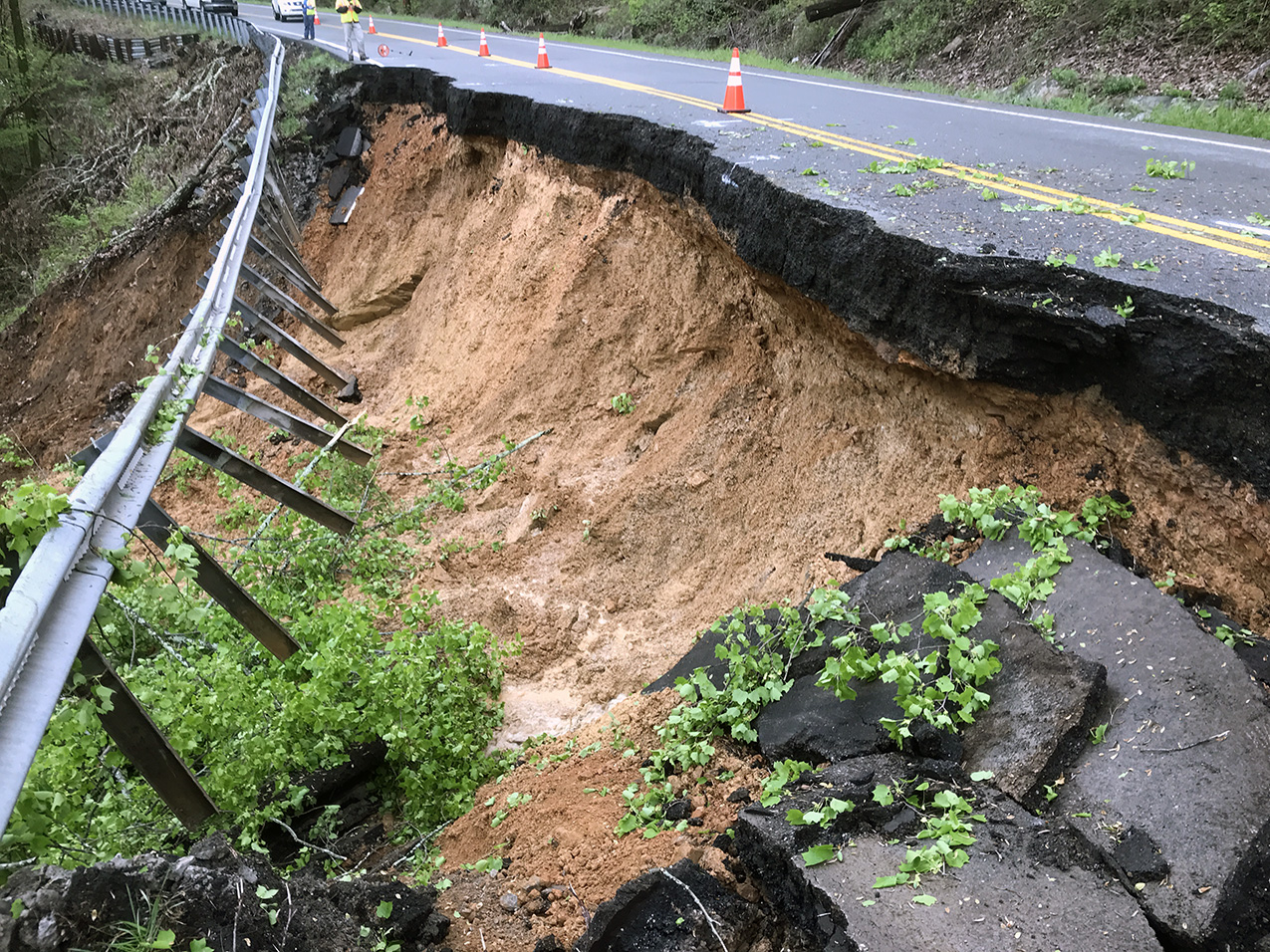
Roadway collapse due to landslide, with damaged pavement and exposed slope.

Ground Stabilization Engineered for Saskatchewan's Prairie Geology

Saskatchewan's geohazard challenges are hidden beneath its flat terrain. The province's Cretaceous clay soils swell and shrink with seasonal moisture changes, damaging transportation infrastructure, bridge foundations, and buried utilities across Saskatoon, Regina, and Prince Albert. Along the South Saskatchewan River and the Qu'Appelle Valley, riverbank instability threatens roads, pipelines, and municipal infrastructure.

GeoStabilization International brings foundation stabilization and ground improvement technologies specifically engineered for Saskatchewan's prairie geology. Our helical pier and micropile systems provide load transfer through active clay zones, while our chemical stabilization programs treat expansive soils in place. For riverbank protection, GSI installs soil nailing and bioengineered revetment systems that stop progressive bank retreat.

GSI's integrated design/build model means Saskatchewan infrastructure owners receive geotechnical investigation, engineering design, construction, and warranty under a single contract—eliminating the coordination gaps that slow traditional projects in the province.

View Stabilization Solutions

Saskatchewan's Soil is Moving Under Your Assets

Schedule a Soil Assessment

Our Slope Stabilization Solutions

Explore Solutions

Saskatchewan's Ground Conditions and GSI's Engineering Approach

Saskatchewan's geological foundation—Cretaceous shale and clay deposits overlain by glacial till—creates ground conditions that challenge infrastructure from Saskatoon to Regina to the river valleys that carve through the prairie landscape. GSI's engineering team understands these conditions and designs solutions calibrated to Saskatchewan's specific soil mechanics.

Expansive Soil Treatment for Urban and Highway Infrastructure

Saskatoon, Regina, and Prince Albert sit on Cretaceous clay soils with high montmorillonite content that generates seasonal volume changes damaging to roads, bridges, and buildings. GSI's helical pier systems transfer structural loads below the active zone to stable bearing materials, while micropile installations provide high-capacity deep foundation support for bridge abutments and heavy infrastructure. For highway and rail embankments, GSI's chemical stabilization programs modify clay mineralogy to reduce swell potential across broad treatment areas.

South Saskatchewan River and Qu'Appelle Valley Riverbank Stabilization

The South Saskatchewan River corridor through Saskatoon and downstream, along with the Qu'Appelle Valley system, experience chronic riverbank erosion that threatens municipal infrastructure, agricultural land, and pipeline crossings. The combination of weak clay banks, spring ice-jam flooding, and seasonal flow variation drives progressive bank retreat that accelerates during high-water events. GSI installs soil nail reinforcement and bioengineered revetment systems that stabilize bank geometry while maintaining riparian habitat function.

Pipeline and Energy Infrastructure Support

Saskatchewan's energy sector relies on pipeline and facility infrastructure that crosses expansive soil terrain and active river crossings. GSI provides ground improvement and slope stabilization solutions that protect energy assets from soil movement, riverbank erosion, and buoyancy effects during flood events. Our design/build model delivers these solutions under accelerated timelines that minimize production disruption.

Contact GSI's Saskatchewan team at (855) 599-5217 for ground assessment and project planning.
How GSI Addresses Saskatchewan Ground Challenges

Our four-step integrated approach begins with geotechnical investigation of Saskatchewan's specific clay soil profiles and delivers warranted ground stabilization under a single design/build contract.

Step 1

Site Assessment

Comprehensive geotechnical investigation of your Saskatchewan site, including subsurface exploration, hazard mapping, and risk evaluation to quantify the specific conditions driving instability.

Step 2

Engineering Design

Our engineers develop a stabilization solution tailored to Saskatchewan's geology and your site's specific failure mechanisms—not a generic template applied from another province.

Step 3

Construction

GSI's trained field crews and proprietary equipment fleet build the engineered solution on your Saskatchewan site, maintaining quality control from first drill hole to final inspection.

Step 4

Warranty & Monitoring

Post-construction instrumentation and monitoring verify performance. Our design/build/warranty model means one team stands behind the complete solution for the long term.

Project support?

Call (855) 599-5217

Project support?

Call (855) 599-5217

Frequently Asked Questions About Geohazard Mitigation in Saskatchewan

Answers to common questions about Saskatchewan's geohazard risks and GSI's engineering approach.

Saskatchewan's Cretaceous clay soils contain high concentrations of montmorillonite—a clay mineral that absorbs water molecules between its structural layers, causing the soil to swell. During dry periods, the clay shrinks and cracks. This volume change cycle generates differential movement beneath foundations, bridge abutments, and road subgrades. GSI engineers solutions that either bypass the active clay zone entirely (helical piers, micropiles) or modify the clay mineralogy to reduce swell potential (chemical stabilization).

The South Saskatchewan River's clay-rich banks erode through a combination of hydraulic scour during high flow events, ice-jam damage during spring breakup, and progressive slope failure driven by saturated bank soils. GSI installs soil nail reinforcement that increases bank shear strength, combined with bioengineered revetment systems that protect the bank face from direct hydraulic erosion. Our designs account for the river's specific flow regime and ice characteristics.

Yes. Micropiles are one of GSI's core foundation technologies for Saskatchewan's clay soil conditions. We design and install micropile systems that provide axial and lateral load capacity through expansive clay deposits to stable bearing strata below. For bridge abutments experiencing differential settlement, micropiles restore load-carrying capacity without requiring bridge closure or superstructure demolition.

GSI injects engineered lime, cement, or proprietary chemical compounds into expansive clay soils through a systematic grid pattern. These compounds react with the clay minerals to form cementation bonds that permanently reduce the soil's swell potential. For Saskatchewan's Cretaceous clays, the specific treatment chemistry is determined through laboratory testing of site soil samples, ensuring the program matches the actual mineralogy. This approach is particularly effective for treating highway subgrades and rail embankments where point-load foundation solutions are not practical.

GSI provides ground stabilization and slope protection services for pipeline corridors that cross Saskatchewan's expansive soil terrain and river valley crossings. Our solutions address soil-induced pipeline stress, riverbank erosion that exposes buried crossings, and buoyancy effects during flood events. We work under pipeline operator safety and environmental protocols, and our design/build model delivers these solutions faster than traditional multi-party procurement approaches.

Saskatchewan's extreme temperature range—from -40°C winters to +35°C summers—drives annual freeze-thaw cycles that exacerbate both expansive soil movement and riverbank instability. Frost penetration depths exceeding 2 metres in some areas create ice lenses that heave road surfaces and displace foundations. Spring thaw saturates clay soils and destabilizes riverbanks. GSI's designs account for these thermal cycles, specifying foundation depths, drainage configurations, and reinforcement systems that perform through Saskatchewan's full seasonal range.

Start Your Saskatchewan Ground Stabilization Project

From urban foundation challenges in Saskatoon and Regina to riverbank erosion along the South Saskatchewan, GSI's prairie-experienced engineers will design and build a solution specific to your site conditions. Share your project details to get started.

855.579.0536

    How Can We Help?

    • Personal Info
    • Contact Info
    • Project Info
    ***Fees May Apply For Residential Site Visits***

    How Can We Help?

    • Personal Info
    • Contact Info
    • Project Info

    How Can We Help?

    • Personal Info
    • Contact Info
    • Project Info

    By using this website, you acknowledge and agree to our Privacy Policy. This site is protected by reCAPTCHA, and the Google Privacy Policy and Terms of Service apply.