Precision Rockfall Mitigation for Maximum Safety

GeoStabilization International (GSI) provides expert manual scaling services designed to protect people, infrastructure, and the environment from rockfall hazards. As leaders in geohazard mitigation, we deliver precise, low-impact solutions that ensure slope stability and long-term safety across Canada’s most challenging terrains, from steep coastal cliffs in British Columbia to rugged transportation corridors in Alberta and Newfoundland.

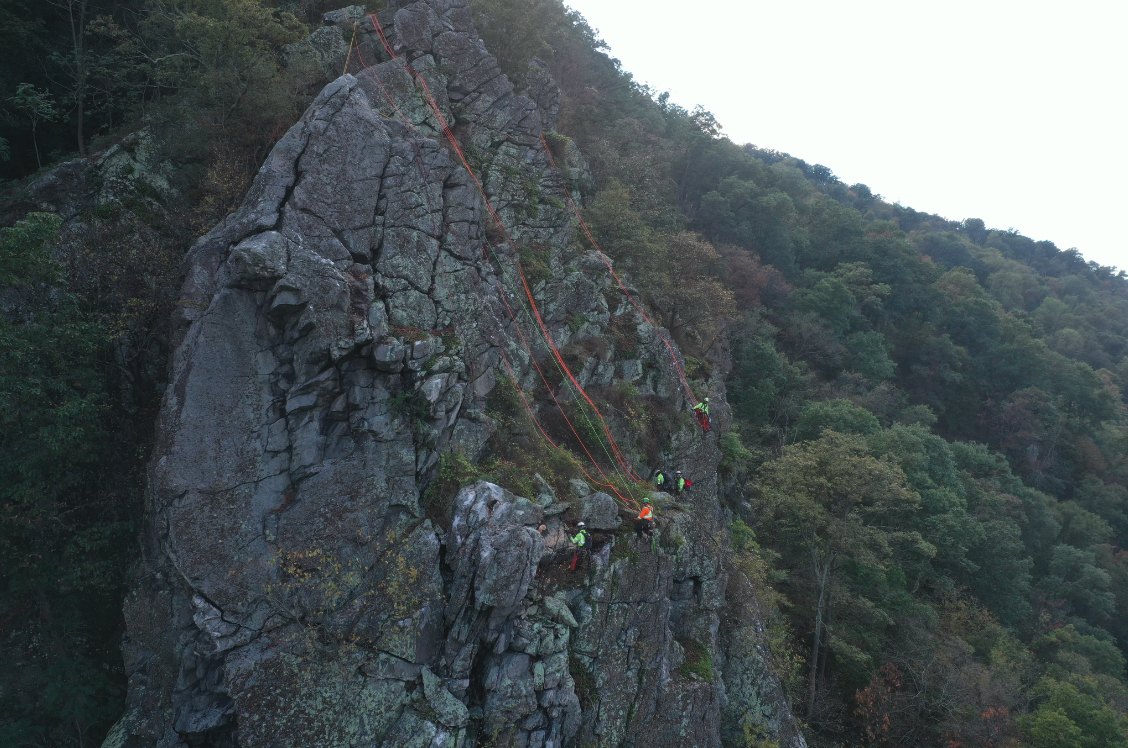
Manual scaling remains one of the most effective and environmentally responsible methods of removing unstable rock and debris from steep slopes, cliffs, and excavation sites. Performed by highly trained Rockfall Remediation Technicians (RRTs), this technique enhances slope stability while minimizing disruption to surrounding landscapes and communities.

CONTACT US

What is Manual Scaling?

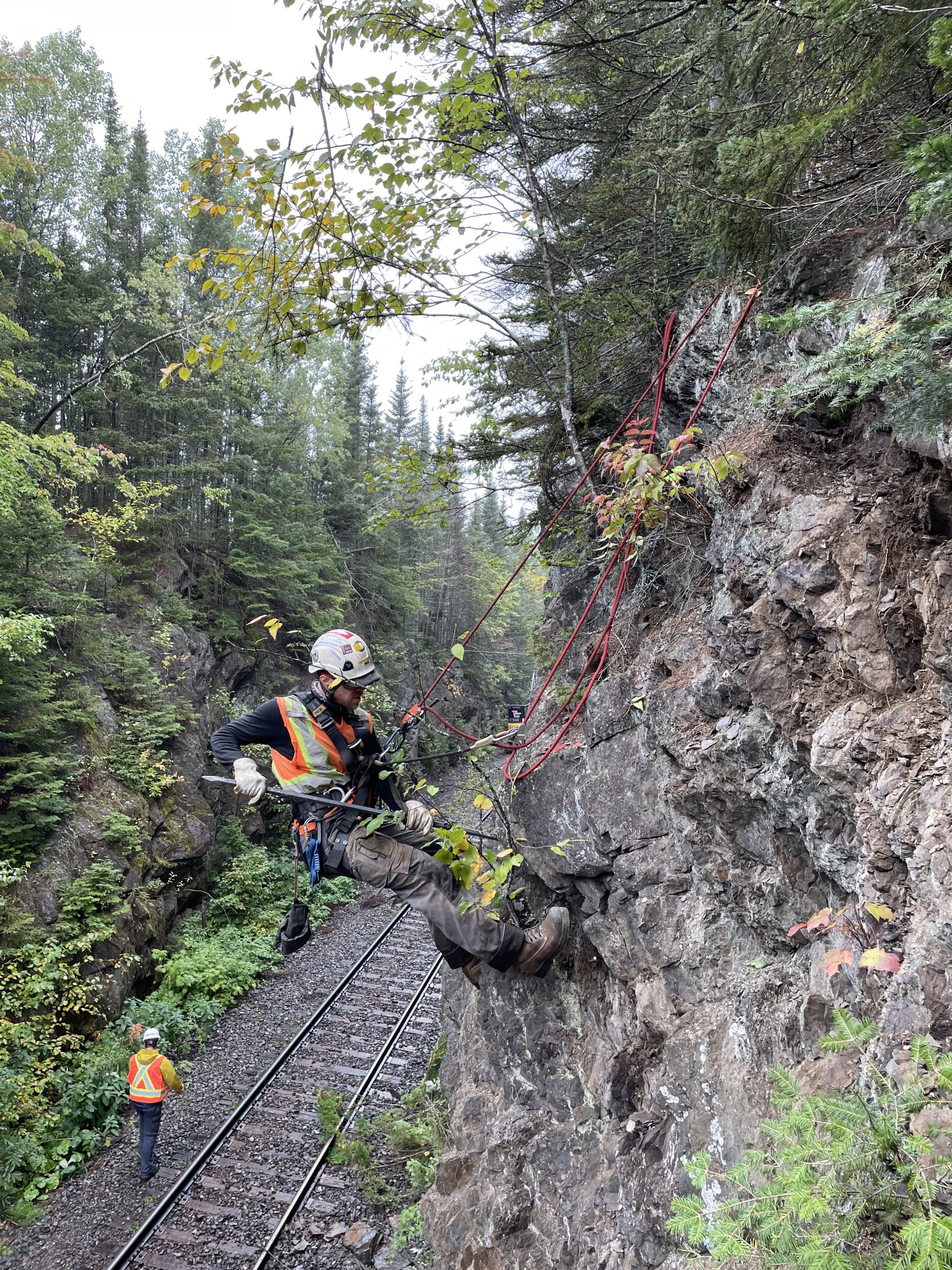
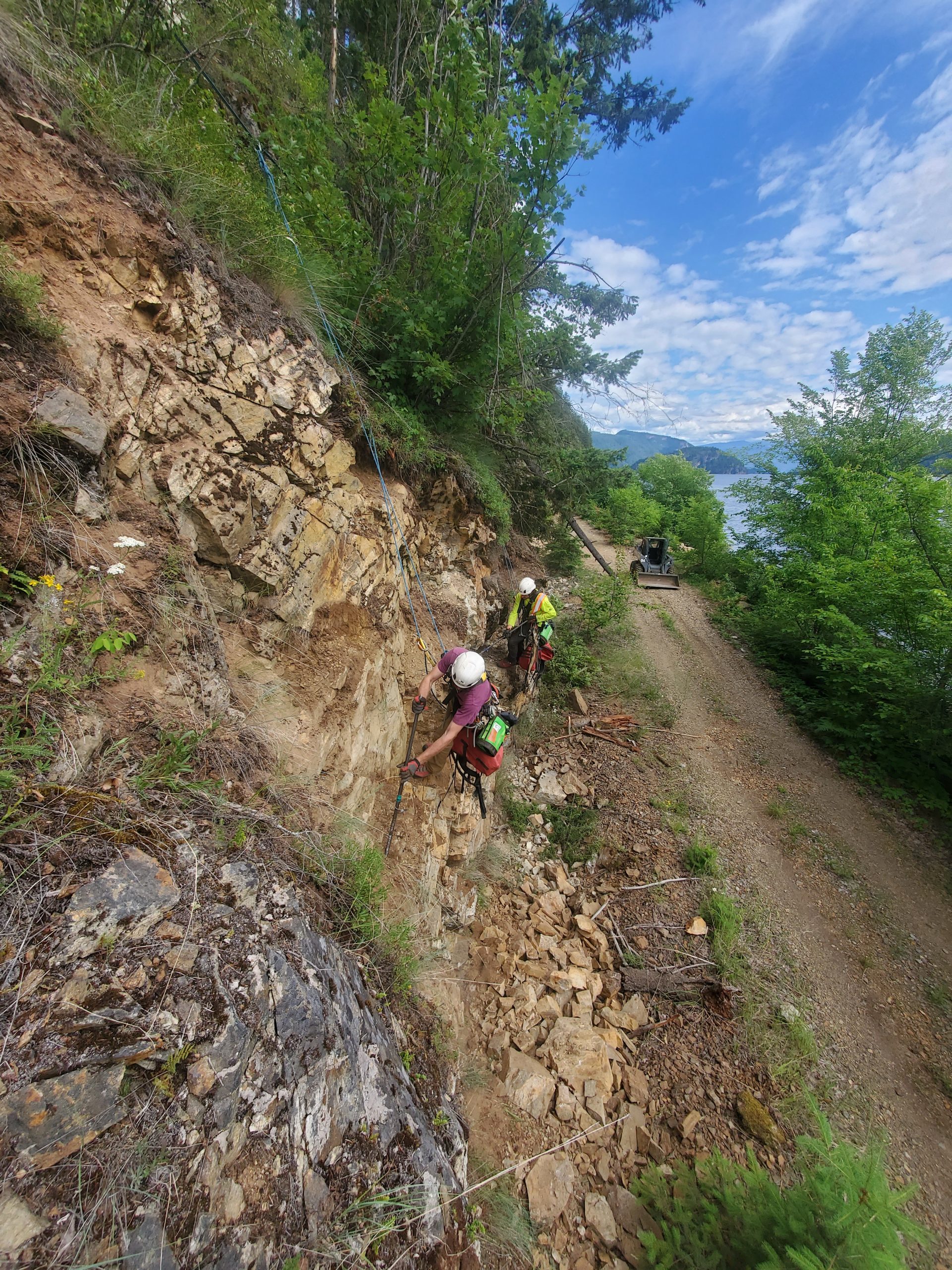
Manual scaling is a controlled rockfall mitigation process that involves the careful removal of loose or unstable rock material from slopes and cliffs. Unlike mechanical methods that rely on heavy machinery, manual scaling is performed by skilled technicians using specialized hand tools such as scaling bars, airbags, and hydraulic jacks.

This precise, hands-on approach allows technicians to target individual loose rocks and fractures without disturbing the stable portions of the slope. By safely dislodging and removing unstable material, manual scaling reduces the risk of future rockfall events and ensures the ongoing safety of roads, railways, construction sites, and nearby communities.
Get in Touch

Contact Us Today

Our Manual Scaling Process:

Every GeoStabilization scaling project begins with a detailed site evaluation and follows a proven process that prioritizes precision, safety, and environmental care.

Step 1

Site Assessment

Our geotechnical engineers conduct a thorough inspection of the slope or rock face to identify loose material, areas of weakness, and potential hazards. This assessment informs a tailored scaling strategy designed to maximize safety and efficiency.

Step 2

Equipment preparation

Each project is equipped with industry-approved tools such as scaling bars, airbags, and hydraulic jacks, as well as personal protective and rope-access systems to ensure worker safety.

Step 3

Safety measures

Before any scaling begins, our team implements a comprehensive safety plan that includes two-rope systems, helmets, harnesses, and secured work zones to protect both the crew and surrounding areas.

Step 4

Controlled Rock Removal

Technicians use scaling bars and other precision tools to carefully dislodge loose rocks and debris. The process is conducted under strict control to avoid unnecessary disturbance to stable rock or nearby infrastructure.

Step 5

Debris Management

Dislodged rocks are safely lowered or relocated to designated collection zones. Larger fragments may be moved using mechanical assists or by controlled release in secure areas.

Step 6

Post-Scaling Stabilization

Once the slope is cleared, engineers assess its stability and, when necessary, recommend follow-up measures such as rock bolting, mesh installation, or shotcrete application to reinforce the exposed surface.

Advantages of Manual Scaling

  • Precision and Control
    Manual scaling provides the highest level of control when removing unstable material. Each rock is evaluated and addressed individually, ensuring safe removal without over-excavating or compromising stable ground.
  • Enhanced Safety
    By eliminating loose rock from the slope surface, manual scaling greatly reduces the likelihood of sudden rockfall incidents that could endanger people or infrastructure.
  • Environmental Responsibility
    This low-impact technique minimizes soil disturbance and preserves the surrounding landscape. Because it does not rely on large equipment, manual scaling is ideal for environmentally sensitive areas and remote sites.
  • Versatility
    Manual scaling can be performed on a wide range of terrains and geological formations, including steep cliffs, cut slopes, and rock faces where mechanized systems cannot safely operate.
  • Cost Efficiency
    Preventing a rockfall before it occurs is far more economical than repairing damage afterward. Manual scaling provides long-term cost savings through proactive hazard management.

LET EXPERTS SCALE THIS FOR YOU

Why Choose GeoStabilization International for Manual Scaling Services?

Our teams have scaled thousands of slopes across Canada, including major transportation corridors, hydroelectric projects, and mining operations.

Beyond scaling, GSI offers a full suite of stabilization services, including mesh installation, rock bolting, and shotcrete, for complete slope protection.

We follow stringent safety standards and employ redundant safety systems to ensure every project is executed without incident.

Every site presents unique challenges. Our engineers develop scaling plans tailored to local geology, slope geometry, and environmental conditions.

GSI maintains dedicated scaling crews capable of mobilizing quickly for emergency or preventive rockfall mitigation.

GET IN TOUCH

Contact GeoStabilzation for Manual Scaling Services

If your site is at risk of rockfall or slope instability, GeoStabilization International can help. Our experienced teams specialize in manual scaling and other proven rockfall mitigation techniques designed to safeguard infrastructure, protect lives, and preserve natural environments.

Contact us today to learn more about our manual scaling services and how we can assist you.

855.559.5217

    How Can We Help?

    • Personal Info
    • Contact Info
    • Project Info
    ***Fees May Apply For Residential Site Visits***

    How Can We Help?

    • Personal Info
    • Contact Info
    • Project Info

    How Can We Help?

    • Personal Info
    • Contact Info
    • Project Info

    By using this website, you acknowledge and agree to our Privacy Policy. This site is protected by reCAPTCHA, and the Google Privacy Policy and Terms of Service apply.