Common Geohazard Impacts on Rail Infrastructure
Natural disasters can destabilize terrain, expose vulnerabilities in the rail corridor, and create new hazards with little warning. Common geohazard impacts include:
Rockfall
Freeze-thaw cycling, wildfire-related vegetation loss, and heavy rainfall can destabilize cliff faces and slopes above rail lines, sending debris onto tracks with limited warning.
Landslides and Slope Failures
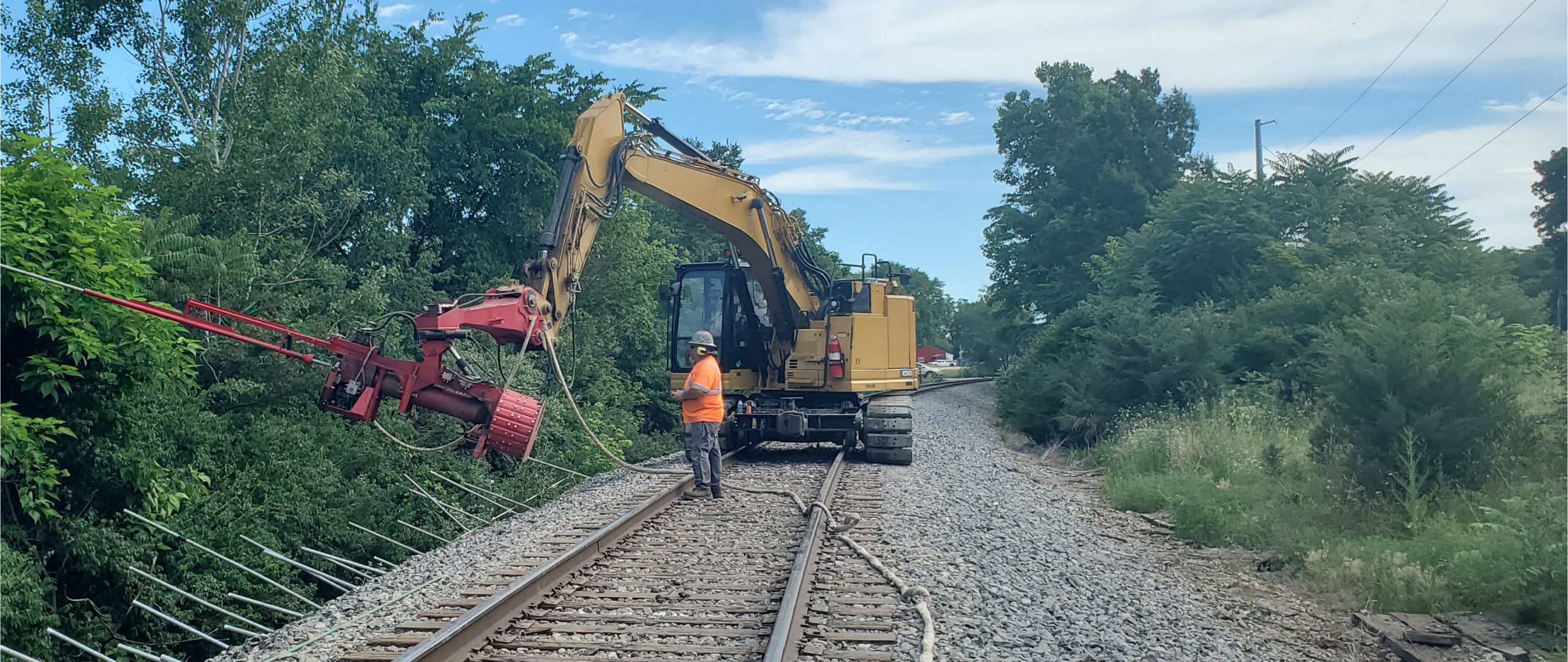
Slope movement can undermine railbeds, embankments, and access roads, often requiring immediate stabilization before track inspection or repair can proceed.
Bridge Scour
Floodwaters eroding soils around bridge piers and abutments can lead to dangerous settlement or structural instability requiring urgent foundation intervention.
Sinkholes and Voids
Underground water movement or soil erosion beneath track subgrade can create voids that compromise track geometry and bearing capacity.
Wildfire Damage
Loss of vegetation and root systems on adjacent slopes increases erosion risk and debris flow potential, particularly in the first rainfall seasons following a fire.
Flooding and Storm Surge
Floodwaters can wash out ballast, erode subgrade soils, and collapse retaining walls or culverts supporting the rail corridor.